• Fri frakt över 249 kr
  • •
  • Snabba leveranser
  • •
  • Billiga böcker
Kundservice

Du är på sajten för privatpersoner.

Företag, bibliotek eller offentlig verksamhet?

Du handlar på classic.bokus.com, där alla dina funktioner finns intakta.
Till classic.bokus.com
Bokus logotyp. Gå till startsidan.
  • Erbjudanden
  • Nyheter
  • Student
  • Topplistor
  • Barn & ungdom
  • Bokus Play
  • E-böcker
  • Pocketböcker
  • Spel & pussel

10% rabatt på allt med kod: NYSTART10 →

Sidfot

Mina sidor

    Hjälp

    • Kundservice
    • Vanliga frågor och svar
    • Frakt och leverans
    • Retur vid ångerrätt
    • Reklamera vara
    • Betalning
    • Köpvillkor
    • Allmänna villkor
    • Information om webbplatsens tillgänglighet

    Om Bokus

    • Om oss
    • Pressrum
    • För studenter
    • För företag
    • För bibliotek och offentlig verksamhet
    • För leverantörer
    • Hållbarhet

    Populärt

    • Aktuella erbjudanden
    • Presentkort
    • Studentlitteratur
    • Nya böcker
    • Topplistor
    • Signerade böcker
    • Engelska böcker

    Inspiration

    • Boktips
    • BookTok
    • Populära bokserier
    • Barnbokskaraktärer
    • Populära författare
    Logotyp för Bokus
    Följ oss på Facebook (extern länk)Följ oss på Instagram (extern länk)Följ oss på YouTube (extern länk)Följ oss på TikTok (extern länk)
    bokus @ CookiesAnpassa cookiesIntegritetspolicyKöpvillkor
    Till Citymail hemsida (extern länk)Till Budbee hemsida (extern länk)Till Postnord hemsida (extern länk)Till Schenker hemsida (extern länk)Till Early Bird hemsida (extern länk)Till Walleys hemsida (extern länk)
    1. Samhälle och politik
    2. Samhälle och kultur
    3. Kultur och medier
    4. Kulturvetenskap

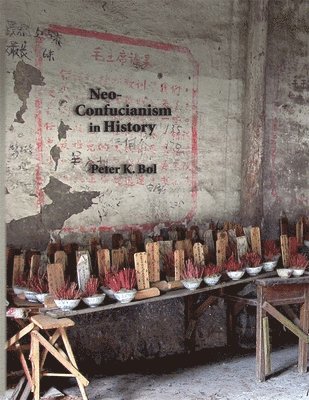
    Neo-Confucianism in History

    AvPeter K. Bol

    Häftad, Engelska, 2010

    Del 307 i serien Harvard East Asian Monographs

    242 kr

    Beställningsvara. Skickas inom 10-15 vardagar. Fri frakt över 249 kr.

    Beskrivning

    Where does Neo-Confucianism—a movement that from the twelfth to the seventeenth centuries profoundly influenced the way people understood the world and responded to it—fit into our story of China’s history?This interpretive, at times polemical, inquiry into the Neo-Confucian engagement with the literati as the social and political elite, local society, and the imperial state during the Song, Yuan, and Ming dynasties is also a reflection on the role of the middle period in China’s history. The book argues that as Neo-Confucians put their philosophy of learning into practice in local society, they justified a new social ideal in which society at the local level was led by the literati with state recognition and support. The later imperial order, in which the state accepted local elite leadership as necessary to its own existence, survived even after Neo-Confucianism lost its hold on the center of intellectual culture in the seventeenth century but continued as the foundation of local education. It is the contention of this book that Neo-Confucianism made that order possible.

    Produktinformation

    • Utgivningsdatum:2010-04-01
    • Mått:156 x 235 x 24 mm
    • Vikt:638 g
    • Format:Häftad
    • Språk:Engelska
    • Serie:Harvard East Asian Monographs
    • Antal sidor:450
    • Förlag:Harvard University, Asia Center
    • ISBN:9780674053243
    • Utmärkelser:Nominated for Joseph Levenson Book Prize 2010

    Utforska kategorier

    • Kulturvetenskap inom Samhälle och politik
    • Östasiatiska religioner inom Filosofi och religion

    Mer om författaren

    Peter K. Bol is Charles H. Carswell Professor of East Asian Languages and Civilizations in the Department of East Asian Languages and Civilizations at Harvard University.

    Recensioner i media

    Bol offers a comprehensive interpretation and polemical analysis of the place where ‘Neo-Confucianism fits into our story of China’s history.’ In reexamining China’s Middle Period, he compares the role of literati in Song and Yuan with that of the early and late Ming dynasty. Highlighting the development of discourse on learning, he observes that neo-Confucianism shifts moral authority away from the political system and toward a new conception of self, importantly developing the category of mind as the basis of moral guidance grounded in an act of will. In the late Ming this move promoted limited government combined with a new emphasis on autonomy and individual social responsibility that extended to people of all backgrounds. Bol points out that in spite of changes in the model of neo-Confucianism in the 17th century and the Qing conquest, the imperial order later continued to look to local elite leadership as the strength of its own existence. He brings forth evidence to support his projection that dual voices can perhaps ‘speak to China today.’ Bol argues that neo-Confucianism could serve, not just as history, but as a resource for thinking about the present.

    Innehållsförteckning

    • * Introduction: Neo-Confucianism in History * The World of the Eleventh Century: 750 and 1050 Compared * Searching for a New Foundation in the Eleventh Century * The Neo-Confucians * Politics * Learning * Belief * Society * Afterword: China's History and Neo-Confucianism * Notes * Bibliography * Character List * Index