• Fri frakt över 249 kr
  • •
  • Snabba leveranser
  • •
  • Billiga böcker
Kundservice

Du är på sajten för privatpersoner.

Företag, bibliotek eller offentlig verksamhet?

Du handlar på classic.bokus.com, där alla dina funktioner finns intakta.
Till classic.bokus.com
Bokus logotyp. Gå till startsidan.
  • Erbjudanden
  • Nyheter
  • Student
  • Topplistor
  • Barn & ungdom
  • Bokus Play
  • E-böcker
  • Pocketböcker
  • Spel & pussel

10% rabatt på allt med kod NYSTART10 →

Sidfot

Mina sidor

    Hjälp

    • Kundservice
    • Vanliga frågor och svar
    • Frakt och leverans
    • Retur vid ångerrätt
    • Reklamera vara
    • Betalning
    • Köpvillkor
    • Allmänna villkor
    • Information om webbplatsens tillgänglighet

    Om Bokus

    • Om oss
    • Pressrum
    • För studenter
    • För företag
    • För bibliotek och offentlig verksamhet
    • För leverantörer
    • Hållbarhet

    Populärt

    • Aktuella erbjudanden
    • Presentkort
    • Studentlitteratur
    • Nya böcker
    • Topplistor
    • Signerade böcker
    • Engelska böcker

    Inspiration

    • Boktips
    • BookTok
    • Populära bokserier
    • Barnbokskaraktärer
    • Populära författare
    Logotyp för Bokus
    Följ oss på Facebook (extern länk)Följ oss på Instagram (extern länk)Följ oss på YouTube (extern länk)Följ oss på TikTok (extern länk)
    bokus @ CookiesAnpassa cookiesIntegritetspolicyKöpvillkor
    Till Citymail hemsida (extern länk)Till Budbee hemsida (extern länk)Till Postnord hemsida (extern länk)Till Schenker hemsida (extern länk)Till Early Bird hemsida (extern länk)Till Walleys hemsida (extern länk)
    1. Naturvetenskap och teknik
    2. Matematik och naturvetenskap
    3. Matematik
    4. Matematisk statistik

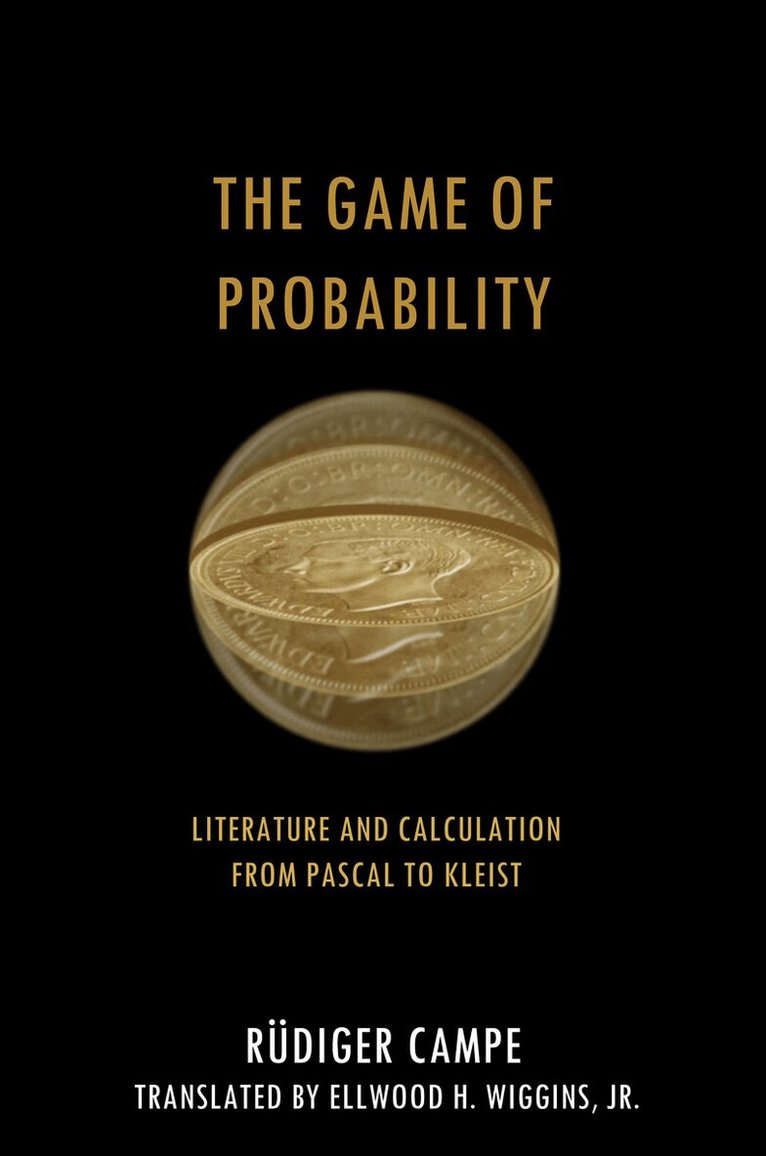
    Game of Probability

    Literature and Calculation from Pascal to Kleist

    AvRüdiger Campe

    Inbunden, Engelska, 2013

    Del i serien Cultural Memory in the Present

    2 275 kr

    Beställningsvara. Skickas inom 5-8 vardagar. Fri frakt över 249 kr.

    Fler format och utgåvor

    Häftad

    559 kr

    E-bok

    656 kr

    Beskrivning

    There exist literary histories of probability and scientific histories of probability, but it has generally been thought that the two did not meet. Campe begs to differ. Mathematical probability, he argues, took over the role of the old probability of poets, orators, and logicians, albeit in scientific terms. Indeed, mathematical probability would not even have been possible without the other probability, whose roots lay in classical antiquity. The Game of Probability revisits the seventeenth and eighteenth-century "probabilistic revolution," providing a history of the relations between mathematical and rhetorical techniques, between the scientific and the aesthetic. This was a revolution that overthrew the "order of things," notably the way that science and art positioned themselves with respect to reality, and its participants included a wide variety of people from as many walks of life. Campe devotes chapters to them in turn. Focusing on the interpretation of games of chance as the model for probability and on the reinterpretation of aesthetic form as verisimilitude (a critical question for theoreticians of that new literary genre, the novel), the scope alone of Campe's book argues for probability's crucial role in the constitution of modernity.

    Produktinformation

    • Utgivningsdatum:2013-01-09
    • Mått:152 x 229 x 18 mm
    • Vikt:522 g
    • Format:Inbunden
    • Språk:Engelska
    • Serie:Cultural Memory in the Present
    • Antal sidor:504
    • Förlag:Stanford University Press
    • ISBN:9780804768641
    • Översättare:Ellwood Wiggins, Ellwood Jr. Wiggins

    Utforska kategorier

    • Matematisk statistik inom Naturvetenskap och teknik
    • Litteraturvetenskap inom Skönlitteratur
    • Matematikens historia inom Naturvetenskap och teknik

    Mer om författaren

    Rüdiger Campe is Professor and Chair of German Language and Literature at Yale University.

    Recensioner i media

    "Wiggin's translation of this demanding critical text is clear and accessible."—Richard Langer, The Year's Work in English Studies "Campe's book is a recommendable and laudable cross-disciplinary enquiry into the aesthetic, theological, philosophical, literary and mathematical developments that circumscribe the notion of modern probability as a highly complex phenomenon."—Laura Søvsø Thomasen and Henrik Kragh Sørensen, British Journal for the History of Science "Readers who have studied other histories containing views of the probability of this period will find considerable, and refreshing, additional material here. For instance, Campe considers, as contributors to the probabilistic revolution, mathematicians, moral theologians, jurists, natural scientists, rhetoricians and logicians, the insurance industry, economists, and civil servants . . . [The Game of Probability] is a work that repays serious study with many illuminating moments, adding as it does not only to readers' probabilistic knowledge but also to their appreciation of the early novel. Campe sheds light on the emergence of probability as we now see it: not only its development from gaming, but also its necessary development through literature and jurisprudence. The book, exhibiting great scholarship, is not a history of probability and statistics, but nevertheless forms an important addition to works on that topic."—A. I. Dale, Mathematical Reviews "Rüdiger Campe's The Game of Probability lays out—for the first time and in all its complexity—a semantic field crucial to our modernity: to our social and juridical modernity, to our scientific and mathematical modernity, to our literary modernity. The breadth and depth of learning upon which this book rests will make it an invaluable resource for scholars across the historical-humanistic disciplines and the bright light generated by its readings will illuminate countless research projects. This marvelous book belongs among the most distinguished publications to have emerged out of cultural studies in Germany during the past thirty years."—David E. Wellbery University of Chicago