• Fri frakt över 249 kr
  • •
  • Snabba leveranser
  • •
  • Billiga böcker
Kundservice

Du är på sajten för privatpersoner.

Företag, bibliotek eller offentlig verksamhet?

Du handlar på classic.bokus.com, där alla dina funktioner finns intakta.
Till classic.bokus.com
Bokus logotyp. Gå till startsidan.
  • Erbjudanden
  • Nyheter
  • Student
  • Topplistor
  • Barn & ungdom
  • Bokus Play
  • E-böcker
  • Pocketböcker
  • Spel & pussel

Må bättre, för mindre! Upp till 50% rabatt på hälsoböcker

Sidfot

Mina sidor

    Hjälp

    • Kundservice
    • Vanliga frågor och svar
    • Frakt och leverans
    • Retur vid ångerrätt
    • Reklamera vara
    • Betalning
    • Köpvillkor
    • Allmänna villkor
    • Information om webbplatsens tillgänglighet

    Om Bokus

    • Om oss
    • Pressrum
    • För studenter
    • För företag
    • För bibliotek och offentlig verksamhet
    • För leverantörer
    • Hållbarhet

    Populärt

    • Aktuella erbjudanden
    • Presentkort
    • Studentlitteratur
    • Nya böcker
    • Topplistor
    • Signerade böcker
    • Engelska böcker

    Inspiration

    • Boktips
    • BookTok
    • Populära bokserier
    • Barnbokskaraktärer
    • Populära författare
    Logotyp för Bokus
    Följ oss på Facebook (extern länk)Följ oss på Instagram (extern länk)Följ oss på YouTube (extern länk)Följ oss på TikTok (extern länk)
    bokus @ CookiesAnpassa cookiesIntegritetspolicyKöpvillkor
    Till Citymail hemsida (extern länk)Till Budbee hemsida (extern länk)Till Postnord hemsida (extern länk)Till Schenker hemsida (extern länk)Till Early Bird hemsida (extern länk)Till Walleys hemsida (extern länk)
    1. Biografier
    2. Sanna berättelser

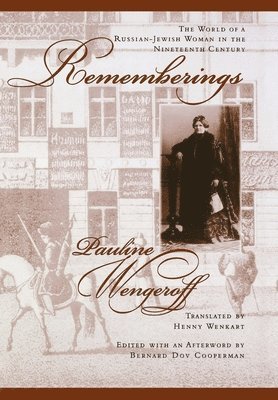
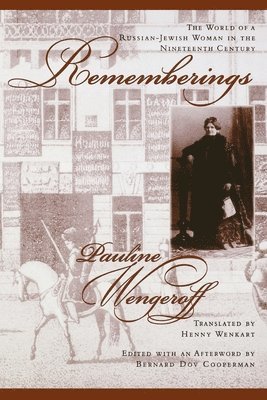
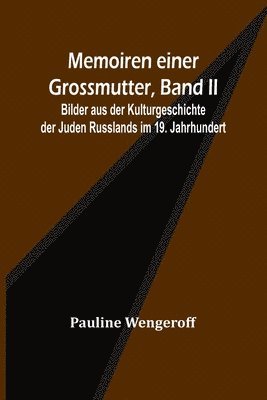
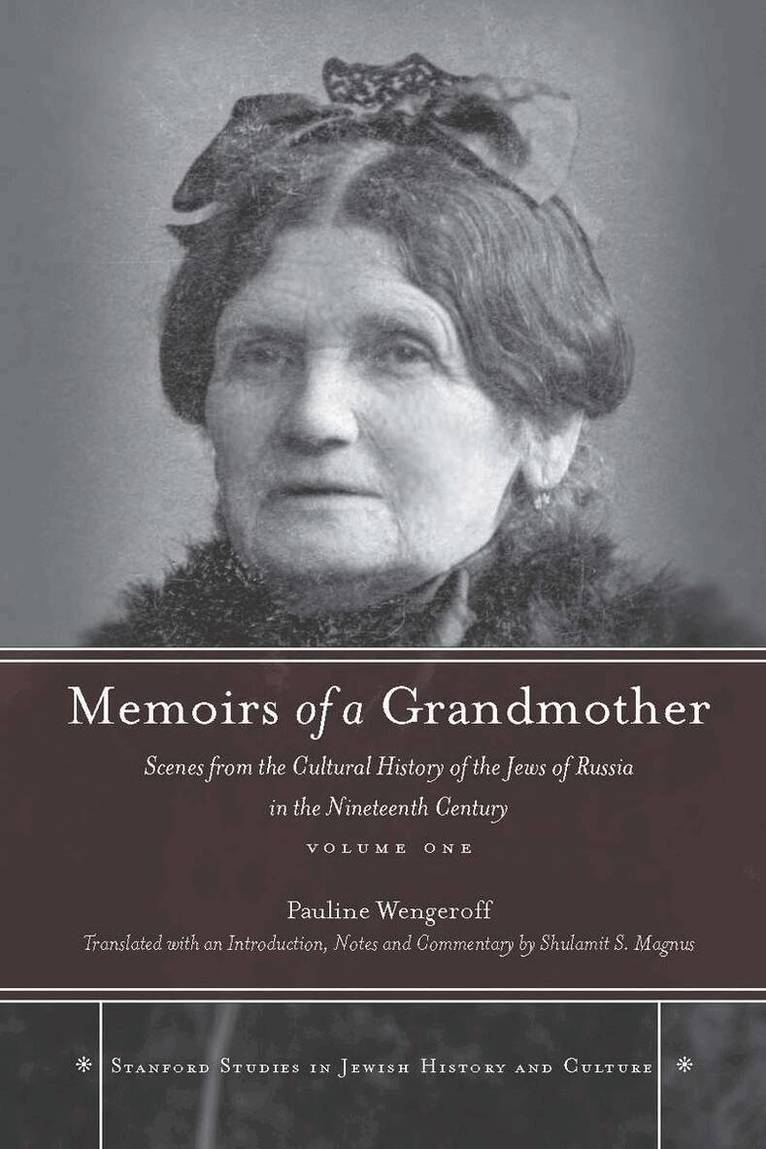
    Memoirs of a Grandmother

    Scenes from the Cultural History of the Jews of Russia in the Nineteenth Century, Volume Two

    AvPauline Wengeroff

    Inbunden, Engelska, 2014

    Del i serien Stanford Studies in Jewish History and Culture

    891 kr

    Beställningsvara. Skickas inom 10-15 vardagar. Fri frakt över 249 kr.

    Fler format och utgåvor

    Inbunden

    891 kr

    E-bok

    997 kr

    E-bok

    1 000 kr

    Beskrivning

    Pauline Wengeroff's Memoirs of a Grandmother offers a unique first-person window into traditionalism, modernity, and the tensions linking the two in nineteenth-century Russia. Wengeroff (1833–1916), a perceptive, highly literate social observer, tells a gripping tale of cultural transformation, situating her narrative in the experience of women and families.In Volume Two, Wengeroff claims that Jewish women were capable and desirous of adopting the best of European modernity but were also wedded to tradition, while Jewish men recklessly abandoned tradition and forced their wives to do the same. The result was not only marital and intergenerational conflict but also catastrophic cultural loss, with women's inability to transmit tradition in the home leading to larger cultural drift. Two of Wengeroff's children converted when faced with anti-Jewish educational and professional discrimination, unwilling to sacrifice secular ambitions and visions for the sake of a traditional culture they did not know. Memoirs is a tale of loss but also of significant hope, which Wengeroff situates not in her children but in a new generation of Jewish youth reclaiming Jewish memory. To them, she addresses her Memoirs, giving an "orphaned youth"—orphaned of their past and culture—a "grandmother."

    Produktinformation

    • Utgivningsdatum:2014-09-17
    • Mått:152 x 229 x 27 mm
    • Vikt:494 g
    • Format:Inbunden
    • Språk:Engelska
    • Serie:Stanford Studies in Jewish History and Culture
    • Antal sidor:240
    • Förlag:Stanford University Press
    • ISBN:9780804768801
    • Översättare:Shulamit S. Magnus, Shulamit S Magnus

    Utforska kategorier

    • Sanna berättelser inom Biografier
    • Socialhistoria och kulturhistoria inom Historia och arkeologi
    • Sociala grupper och identitet inom Samhälle och politik

    Mer om författaren

    Shulamit S. Magnus is Associate Professor of Jewish Studies at Oberlin College. Her edition of the first volume of Wengeroff's Memoirs of a Grandmother won the National Jewish Book Award for Women's Studies (2011).

    Recensioner i media

    "This is a stunning piece of work. Wengeroff's recreation of a life during the transition from traditional to modern Jewish culture in 19th century Russia is engrossing, powerfully written, and often lyric. As a window into women's lives and women's perspective on their community's life, this is an almost unparalleled source. Magnus's commentary is brilliant: she has a fine eye for what needs to be annotated and is remarkably astute about the central themes of the memoir."—Carol Berkin, Baruch College "Wengeroff's autobiography is unquestionably one of the most interesting sources we have on Jewish life in Eastern Europe, and this edition should make it yet more accessible to non-German readers. [Memoirs of a Grandmother] will be a standard reference work and a starting point for a great deal of research. The readability of the translation and the user-friendly nature of the notes make use of this book very enjoyable, which is not something to be taken for granted these days."—Shaul Stampfer, The Hebrew University of Jerusalem

    Innehållsförteckning

    • Memoirs of a Grandmother: Scenes from the Cultural History of the Jews of Russia in the Nineteenth Century, Volume TwoAuthor(s): Pauline Wengeroff. Translated with an Introduction, Notes, and Commentary by Shulamit S. MagnusThis book is an unabridged translation and critical edition of Pauline Wengeroff's Memoirs of a Grandmother. Situated in the second half of the nineteenth century, the volume tells the story of the dissolution of tradition in Russian Jewish society through the experience of one family, which Wengeroff depicts as typical and representative. Wengeroff claims there was a gendered disparity in the behavior of women and men about Jewish tradition in this era, with women both wedded to tradition and wishing to adopt the best of European culture, and men recklessly abandoning Jewish culture and forcing women to do the same, also denying children Jewish education. The result, she claims, was a devastating cultural loss because of women's loss of domestic power. The volume is an epic tale of cultural, marital, and intergenerational struggle, loss, and possibly redemption by century's end, in Wengeroff's hope for a reclaimed culture in a new generation seeking Jewish memory. IntroductionChapter abstract: This introduction provides background to the era depicted in this volume and an analysis of Wengeroff's narrative claims and strategies in crafting this work as she does. 1PrefaceChapter abstract: Pauline Wengeroff sets the scene for the second volume of her memoirs, which begins with her engagement, wedding, and the early years of marital bliss, seen specifically through the lens of the Jewish family. It continues, however, with the introduction of discord, ushered in by a new way of life and new values. Wengeroff speaks of writing her memoirs and her desire to share it with a younger generation. She thanks Dr. Gustav Karpeles, who is responsible for its publication and reprints two brief letters he wrote her regarding the memoirs. 2The Second Period of the EnlightenmentChapter abstract: Situated in the second half of the nineteenth century, Memoirs tells the story of the dissolution of tradition in Russian Jewish society through the experience of one family. This chapter depicts the unfolding of Jewish enlightenment in the 1840s and its social impact. 3My EngagementChapter abstract: Situated in the second half of the nineteenth century, Memoirs tells the story of the dissolution of tradition in Russian Jewish society through the experience of one family. This chapter describes traditional and arranged marriages. 4My Bridal YearChapter abstract: Situated in the second half of the nineteenth century, Memoirs tells the story of the dissolution of tradition in Russian Jewish society through the experience of one family. This chapter includes a depiction of dowry and preparations for a traditional marriage. 5Arrival in Konotop. Wedding.Chapter abstract: Situated in the second half of the nineteenth century, Memoirs tells the story of the dissolution of tradition in Russian Jewish society through the experience of one family. This chapter depicts the arrival of and the accommodation to patrilocal marriage, as well as marriage rituals in a Ukrainian town. 6Four Years in my In-Law's HouseChapter abstract: Situated in the second half of the nineteenth century, Memoirs tells the story of the dissolution of tradition in Russian Jewish society through the experience of one family. This chapter depicts Wengeroff's newlywed life, her help in running an inn, and marital happiness. 7The TransformationChapter abstract: Situated in the second half of the nineteenth century, Memoirs tells the story of the dissolution of tradition in Russian Jewish society through the experience of one family. This chapter describes Wengeroff's husband's loss of faith while on a pilgrimage to a Hasidic master and Wengeroff's consternation over this loss. It also depicts the beginning of marital strife over religion, as well as the birth of her children. 8Further Destinies UnfoldChapter abstract: Situated in the second half of the nineteenth century, Memoirs tells the story of the dissolution of tradition in Russian Jewish society through the experience of one family. This chapter shows the Wengeroffs moving out of the home of Mr. Wengeroff's parents and living on their own. It details the beginnings of their wanderings and depicts Luben. 9Alexander IIChapter abstract: Situated in the second half of the nineteenth century, Memoirs tells the story of the dissolution of tradition in Russian Jewish society through the experience of one family. This chapter depicts the ascension of Alexander II and the liberalizing reforms of Jewish status. 10My Wise Mother Said Two ThingsChapter abstract: Situated in the second half of the nineteenth century, Memoirs tells the story of the dissolution of tradition in Russian Jewish society through the experience of one family. This chapter describes the sense of inevitability about the loss of tradition in the younger generation, cultural slippage, and the loss of parental control. 11KovnoChapter abstract: Situated in the second half of the nineteenth century, Memoirs tells the story of the dissolution of tradition in Russian Jewish society through the experience of one family. This chapter depicts assimilating Jewish society and ultra-Orthodox (mussar) Jewish society, the rejection of modernity, tensions between husbands and wives over tradition, and the conflicting behavior of husbands and wives over Sabbath observance. 12VilnaChapter abstract: Situated in the second half of the nineteenth century, Memoirs tells the story of the dissolution of tradition in Russian Jewish society through the experience of one family. This chapter depicts Jewish society in more traditional Vilna, the effects on Wengeroff's husband, and the family's continuing economic troubles. 13HelsingforsChapter abstract: Situated in the second half of the nineteenth century, Memoirs tells the story of the dissolution of tradition in Russian Jewish society through the experience of one family. This chapter depicts life in a fortress on the Finnish coast, Jewish life and isolation, the personal loneliness of Pauline Wengeroff, and the economic struggle of the family. 14PetersburgChapter abstract: Situated in the second half of the nineteenth century, Memoirs tells the story of the dissolution of tradition in Russian Jewish society through the experience of one family. This chapter depicts the capital of Petersburg, in which Jewish settlement is new. It also describes extreme assimilation, family rifts, marital tension over tradition, and the expulsion from school of the Wengeroffs' son over Jewish observance. 15The Dangerous Operation: The Reform of My KitchenChapter abstract: Situated in the second half of the nineteenth century, Memoirs tells the story of the dissolution of tradition in Russian Jewish society through the experience of one family. This chapter depicts the traumatic relinquishing of the observance of Jewish dietary laws, the sense of betrayal by her husband that Wengeroff felt, her guilt toward her parents, and her general grief. 16The Third GenerationChapter abstract: Situated in the second half of the nineteenth century, Memoirs tells the story of the dissolution of tradition in Russian Jewish society through the experience of one family. This chapter describes a prophecy that Wengeroff's mother had that came true, as well as the conversion of her two sons in light of the anti-Jewish educational and professional discrimination they experienced and the lack of meaningful Jewish education and experience. 17The Death of My HusbandChapter abstract: Situated in the second half of the nineteenth century, Memoirs tells the story of the dissolution of tradition in Russian Jewish society through the experience of one family. This chapter includes an anguished depiction of the death of Wengeroff's husband. She details his funeral, her loss, and her grief.