• Fri frakt över 249 kr
  • •
  • Snabba leveranser
  • •
  • Billiga böcker
Kundservice

Du är på sajten för privatpersoner.

Företag, bibliotek eller offentlig verksamhet?

Du handlar på classic.bokus.com, där alla dina funktioner finns intakta.
Till classic.bokus.com
Bokus logotyp. Gå till startsidan.
  • Erbjudanden
  • Student
  • Topplistor
  • Barn & ungdom
  • Bokus Play
  • E-böcker
  • Ljudböcker
  • Pocketböcker
  • Spel och pussel

Pocketfynda! Hundratals böcker för 49 kr/st →

Sidfot

Mina sidor

    Hjälp

    • Kundservice
    • Vanliga frågor och svar
    • Frakt och leverans
    • Retur vid ångerrätt
    • Reklamera vara
    • Betalning
    • Köpvillkor
    • Allmänna villkor
    • Information om webbplatsens tillgänglighet

    Om Bokus

    • Om oss
    • Pressrum
    • För studenter
    • För företag
    • För bibliotek och offentlig verksamhet
    • För leverantörer
    • Hållbarhet

    Populärt

    • Aktuella erbjudanden
    • Presentkort
    • Studentlitteratur
    • Nya böcker
    • Topplistor
    • Signerade böcker
    • Engelska böcker

    Inspiration

    • Boktips
    • BookTok
    • Barnbokskaraktärer
    • Populära författare
    Logotyp för Bokus
    Följ oss på Facebook (extern länk)Följ oss på Instagram (extern länk)Följ oss på YouTube (extern länk)Följ oss på TikTok (extern länk)
    bokus @ CookiesAnpassa cookiesIntegritetspolicyKöpvillkor
    Till Citymail hemsida (extern länk)Till Budbee hemsida (extern länk)Till Postnord hemsida (extern länk)Till Schenker hemsida (extern länk)Till Early Bird hemsida (extern länk)Till Walleys hemsida (extern länk)
    1. Filosofi och religion
    2. Filosofi
    3. Filosofiska discipliner

    Walter Benjamin

    Images, the Creaturely, and the Holy

    AvSigrid Weigel

    Häftad, Engelska, 2013

    Del i serien Cultural Memory in the Present

    384 kr

    Beställningsvara. Skickas inom 5-8 vardagar. Fri frakt över 249 kr.

    Fler format och utgåvor

    Inbunden

    1 637 kr

    Beskrivning

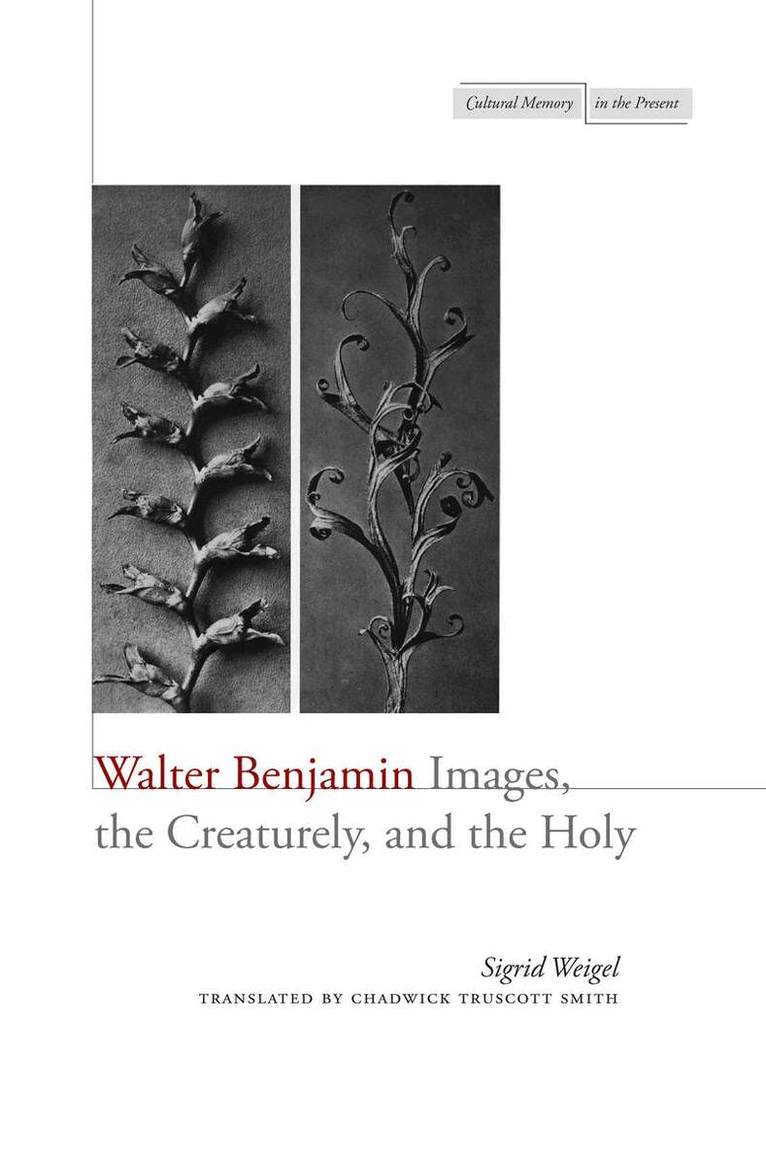
    Arguing that the importance of painting and other visual art for Benjamin's epistemology has yet to be appreciated, Weigel undertakes the first systematic analysis of their significance to his thought. She does so by exploring Benjamin's dialectics of secularization, an approach that allows Benjamin to explore the simultaneous distance from and orientation towards revelation and to deal with the difference and tensions between religious and profane ideas. In the process, Weigel identifies the double reference of 'life' to both nature and to a 'supernatural' sphere as a guiding concept of Benjamin's writings. Sensitive to the notorious difficulty of translating his language, she underscores just how much is lost in translation, particularly with regard to religious connotations. The book thus positions Benjamin with respect to the other European thinkers at the heart of current discussions of sovereignty and martyrdom, of holy and creaturely life. It corrects misreadings, including Agamben's staging of an affinity between Benjamin and Schmitt, and argues for the closeness of Benjamin's work to that of Aby Warburg, with whom Benjamin unsuccessfully attempted an intellectual exchange.

    Produktinformation

    • Utgivningsdatum:2013-01-09
    • Mått:152 x 229 x 22 mm
    • Vikt:476 g
    • Format:Häftad
    • Språk:Engelska
    • Serie:Cultural Memory in the Present
    • Antal sidor:320
    • Förlag:Stanford University Press
    • ISBN:9780804780605
    • Översättare:Chadwick Truscott Smith

    Utforska kategorier

    • Filosofiska discipliner inom Filosofi och religion
    • Litteraturteori inom Skönlitteratur

    Mer om författaren

    Sigrid Weigel is Director of the Center for Literary and Cultural Research in Berlin.

    Recensioner i media

    "Weigel (director, Center for Literary and Cultural Research, Berlin) offers a meticulous exploration of the German writer Walter Benjamin's take on creaturely existence, law, sovereignty, secularization and holiness, language, and art."—M. V. Marder, CHOICE "Weigel's readings, which are steeped in philological detail and hermeneutic insight, brilliantly exhibit the stakes involved in approaching Benjamin's work anew. Her impeccable sense for intertextual trajectories coupled with broad erudition not only results in sophisticated exegeses, but also amply demonstrate the continued if not urgent relevance of Benjamin's interventions for our current intellectual and cultural concerns."—John T. Hamilton, Harvard University