• Fri frakt över 249 kr
  • •
  • Snabba leveranser
  • •
  • Billiga böcker
Kundservice

Du är på sajten för privatpersoner.

Företag, bibliotek eller offentlig verksamhet?

Du handlar på classic.bokus.com, där alla dina funktioner finns intakta.
Till classic.bokus.com
Bokus logotyp. Gå till startsidan.
  • Erbjudanden
  • Nyheter
  • Student
  • Topplistor
  • Barn & ungdom
  • Bokus Play
  • E-böcker
  • Pocketböcker
  • Spel & pussel

10% rabatt på allt med kod: NYSTART10 →

Sidfot

Mina sidor

    Hjälp

    • Kundservice
    • Vanliga frågor och svar
    • Frakt och leverans
    • Retur vid ångerrätt
    • Reklamera vara
    • Betalning
    • Köpvillkor
    • Allmänna villkor
    • Information om webbplatsens tillgänglighet

    Om Bokus

    • Om oss
    • Pressrum
    • För studenter
    • För företag
    • För bibliotek och offentlig verksamhet
    • För leverantörer
    • Hållbarhet

    Populärt

    • Aktuella erbjudanden
    • Presentkort
    • Studentlitteratur
    • Nya böcker
    • Topplistor
    • Signerade böcker
    • Engelska böcker

    Inspiration

    • Boktips
    • BookTok
    • Populära bokserier
    • Barnbokskaraktärer
    • Populära författare
    Logotyp för Bokus
    Följ oss på Facebook (extern länk)Följ oss på Instagram (extern länk)Följ oss på YouTube (extern länk)Följ oss på TikTok (extern länk)
    bokus @ CookiesAnpassa cookiesIntegritetspolicyKöpvillkor
    Till Citymail hemsida (extern länk)Till Budbee hemsida (extern länk)Till Postnord hemsida (extern länk)Till Schenker hemsida (extern länk)Till Early Bird hemsida (extern länk)Till Walleys hemsida (extern länk)
    1. Psykologi och pedagogik
    2. Psykologi
    3. Barnpsykologi och utvecklingspsykologi

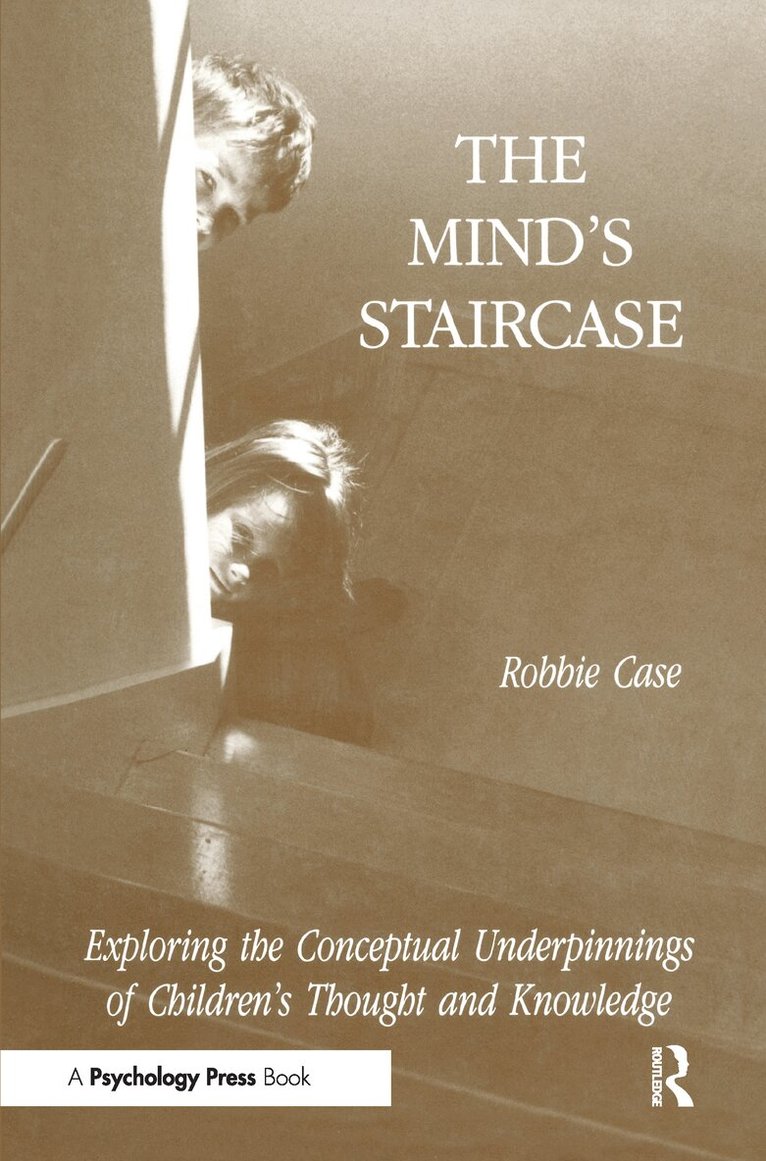
    Mind's Staircase

    Exploring the Conceptual Underpinnings of Children's Thought and Knowledge

    AvRobbie Case

    Inbunden, Engelska, 1992

    716 kr

    Beställningsvara. Skickas inom 10-15 vardagar. Fri frakt över 249 kr.

    Fler format och utgåvor

    E-bok

    668 kr

    E-bok

    710 kr

    Beskrivning

    The shortcomings of Piaget's theory of intellectual development are well-known. Less clear is what sort of theory should be devised to replace it. This volume describes the current "main contenders," including neo-Piagetian, neo-connectionist, neo-innatist and sociocultural models. Its contributors conclude that none of these models are adequate because each one implies a view of the human mind which is either too general, too particular, or too modular. A collaborative program of research -- seven years in the making -- is then described, which gives support to a newly emerging synthesis of these various positions.

    Produktinformation

    • Utgivningsdatum:1992-01-01
    • Mått:152 x 229 x 32 mm
    • Vikt:960 g
    • Format:Inbunden
    • Språk:Engelska
    • Antal sidor:430
    • Förlag:Taylor & Francis Inc
    • ISBN:9780805803242

    Utforska kategorier

    • Barnpsykologi och utvecklingspsykologi inom Psykologi och pedagogik
    • Kognitiv psykologi inom Psykologi och pedagogik

    Recensioner i media

    "Robbie Case and his colleagues have devised a powerful alternative that promises to be much more effective in dealing with understanding in real children....In this book Case and his colleagues provide a powerful beginning for building this kind of exciting new framework."—Contemporary Psychology"...an extensive review of contemporary views of intellectual development....Each research project is detailed in a scholarly manner."—CHOICE"The Mind's Staircase is a remarkable book presenting Case's attempt to take into account a thoroughly alien set of perspectives and results and generate a new model that could integrate and account for results across the entire span of consideration -- in particular, both domain-general and domain-specific aspects of development. Case ends up with a model that seems to have just the right integrations and differentiations to be able to handle both specificity and generality of development."—American Journal of Psychology

    Innehållsförteckning

    • Contents: Part I:Introduction.R. Case, General and Specific Views of the Mind, its Structure, and its Development. R. Case, A Neo-Piagetian Approach to the Issue of Cognitive Generality and Specificity. R. Case, Advantages and Limitations of the Neo-Piagetian Position. Part II:The Role of Central Conceptual Structures in the Development of Children's Logico-Mathematical Thought.Z. Marini, Synchrony and Asynchrony in the Development of Children's Scientific Reasoning. S. Griffin, R. Case, R. Sandieson, Synchrony and Asynchrony in the Acquisition of Children's Everyday Mathematical Knowledge. A.M. Capodilupo, A Neo-Structural Analysis of Children's Response to Instruction in the Sight-Reading of Musical Notation. R. Case, R. Sandieson, Testing for the Presence of a Central Quantative Structure: Use of the Transfer Paradigm. Part III:The Role of Central Conceptual Structures in the Development of Children's Social and Emotional Thought.J. Goldberg-Reitman, Young Girls' Conception of Their Mothers' Role: A Neo- Structural Analysis. M. Bruchkowsky, The Development of Empathic Cognition in Middle and Early Childhood. A. McKeough, A Neo-Structural Analysis of Children's Narrative and its Development. S. Griffin, Young Children's Awareness of Their Inner World: A Neo-Structural Analysis of the Development of Intrapersonal Intelligence. A. McKeough, Testing for the Presence of a Central Social Structure: Use of the Transfer Paradigm. Part IV:The Role of Central Conceptual Structures in the Development of Children's Spatial Thought.S. Dennis, Stage and Structure in the Development of Children's Spatial Representations. D.T. Reid, Horizontal and Vertical Structure: Stages and Substages in Children's Motor Development. Part V:Cross-Domain Synchrony and Asynchrony in the Acquisition of Different Central Conceptual Structures.R. Case, S. Griffin, A. McKeough, Y. Okamoto, Parallels in the Development of Children's Social, Numerical, and Spatial Thought. J. Crammond, Analyzing the Basic Cognitive-Developmental Processes of Children with Specific Types of Learning Disability. M. Porath, Stage and Structure in the Development of Children with Various Types of "Giftedness." T.A. Fiati, Cross-Cultural Variation in the Structure of Children's Thought. Part VI:Conclusion.R. Case, The Mind and its Modules: Toward a Multi-Level View of the Development of Human Intelligence.