• Fri frakt över 249 kr
  • •
  • Snabba leveranser
  • •
  • Billiga böcker
Kundservice

Du är på sajten för privatpersoner.

Företag, bibliotek eller offentlig verksamhet?

Du handlar på classic.bokus.com, där alla dina funktioner finns intakta.
Till classic.bokus.com
Bokus logotyp. Gå till startsidan.
  • Erbjudanden
  • Student
  • Topplistor
  • Barn & ungdom
  • Bokus Play
  • E-böcker
  • Ljudböcker
  • Pocketböcker
  • Spel och pussel

Pocketfynda! Hundratals böcker för 49 kr/st →

Sidfot

Mina sidor

    Hjälp

    • Kundservice
    • Vanliga frågor och svar
    • Frakt och leverans
    • Retur vid ångerrätt
    • Reklamera vara
    • Betalning
    • Köpvillkor
    • Allmänna villkor
    • Information om webbplatsens tillgänglighet

    Om Bokus

    • Om oss
    • Pressrum
    • För studenter
    • För företag
    • För bibliotek och offentlig verksamhet
    • För leverantörer
    • Hållbarhet

    Populärt

    • Aktuella erbjudanden
    • Presentkort
    • Studentlitteratur
    • Nya böcker
    • Topplistor
    • Signerade böcker
    • Engelska böcker

    Inspiration

    • Boktips
    • BookTok
    • Barnbokskaraktärer
    • Populära författare
    Logotyp för Bokus
    Följ oss på Facebook (extern länk)Följ oss på Instagram (extern länk)Följ oss på YouTube (extern länk)Följ oss på TikTok (extern länk)
    bokus @ CookiesAnpassa cookiesIntegritetspolicyKöpvillkor
    Till Citymail hemsida (extern länk)Till Budbee hemsida (extern länk)Till Postnord hemsida (extern länk)Till Schenker hemsida (extern länk)Till Early Bird hemsida (extern länk)Till Walleys hemsida (extern länk)
    1. Psykologi och pedagogik
    2. Pedagogik
    3. Pedagogisk psykologi

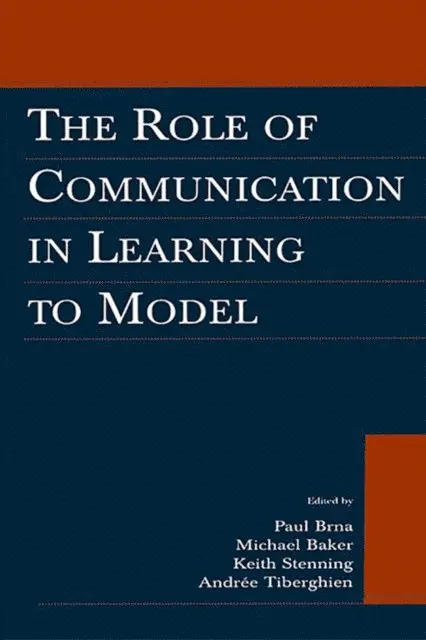
    Role of Communication in Learning To Model

    AvPaul Brna,Michael Baker

    Inbunden, Engelska, 2002

    2 410 kr

    Beställningsvara. Skickas inom 10-15 vardagar. Fri frakt över 249 kr.

    Beskrivning

    In this book, a number of experts from various disciplines take a look at three different strands in learning to model. They examine the activity of modeling from disparate theoretical standpoints, taking into account the individual situation of the individuals involved. The chapters seek to bridge the modeling of communication and the modeling of particular scientific domains. In so doing, they seek to throw light on the educational communication that goes on in conceptual learning. Taken together, the chapters brought together in this volume illustrate the diversity and vivacity of research on a relatively neglected, yet crucially important aspect of education across disciplines: learning to model. A common thread across the research presented is the view that communication and interaction, as fundamental to most educational practices and as a repository of conceptual understanding and a learning mechanism in itself, is intimately linked to elaborating meaningful, coherent, and valid representations of the world. The editors hope this volume will contribute to both the fundamental research in its field and ultimately provide results that can be of practical value in designing new situations for teaching and learning modeling, particularly those involving computers.

    Produktinformation

    • Utgivningsdatum:2002-07-01
    • Mått:152 x 229 x 25 mm
    • Vikt:810 g
    • Format:Inbunden
    • Språk:Engelska
    • Antal sidor:352
    • Förlag:Taylor & Francis Inc
    • ISBN:9780805840643

    Utforska kategorier

    • Pedagogisk psykologi inom Psykologi och pedagogik
    • Tillämpad matematik inom Naturvetenskap och teknik

    Mer om författaren

    Paul Brna, Michael Baker, Keith Stenning, Anfree Tiberghien

    Recensioner i media

    "It is thus refreshing to see an edited collection that deals explicitly with cognitive science and education. This collection, which stems from a conference held in Corsica in 1999, consists of a mix of chapters that apply cognitive science approaches to the understanding of learning in a variety of scientific domains and chapters that present and assess different computer-assisted learning environments."—American Journal of Psychology

    Innehållsförteckning

    • Contents: Preface. Part I: Coordinating Representations.K. Stenning, J.G. Greeno, R. Hall, M. Sommerfeld, M. Wiebe, Coordinating Mathematical With Biological Multiplication: Conceptual Learning as the Development of Heterogeneous Reasoning Systems. J. Vince, A. Tiberghien, Modeling in Teaching and Learning Elementary Physics. J.R. Frederiksen, B.Y. White, Conceptualizing and Constructing Linked Models: Creating Coherence in Complex Knowledge Systems. Part II: Provoking More Effective Modeling.R. Luckin, B. du Boulay, Construction and Abstraction: Contrasting Methods of Supporting Model Building in Learning Science. Z. Fund, Cognitive Support in Computerized Science Problem Solving: Eliciting External Representation and Improving Search Strategies. A. Bouwer, V.B. Machado, B. Bredeweg, Interactive Model-Building Environments. S. Bull, V. Dimitrova, P. Brna, Enhancing Reflective Modeling Through Communicative Interaction in Learning Environments. Part III: Collaboration and Language.P. Brna, M. Burton, Modeling the Modelers: Communicating About Content Through Shared External Representations. K. Lund, Teachers' Explanations of Students' Collaborative Modeling Activities. D. Alamargot, J. Andriessen, The "Power" of Text Production Activity in Collaborative Modeling: Nine Recommendations to Make a Computer-Supported Situation Work. M. Baker, Argumentative Interactions, Discursive Operations, and Learning to Model in Science.