• Fri frakt över 249 kr
  • •
  • Snabba leveranser
  • •
  • Billiga böcker
Kundservice

Du är på sajten för privatpersoner.

Företag, bibliotek eller offentlig verksamhet?

Du handlar på classic.bokus.com, där alla dina funktioner finns intakta.
Till classic.bokus.com
Bokus logotyp. Gå till startsidan.
  • Erbjudanden
  • Nyheter
  • Student
  • Topplistor
  • Barn & ungdom
  • Bokus Play
  • E-böcker
  • Pocketböcker
  • Spel & pussel

10% rabatt på allt med kod: NYSTART10 →

Sidfot

Mina sidor

    Hjälp

    • Kundservice
    • Vanliga frågor och svar
    • Frakt och leverans
    • Retur vid ångerrätt
    • Reklamera vara
    • Betalning
    • Köpvillkor
    • Allmänna villkor
    • Information om webbplatsens tillgänglighet

    Om Bokus

    • Om oss
    • Pressrum
    • För studenter
    • För företag
    • För bibliotek och offentlig verksamhet
    • För leverantörer
    • Hållbarhet

    Populärt

    • Aktuella erbjudanden
    • Presentkort
    • Studentlitteratur
    • Nya böcker
    • Topplistor
    • Signerade böcker
    • Engelska böcker

    Inspiration

    • Boktips
    • BookTok
    • Populära bokserier
    • Barnbokskaraktärer
    • Populära författare
    Logotyp för Bokus
    Följ oss på Facebook (extern länk)Följ oss på Instagram (extern länk)Följ oss på YouTube (extern länk)Följ oss på TikTok (extern länk)
    bokus @ CookiesAnpassa cookiesIntegritetspolicyKöpvillkor
    Till Citymail hemsida (extern länk)Till Budbee hemsida (extern länk)Till Postnord hemsida (extern länk)Till Schenker hemsida (extern länk)Till Early Bird hemsida (extern länk)Till Walleys hemsida (extern länk)
    1. Psykologi och pedagogik
    2. Psykologi

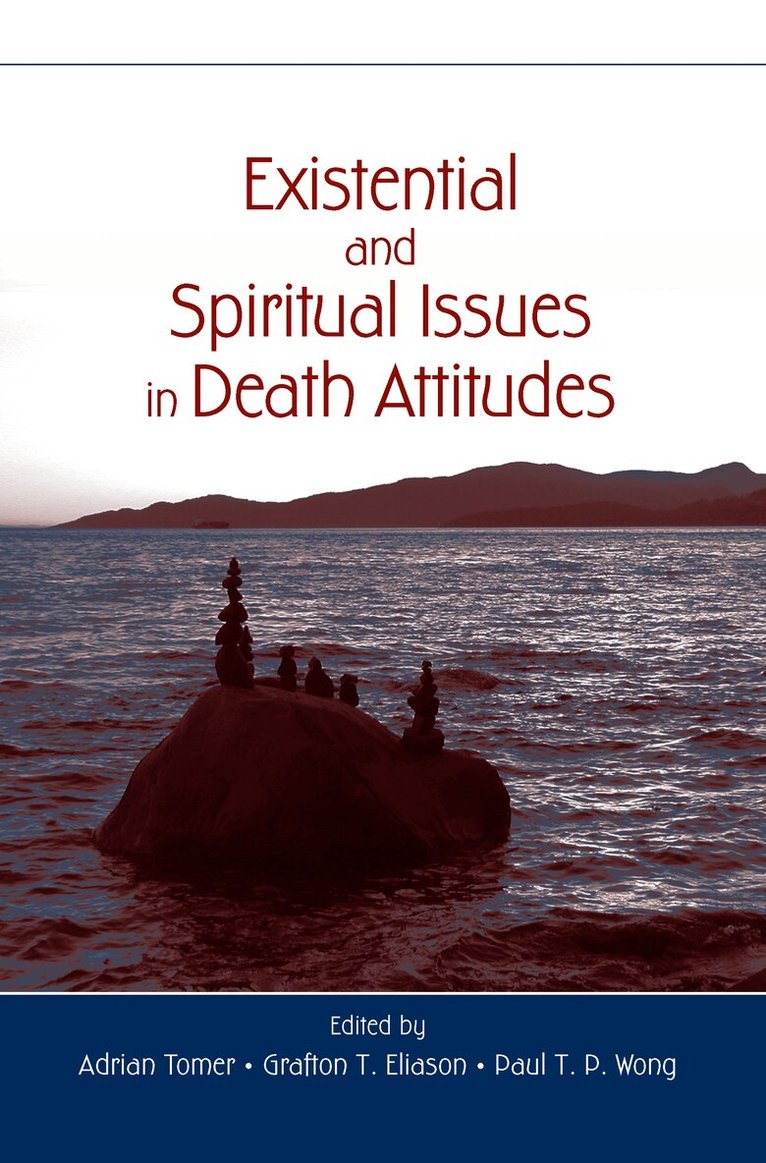
    Existential and Spiritual Issues in Death Attitudes

    AvAdrian Tomer,Grafton T. Eliason

    Inbunden, Engelska, 2007

    2 423 kr

    Beställningsvara. Skickas inom 10-15 vardagar. Fri frakt över 249 kr.

    Beskrivning

    Existential and Spiritual Issues in Death Attitudes provides: an in-depth examination of death attitudes, existentialism, and spirituality and their relationships; a review of the major theoretical models; clinical applications of these models to issues such as infertility, bereavement, anxiety, and suicide; and an introduction to meaning management theory and how it can be applied to grief counseling.In this new volume, death is treated both as a threat to meaning and as an opportunity to create meaning. The first section introduces theory and methodology to connect the latest empirical research on death attitudes to the philosophical/psychological existential and spirituality literature. Part II presents the latest empirical research on subjects such as end-of-life decisions and living with HIV. The final section considers therapeutic applications to issues including suicide, infertility, bereavement, and anxiety. The concluding chapter highlights the book’s common themes and provides questions to encourage further investigation of the most critical topics.Psychologists, counselors, social workers, physicians, nurses, and religious leaders, as well as academics in the fields of psychology, gerontology, philosophy, religion, counseling, social work, sociology, and medicine will value this new resource. Main points summarize important ideas of each chapter, making it an appropriate text in courses on death and dying and/or and spirituality. Its clinical applications will appeal to practicing professionals.

    Produktinformation

    • Utgivningsdatum:2007-07-31
    • Mått:152 x 229 x undefined mm
    • Vikt:1 070 g
    • Format:Inbunden
    • Språk:Engelska
    • Antal sidor:466
    • Förlag:Taylor & Francis Inc
    • ISBN:9780805852714

    Utforska kategorier

    • Psykologi inom Psykologi och pedagogik
    • Religion: allmänt inom Filosofi och religion
    • Sociologi inom Samhälle och politik

    Mer om författaren

    Adrian Tomer, Grafton T. Eliason, Paul T. P. Wong

    Recensioner i media

    “This book is a major and valuable achievement ... [it] provides a ... much needed counter-balance to the dearth of studies on the human dimensions of living with death.”-Ernesto Spinelli, Ph.D. School of Psychotherapy and Counseling, Regents College"For anyone wishing to get a comprehensive overview of research on death attitudes, this volume is an indispensable resource." -Louis Hoffman, Ph.D.Core Faculty; Editor-In-Chief, University of the Rockies Press, University of the Rockies/Colorado School of Professional Psychologyand-Nathaniel Granger, JrAuthor, “A Cultural Critique of Humanistic Psychology: An African-American Male Perspective”

    Innehållsförteckning

    • Preface. Spinelli, Foreword. Neimeyer, Introduction. Part I: Theoretical and Methodological Positions. Tomer & Eliason, Existentialism and Death Attitudes. Mikulincer & Florian, The Complex and Multifaceted Nature of the Fear of Personal Death: The Multidimensional Model of Victor Florian. Wong, Meaning Management Theory and Death Acceptance. Part II: Research. Hart & Goldenberg, A Terror Management Perspective on Spirituality and the Problem of the Body. Cicirelli, End-of-Life Decisions: Research Findings and Implications. Ardelt, Wisdom, Religiosity, Purpose in Life, and Death Attitudes of Aging Adults. Tomer &. Eliason, Regret and Death Attitudes. Dobson & Wong, Women Living With HIV: The Role of Meaning and Spirituality. Ivoncavich & Wong, The Role of Existential & Spiritual Coping in Anticipatory Grief. Nouel, Construction of Meaning in the Face of Mortality. Thorson & Laughlin, The Dark Night of the Soul. Part III: Applications. Orbach, Existentialism and Suicide. Mannarino, Eliason, & Rubin, Regret Therapy: Coping With Death and End of Life Issues. Morrant & Catlett, Separation Theory and Voice Therapy: Philosophical Underpinnings and Applications to Death Anxiety Across the Life Span. Wong, Transformation of Grief Through Meaning: Meaning-Centered Counseling for Bereavement. Gibson, Making Meaning of Infertility and Death Through the Use of Spirituality and Growth-Fostering Relationships in Counseling. Eliason, Lepore & Myer, The Evolution of Grief Counseling. Tomer, Eliason & Wong, Conclusion.