• Fri frakt över 249 kr
  • •
  • Snabba leveranser
  • •
  • Billiga böcker
Kundservice

Du är på sajten för privatpersoner.

Företag, bibliotek eller offentlig verksamhet?

Du handlar på classic.bokus.com, där alla dina funktioner finns intakta.
Till classic.bokus.com
Bokus logotyp. Gå till startsidan.
  • Erbjudanden
  • Nyheter
  • Student
  • Topplistor
  • Barn & ungdom
  • Bokus Play
  • E-böcker
  • Pocketböcker
  • Spel & pussel

10% rabatt på allt med kod NYSTART10 →

Sidfot

Mina sidor

    Hjälp

    • Kundservice
    • Vanliga frågor och svar
    • Frakt och leverans
    • Retur vid ångerrätt
    • Reklamera vara
    • Betalning
    • Köpvillkor
    • Allmänna villkor
    • Information om webbplatsens tillgänglighet

    Om Bokus

    • Om oss
    • Pressrum
    • För studenter
    • För företag
    • För bibliotek och offentlig verksamhet
    • För leverantörer
    • Hållbarhet

    Populärt

    • Aktuella erbjudanden
    • Presentkort
    • Studentlitteratur
    • Nya böcker
    • Topplistor
    • Signerade böcker
    • Engelska böcker

    Inspiration

    • Boktips
    • BookTok
    • Populära bokserier
    • Barnbokskaraktärer
    • Populära författare
    Logotyp för Bokus
    Följ oss på Facebook (extern länk)Följ oss på Instagram (extern länk)Följ oss på YouTube (extern länk)Följ oss på TikTok (extern länk)
    bokus @ CookiesAnpassa cookiesIntegritetspolicyKöpvillkor
    Till Citymail hemsida (extern länk)Till Budbee hemsida (extern länk)Till Postnord hemsida (extern länk)Till Schenker hemsida (extern länk)Till Early Bird hemsida (extern länk)Till Walleys hemsida (extern länk)
    1. Medicin
    2. Medicin: allmänt
    3. Medicinhistoria

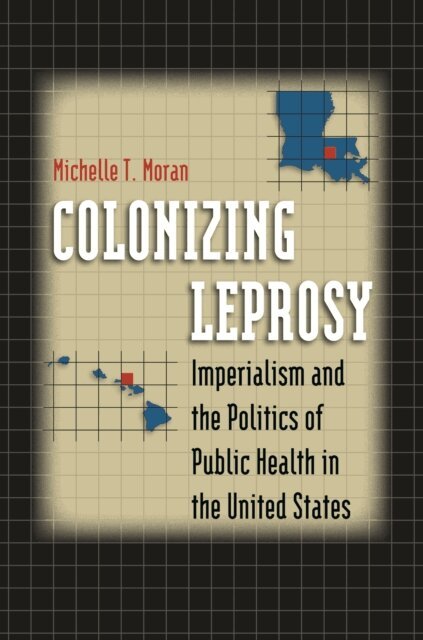
    Colonizing Leprosy

    Imperialism and the Politics of Public Health in the United States

    AvMichelle T. Moran

    Häftad, Engelska, 2007

    Del i serien Studies in Social Medicine

    465 kr

    Beställningsvara. Skickas inom 10-15 vardagar. Fri frakt över 249 kr.

    Fler format och utgåvor

    E-bok

    450 kr

    E-bok

    347 kr

    Beskrivning

    By comparing institutions in Hawai'i and Louisiana designed to incarcerate individuals with a highly stigmatized disease, ""Colonizing Leprosy"" provides an innovative study of the complex relationship between U.S. imperialism and public health policy in the late nineteenth and early twentieth centuries. Focusing on the Kalaupapa Settlement in Moloka'i and the U.S. National Leprosarium in Carville, Michelle Moran shows not only how public health policy emerged as a tool of empire in America's colonies, but also how imperial ideologies and racial attitudes shaped practices at home. Although medical personnel at both sites considered leprosy a colonial disease requiring strict isolation, Moran demonstrates that they adapted regulations developed at one site for use at the other by changing rules to conform to ideas of how ""natives"" and ""Americans"" should be treated. By analyzing administrators' decisions, physicians' treatments, and patients' protests, Moran examines the roles that gender, race, ethnicity, and sexuality played in shaping both public opinion and health policy. ""Colonizing Leprosy"" makes an important contribution to an understanding of how imperial imperatives, public health practices, and patient activism informed debates over the constitution and health of American bodies.


    Produktinformation

    • Utgivningsdatum:2007-09-10
    • Mått:168 x 233 x 18 mm
    • Vikt:456 g
    • Format:Häftad
    • Språk:Engelska
    • Serie:Studies in Social Medicine
    • Antal sidor:296
    • Förlag:The University of North Carolina Press
    • ISBN:9780807858394

    Utforska kategorier

    • Medicinhistoria inom Medicin
    • Diskriminering och rättvisa inom Samhälle och politik
    • Hälso- och sjukvård inom Medicin

    Mer om författaren

    MICHELLE T. MORAN teaches in the Core Humanities Program and the Department of History at the University of Nevada, Reno.

    Recensioner i media

    "A scholarly tour de force, well written and beautifully documented, Colonizing Leprosy is a superb work. Bravo!" - Howard Markel, director, Center for the History of Medicine, The University of Michigan"