• Fri frakt över 249 kr
  • •
  • Snabba leveranser
  • •
  • Billiga böcker
Kundservice

Du är på sajten för privatpersoner.

Företag, bibliotek eller offentlig verksamhet?

Du handlar på classic.bokus.com, där alla dina funktioner finns intakta.
Till classic.bokus.com
Bokus logotyp. Gå till startsidan.
  • Erbjudanden
  • Student
  • Topplistor
  • Barn & ungdom
  • Bokus Play
  • E-böcker
  • Ljudböcker
  • Pocketböcker
  • Spel och pussel

Pocketfynda! Hundratals böcker för 49 kr/st →

Sidfot

Mina sidor

    Hjälp

    • Kundservice
    • Vanliga frågor och svar
    • Frakt och leverans
    • Retur vid ångerrätt
    • Reklamera vara
    • Betalning
    • Köpvillkor
    • Allmänna villkor
    • Information om webbplatsens tillgänglighet

    Om Bokus

    • Om oss
    • Pressrum
    • För studenter
    • För företag
    • För bibliotek och offentlig verksamhet
    • För leverantörer
    • Hållbarhet

    Populärt

    • Aktuella erbjudanden
    • Presentkort
    • Studentlitteratur
    • Nya böcker
    • Topplistor
    • Signerade böcker
    • Engelska böcker

    Inspiration

    • Boktips
    • BookTok
    • Barnbokskaraktärer
    • Populära författare
    Logotyp för Bokus
    Följ oss på Facebook (extern länk)Följ oss på Instagram (extern länk)Följ oss på YouTube (extern länk)Följ oss på TikTok (extern länk)
    bokus @ CookiesAnpassa cookiesIntegritetspolicyKöpvillkor
    Till Citymail hemsida (extern länk)Till Budbee hemsida (extern länk)Till Postnord hemsida (extern länk)Till Schenker hemsida (extern länk)Till Early Bird hemsida (extern länk)Till Walleys hemsida (extern länk)
    1. Samhälle och politik
    2. Samhälle och kultur
    3. Kultur och medier
    4. Kulturvetenskap

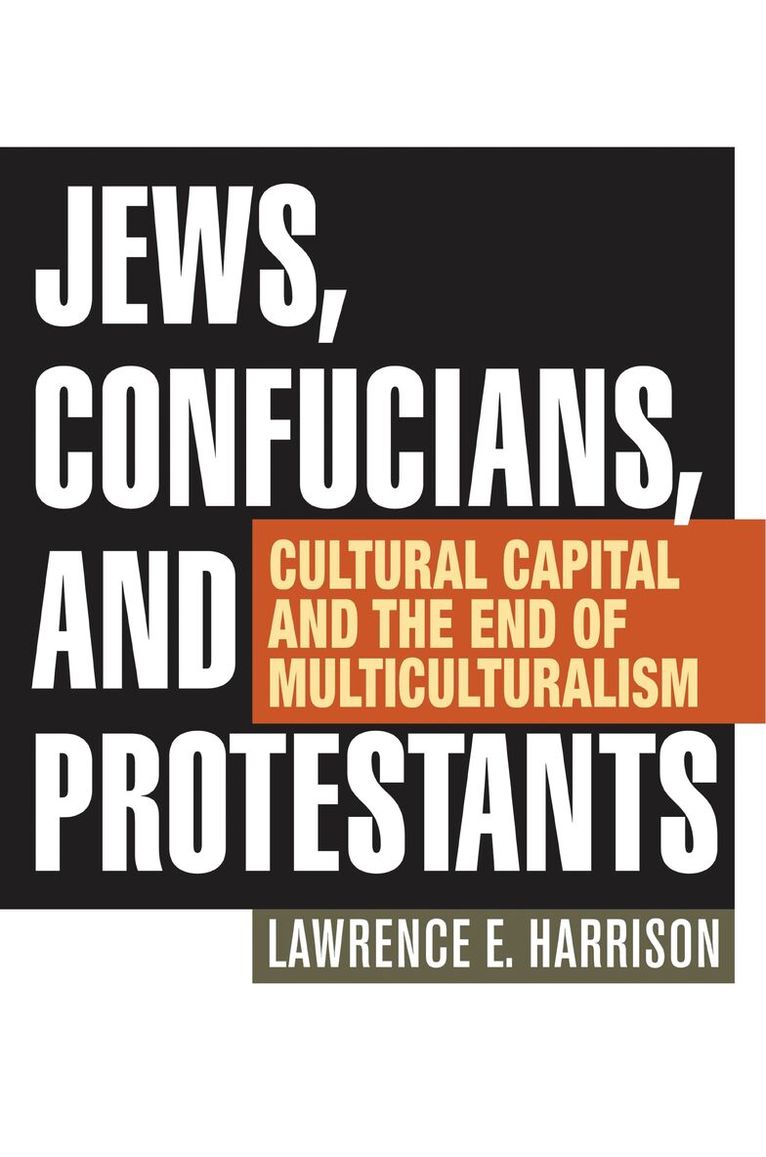
    Jews, Confucians, and Protestants

    Cultural Capital and the End of Multiculturalism

    AvLawrence E. Harrison

    Häftad, Engelska, 2017

    366 kr

    Beställningsvara. Skickas inom 10-15 vardagar. Fri frakt över 249 kr.

    Fler format och utgåvor

    Inbunden

    767 kr

    E-bok

    404 kr

    Beskrivning

    Multiculturalism—the belief that no culture is better or worse than any other; it is merely different—has come to dominate Western intellectual thought and to serve as a guide to domestic and foreign policy and development aid. But what if multiculturalism itself is flawed? What if some cultures are more prone to progress than others and more successful at creating the cultural capital that encourages democratic governance, social justice for all, and the elimination of poverty? In Jews, Confucians, and Protestants: Cultural Capital and the End of Multiculturalism, Lawrence E. Harrison takes the politically incorrect stand that all cultures are not created equal. Analyzing the performance of 117 countries, grouped by predominant religion, Harrison argues for the superiority of those cultures that emphasize Jewish, Confucian, and Protestant values. A concluding chapter outlines ways in which cultural change may substantially transform societies within a generation.

    Produktinformation

    • Utgivningsdatum:2017-10-24
    • Mått:151 x 231 x 14 mm
    • Vikt:322 g
    • Format:Häftad
    • Språk:Engelska
    • Antal sidor:232
    • Förlag:Bloomsbury Publishing Plc
    • ISBN:9780810896291

    Utforska kategorier

    • Kulturvetenskap inom Samhälle och politik
    • Etnicitet inom Samhälle och politik

    Mer om författaren

    Lawrence E. Harrison is the author of Undervelopment is a State of Mind (Madison Books), The Central Liberal Truth: How Politics Can Change a Culture and Save It from Itself (Oxford), and coeditor, with Samuel P. Huntington of Culture Matters—How Values Shape Human Progress (Perseus).

    Recensioner i media

    Sailing into stiff headwinds, Harrison challenges the belief—foundational to multiculturalism—that all cultures are equally valuable. Some cultures, he argues, simply are better than others at fostering economic growth, democratic governance, and social justice. It is, he asserts, a culture of education, frugality, and intracommunity trust that makes Jews financial titans. Likewise, a culture of learning and personal moderation empowers Confucian entrepreneurs in Japan, Taiwan, and South Korea. And it is a culture of hard work coupled to personal responsibility that elevates Protestants to top positions in global business. Other cultures—tradition-bound Catholicism, fatalistic Islam, and irrational Voodoo—come in for censure as obstacles to progress. Likewise labeled as barriers to advancement are contemporary cultural patterns among African Americans and Latino immigrants. Clearly separating himself from conservatives, Harrison outlines a progressive agenda based on deliberate cultural engineering. Still, in trying to test this agenda, Harrison’s Cultural Change Institute has encountered considerable resistance. That resistance persists in sharp debates sure to bring readers, both partisans and critics, to this book.

    Innehållsförteckning

    • ContentsAcknowledgmentsIntroductionChapter 1: Cultural Capital DefinedChapter 2: Why Jews, Confucians, and Protestants?Chapter 3: JewsChapter 4: ConfuciansChapter 5: ProtestantsChapter 6: Other High Achievers I: Basques and SikhsChapter 7: Other High Achievers II: Mormons and IsmailisChapter 8: Catholic Latin AmericaChapter 9: Latino Immigration into the United StatesChapter 10: African AmericansChapter 11: What to Do