• Fri frakt över 249 kr
  • •
  • Snabba leveranser
  • •
  • Billiga böcker
Kundservice

Du är på sajten för privatpersoner.

Företag, bibliotek eller offentlig verksamhet?

Du handlar på classic.bokus.com, där alla dina funktioner finns intakta.
Till classic.bokus.com
Bokus logotyp. Gå till startsidan.
  • Erbjudanden
  • Nyheter
  • Student
  • Topplistor
  • Barn & ungdom
  • Bokus Play
  • E-böcker
  • Pocketböcker
  • Spel & pussel

10% rabatt på allt med kod: NYSTART10 →

Sidfot

Mina sidor

    Hjälp

    • Kundservice
    • Vanliga frågor och svar
    • Frakt och leverans
    • Retur vid ångerrätt
    • Reklamera vara
    • Betalning
    • Köpvillkor
    • Allmänna villkor
    • Information om webbplatsens tillgänglighet

    Om Bokus

    • Om oss
    • Pressrum
    • För studenter
    • För företag
    • För bibliotek och offentlig verksamhet
    • För leverantörer
    • Hållbarhet

    Populärt

    • Aktuella erbjudanden
    • Presentkort
    • Studentlitteratur
    • Nya böcker
    • Topplistor
    • Signerade böcker
    • Engelska böcker

    Inspiration

    • Boktips
    • BookTok
    • Populära bokserier
    • Barnbokskaraktärer
    • Populära författare
    Logotyp för Bokus
    Följ oss på Facebook (extern länk)Följ oss på Instagram (extern länk)Följ oss på YouTube (extern länk)Följ oss på TikTok (extern länk)
    bokus @ CookiesAnpassa cookiesIntegritetspolicyKöpvillkor
    Till Citymail hemsida (extern länk)Till Budbee hemsida (extern länk)Till Postnord hemsida (extern länk)Till Schenker hemsida (extern länk)Till Early Bird hemsida (extern länk)Till Walleys hemsida (extern länk)
    1. Samhälle och politik
    2. Samhälle och kultur
    3. Kultur och medier
    4. Referensverk och tvärvetenskap

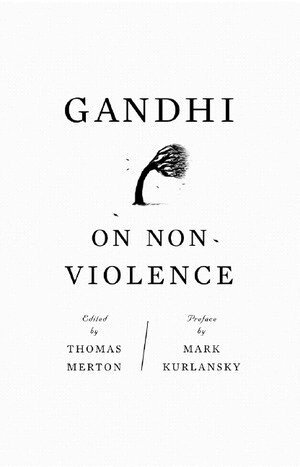
    Gandhi on Non-Violence

    AvMahatma Gandhi,Thomas Merton

    Häftad, Engelska, 2007

    142 kr

    Beställningsvara. Skickas inom 5-8 vardagar. Fri frakt över 249 kr.

    Beskrivning

    "One has to speak out and stand up for one's convictions. Inaction at a time of conflagration is inexcusable."—Mahatma GandhiThe basic principles of Gandhi's philosophy of non-violence (Ahimsa) and non-violent action (Satyagraha) were chosen by Thomas Merton for this volume in 1965. In his challenging Introduction, "Gandhi and the One-Eyed Giant," Merton emphasizes the importance of action rather than mere pacifism as a central component of non-violence, and illustrates how the foundations of Gandhi's universal truths are linked to traditional Hindu Dharma, the Greek philosophers, and the teachings of Christ and Thomas Aquinas.Educated as a Westerner in South Africa, it was Gandhi's desire to set aside the caste system as well as his political struggles in India which led him to discover the dynamic power of non-cooperation. But, non-violence for Gandhi "was not simply a political tactic," as Merton observes: "the spirit of non-violence sprang from an inner realization of spiritual unity in himself." Gandhi's politics of spiritual integrity have influenced generations of people around the world, as well as civil rights leaders from Martin Luther King, Jr. and Steve Biko to Václav Havel and Aung San Suu Kyi.Mark Kurlansky has written an insightful preface for this edition that touches upon the history of non-violence and reflects the core of Gandhi's spiritual and ethical doctrine in the context of current global conflicts.

    Produktinformation

    • Utgivningsdatum:2007-11-17
    • Mått:132 x 203 x 10 mm
    • Vikt:145 g
    • Format:Häftad
    • Språk:Engelska
    • Antal sidor:144
    • Förlag:New Directions Publishing Corporation
    • ISBN:9780811216869

    Utforska kategorier

    • Referensverk och tvärvetenskap inom Samhälle och politik
    • Politisk aktivism inom Samhälle och politik

    Mer om författaren

    Educated as a Westerner in South Africa, Mahatma Gandhi's desire to set aside the caste system as well as his political struggles in India, led him to discover the dynamic power of non-cooperation. Thomas Merton (1915-1968) entered the Cistercian Abbey of Gethsemani in Kentucky, following his conversion to Catholicism and was ordained in 1949. During the 1960s, he was increasingly drawn into a dialogue between Eastern and Western religions and was actively engaged with domestic issues of war and racism.