• Fri frakt över 249 kr
  • •
  • Snabba leveranser
  • •
  • Billiga böcker
Kundservice

Du är på sajten för privatpersoner.

Företag, bibliotek eller offentlig verksamhet?

Du handlar på classic.bokus.com, där alla dina funktioner finns intakta.
Till classic.bokus.com
Bokus logotyp. Gå till startsidan.
  • Erbjudanden
  • Nyheter
  • Student
  • Topplistor
  • Barn & ungdom
  • Bokus Play
  • E-böcker
  • Pocketböcker
  • Spel & pussel

10% rabatt på allt med kod NYSTART10 →

Sidfot

Mina sidor

    Hjälp

    • Kundservice
    • Vanliga frågor och svar
    • Frakt och leverans
    • Retur vid ångerrätt
    • Reklamera vara
    • Betalning
    • Köpvillkor
    • Allmänna villkor
    • Information om webbplatsens tillgänglighet

    Om Bokus

    • Om oss
    • Pressrum
    • För studenter
    • För företag
    • För bibliotek och offentlig verksamhet
    • För leverantörer
    • Hållbarhet

    Populärt

    • Aktuella erbjudanden
    • Presentkort
    • Studentlitteratur
    • Nya böcker
    • Topplistor
    • Signerade böcker
    • Engelska böcker

    Inspiration

    • Boktips
    • BookTok
    • Populära bokserier
    • Barnbokskaraktärer
    • Populära författare
    Logotyp för Bokus
    Följ oss på Facebook (extern länk)Följ oss på Instagram (extern länk)Följ oss på YouTube (extern länk)Följ oss på TikTok (extern länk)
    bokus @ CookiesAnpassa cookiesIntegritetspolicyKöpvillkor
    Till Citymail hemsida (extern länk)Till Budbee hemsida (extern länk)Till Postnord hemsida (extern länk)Till Schenker hemsida (extern länk)Till Early Bird hemsida (extern länk)Till Walleys hemsida (extern länk)
    1. Samhälle och politik
    2. Politik och statsskick
    3. Politiskt förtryck

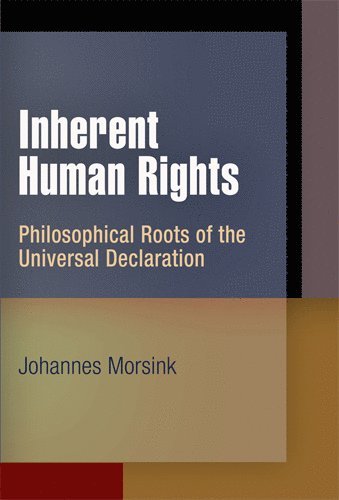
    Inherent Human Rights

    Philosophical Roots of the Universal Declaration

    AvJohannes Morsink

    E-bok
    PDF, Engelska, 2012

    Del i serien Pennsylvania Studies in Human Rights

    1 088 kr

    Läs direkt i Bokus Reader – eller ladda ned till din enhet (PDF kräver ofta zoom och scroll på små skärmar).

    Fler format och utgåvor

    Inbunden

    773 kr

    Beskrivning

    Confronting the evils of World War II and building on the legacy of the 1776 Declaration of Independence and the 1789 French Declaration of the Rights of Man and of the Citizen, a group of world citizens including Eleanor Roosevelt drafted the Universal Declaration of Human Rights. Adopted by the United Nations in 1948, the Universal Declaration has been translated into 300 languages and has become the basis for most other international human rights texts and norms. In spite of the global success of this document, however, a philosophical disconnect exists between what major theorists have said a human right is and the foundational text of the very movement they advocate.In Inherent Human Rights: Philosophical Roots of the Universal Declaration, philosopher and political theorist Johannes Morsink offers an alternative to contemporary assumptions. A major historian of the Universal Declaration, Morsink traces the philosophical roots of the Declaration back to the Enlightenment and to a shared revulsion at the horrors of the Holocaust. He defends the Declaration's perspective that all people have human rights simply by virtue of being born into the human family and that human beings have these rights regardless of any government or court action (or inaction). Like mathematical principles, human rights are truly universal, not the products of a particular culture, economic scheme, or political system. Our understanding of their existence can be blocked only by madness and false ideologies. Morsink argues that the drafters of the Declaration shared this metaphysical view of human rights. By denying the inherence of human rights and their metaphysical nature, and removing the concepts of the Declaration from their historical and philosophical context, contemporary constructivist scholars and pragmatic activists create an unnecessary and potentially dangerous political fog. The book carefully dissects various human rights models and ends with a defense of the Declaration's cosmopolitan vision against charges of unrealistic utopianism and Western ethnocentrism.Inherent Human Rights takes exception to the reigning view that the Golden Rule is the best defense of human rights. Instead, it calls for us to "follow the lead of the Declaration's drafters and liberate the idea of human rights from the realm of the political and the juridical, which is where contemporary theorists have imprisoned it."
    Produktinformation

    • Utgivningsdatum:2012-02-28
    • Språk:Engelska
    • Antal sidor:328
    • Filformat:PDF
    • Kopieringsskydd:LCP
    • ISBN:9780812202854
    • Förlag:University of Pennsylvania Press
    • Serie:Pennsylvania Studies in Human Rights

    Utforska kategorier

    • Politiskt förtryck inom Samhälle och politik
    • Internationell rätt inom Juridik

    Mer om författaren

    Johannes Morsink is Professor of Political Philosophy at Drew University in Madison, New Jersey, and the author of The Universal Declaration of Human Rights: Origins, Drafting, and Intent, also available from University of Pennsylvania Press.

    Recensioner i media

    "[Inherent Human Rights] continues the project of putting political philosophy to work in the service of human rights... Like all of Morsink's work, this book is thoughtful and carefully researched; his ability to develop difficult ideas both broadly and deeply is the book's most obvious virtue."-Perspectives on Politics

    Innehållsförteckning

    • Introduction. The Need to Think Beyond the PoliticalChapter 1. The Metaphysics of Inherence-Enlightenment Precedents-From Natural to Human Rights-Duties and the Fallacy of ImplementationChapter 2. Obeying the Conscience of Humanity-Rights from the Wrongs of the Holocaust-The Doctrine of Manifest Illegality-The Framework of Moral IntuitionismChapter 3. The Shortcomings of the Golden Rule-Micro: Alan Gewirth's Rationalization-Macro: John Rawls's EthnocentrismChapter 4. Human Rights Cosmopolitanism-The Moral World Picture of the Declaration-The Capabilities Approach to Human Rights-Fitting in Patriotism and MulticulturalismChapter 5. The Charge of Unrealistic Utopianism-New Rights Call for a New World Order-The Construction of Human Rights Thresholds-Social and Economic Covenant ExamplesChapter 6. Human Rights and Democratic Participation-Habermas on Popular Sovereignty and Human Rights-The Right to Participation in Substantive DemocraciesNotesIndexAcknowledgments