• Fri frakt över 249 kr
  • •
  • Snabba leveranser
  • •
  • Billiga böcker
Kundservice

Du är på sajten för privatpersoner.

Företag, bibliotek eller offentlig verksamhet?

Du handlar på classic.bokus.com, där alla dina funktioner finns intakta.
Till classic.bokus.com
Bokus logotyp. Gå till startsidan.
  • Erbjudanden
  • Nyheter
  • Student
  • Topplistor
  • Barn & ungdom
  • Bokus Play
  • E-böcker
  • Pocketböcker
  • Spel & pussel

10% rabatt på allt med kod: NYSTART10 →

Sidfot

Mina sidor

    Hjälp

    • Kundservice
    • Vanliga frågor och svar
    • Frakt och leverans
    • Retur vid ångerrätt
    • Reklamera vara
    • Betalning
    • Köpvillkor
    • Allmänna villkor
    • Information om webbplatsens tillgänglighet

    Om Bokus

    • Om oss
    • Pressrum
    • För studenter
    • För företag
    • För bibliotek och offentlig verksamhet
    • För leverantörer
    • Hållbarhet

    Populärt

    • Aktuella erbjudanden
    • Presentkort
    • Studentlitteratur
    • Nya böcker
    • Topplistor
    • Signerade böcker
    • Engelska böcker

    Inspiration

    • Boktips
    • BookTok
    • Populära bokserier
    • Barnbokskaraktärer
    • Populära författare
    Logotyp för Bokus
    Följ oss på Facebook (extern länk)Följ oss på Instagram (extern länk)Följ oss på YouTube (extern länk)Följ oss på TikTok (extern länk)
    bokus @ CookiesAnpassa cookiesIntegritetspolicyKöpvillkor
    Till Citymail hemsida (extern länk)Till Budbee hemsida (extern länk)Till Postnord hemsida (extern länk)Till Schenker hemsida (extern länk)Till Early Bird hemsida (extern länk)Till Walleys hemsida (extern länk)
    1. Samhälle och politik
    2. Politik och statsskick
    3. Politiskt förtryck

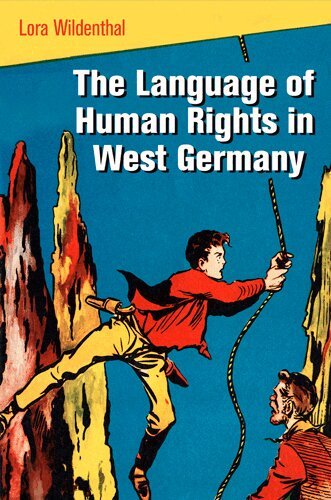
    Language of Human Rights in West Germany

    AvLora Wildenthal

    E-bok
    PDF, Engelska, 2012

    Del i serien Pennsylvania Studies in Human Rights

    1 420 kr

    Läs direkt i Bokus Reader – eller ladda ned till din enhet (PDF kräver ofta zoom och scroll på små skärmar).

    Beskrivning

    Human rights language is abstract and ahistorical because advocates intend human rights to be valid at all times and places. Yet the abstract universality of human rights discourse is a problem for historians, who seek to understand language in a particular time and place. Lora Wildenthal explores the tension between the universal and the historically specific by examining the language of human rights in West Germany between World War II and unification. In the aftermath of Nazism, genocide, and Allied occupation, and amid Cold War and national division, West Germans were especially obliged to confront issues of rights and international law.The Language of Human Rights in West Germany traces the four most important purposes for which West Germans invoked human rights after World War II. Some human rights organizations and advocates sought to critically examine the Nazi past as a form of basic rights education. Others developed arguments for the rights of Germans-especially expellees-who were victims of the Allies. At the same time, human rights were construed in opposition to communism, especially with regard to East Germany. In the 1970s, several movements emerged to mobilize human rights on behalf of foreigners, both far away and inside West Germany. Wildenthal demonstrates that the language of human rights advocates, no matter how international its focus, can be understood more fully when situated in its domestic political context.

    Produktinformation

    • Utgivningsdatum:2012-10-15
    • Språk:Engelska
    • Antal sidor:288
    • Filformat:PDF
    • Kopieringsskydd:LCP
    • ISBN:9780812207293
    • Förlag:University of Pennsylvania Press
    • Serie:Pennsylvania Studies in Human Rights

    Utforska kategorier

    • Politiskt förtryck inom Samhälle och politik

    Mer om författaren

    Lora Wildenthal is Associate Professor and Chair of the Department of History at Rice University, and author of German Women for Empire, 1884-1945.

    Recensioner i media

    "In this excellent, precise, and sovereign book, Lora Wildenthal brings new and welcome nuances to the existing historiography and also breaks new ground... An important study that is likely to remain a central reference point for future work not only on the politics of human rights in post-1945 Germany but also on histories of pluralism and civility."-American Historical Review "This is a special book: well-grounded, thoughtful, polished, and responsible. Lora Wildenthal has written an important work that goes far beyond the usual praise and will be greatly appreciated as a landmark study about both postwar German history and about human rights history."-Samuel Moyn, Columbia University "The crimes of Nazi Germany were one of the major reasons for the spread of the international movement for human rights after World War II, but until now no one has told the story of the movement in Germany itself. Lora Wildenthal does so with erudition and grace, and she shows us how important it is to situate the human rights movement in specific contexts of time and place. Along the way, she brings to light dedicated activists and fledgling organizations that deserve to be restored to history. This is a valuable read for anyone interested in human rights and international justice."-Elizabeth Heineman, Iowa University

    Innehållsförteckning

    • IntroductionChapter 1. Human Rights Activism in Occupied and Early West Germany: The Case of the German League for Human RightsChapter 2. Rudolf Laun and "German Human Rights" in Occupied and Early West GermanyChapter 3. Human Rights Activism as Domestic Politics: The International League for Human Rights, West German Amnesty, and the Humanist Union Confront Adenauer's West GermanyChapter 4. "German Human Rights" Enter the Mainstream: The Case of Otto KimminichChapter 5. Human Rights for Women across Cultural Lines: Terre des FemmesConclusionA Note on SourcesNotesIndexAcknowledgments