• Fri frakt över 249 kr
  • •
  • Snabba leveranser
  • •
  • Billiga böcker
Kundservice

Du är på sajten för privatpersoner.

Företag, bibliotek eller offentlig verksamhet?

Du handlar på classic.bokus.com, där alla dina funktioner finns intakta.
Till classic.bokus.com
Bokus logotyp. Gå till startsidan.
  • Erbjudanden
  • Nyheter
  • Student
  • Topplistor
  • Barn & ungdom
  • Bokus Play
  • E-böcker
  • Pocketböcker
  • Spel & pussel

10% rabatt på allt med kod NYSTART10 →

Sidfot

Mina sidor

    Hjälp

    • Kundservice
    • Vanliga frågor och svar
    • Frakt och leverans
    • Retur vid ångerrätt
    • Reklamera vara
    • Betalning
    • Köpvillkor
    • Allmänna villkor
    • Information om webbplatsens tillgänglighet

    Om Bokus

    • Om oss
    • Pressrum
    • För studenter
    • För företag
    • För bibliotek och offentlig verksamhet
    • För leverantörer
    • Hållbarhet

    Populärt

    • Aktuella erbjudanden
    • Presentkort
    • Studentlitteratur
    • Nya böcker
    • Topplistor
    • Signerade böcker
    • Engelska böcker

    Inspiration

    • Boktips
    • BookTok
    • Populära bokserier
    • Barnbokskaraktärer
    • Populära författare
    Logotyp för Bokus
    Följ oss på Facebook (extern länk)Följ oss på Instagram (extern länk)Följ oss på YouTube (extern länk)Följ oss på TikTok (extern länk)
    bokus @ CookiesAnpassa cookiesIntegritetspolicyKöpvillkor
    Till Citymail hemsida (extern länk)Till Budbee hemsida (extern länk)Till Postnord hemsida (extern länk)Till Schenker hemsida (extern länk)Till Early Bird hemsida (extern länk)Till Walleys hemsida (extern länk)
    1. Samhälle och politik
    2. Sociologi och antropologi
    3. Antropologi

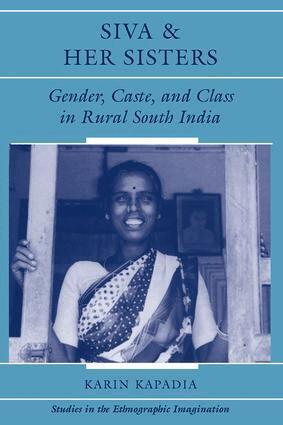
    Siva And Her Sisters

    Gender, Caste, And Class In Rural South India

    AvKarin Kapadia

    Häftad, Engelska, 1998

    541 kr

    Beställningsvara. Skickas inom 10-15 vardagar. Fri frakt över 249 kr.

    Fler format och utgåvor

    Inbunden

    2 058 kr

    E-bok

    637 kr

    E-bok

    639 kr

    Beskrivning

    This book examines two subordinated groups, untouchables" and women,in a village in Tamilnadu, South India. The lives and work of untouchable" women in this village provide a unique analytical focus that clarifies the ways in which three axes of identity,gender, caste, and class,are constructed in South India. Karin Kapadia argues that subordinated groups do not internalize the values of their masters but instead reject them in innumerable subtle ways.Kapadia contends that elites who hold economic power do not dominate the symbolic means of production. Looking at the everyday practices, rituals, and cultural discourses of Tamil low castes, she shows how their cultural values repudiate the norms of Brahminical elites. She also demonstrates that caste and class processes cannot be fully addressed without considering their interrelationship with gender.

    Produktinformation

    • Utgivningsdatum:1998-04-17
    • Mått:227 x 153 x 18 mm
    • Vikt:396 g
    • Format:Häftad
    • Språk:Engelska
    • Antal sidor:296
    • Förlag:Taylor & Francis Inc
    • ISBN:9780813334912

    Utforska kategorier

    • Antropologi inom Samhälle och politik
    • Genusvetenskap inom Samhälle och politik
    • Sociala grupper och identitet inom Samhälle och politik

    Mer om författaren

    Karin Kapadia is on the faculty of the Department of Anthropology at the London School of Economics and Political Science.

    Innehållsförteckning

    • List of Tables and Illustrations, Preface and Acknowledgments, Key to Kinship Notation, Part One: The Politics of Cultural Contestation, Introduction: The “Untouchable” Rejection of Hegemony and False Consciousness, Forms of Resistance, The Relevance of a Critical Feminist Theory, The Politics of Culture, The Socioeconomic Background, Classes Within Castes, “Kinship Burns!” Kinship Discourses and Gender, The Categories of Tamil Kinship, The Mother’s Brother, Affinal Kin and Patrilineal Kin, The Concept of the Blood-Bond, Mother’s Brother, Astrology, and Divination at Childbirth, The Blood-Bond and Non-Brahmin “Matrilateralism,” The Exchange of Blood, Implications of the Blood-Bond, What Kinship Connotes, “Kinship Burns!” Marrying Money: Changing Preference and Practice in Tamil Marriage, Non-Brahmin and Brahmin Marriage Preferences and Their Implications, The Traditional Contexts of Non-Brahmin and Brahmin Marriage, The Advantages to Non-Brahmin Women in Close- Kin Marriage, The Bilaterality of Traditional Non-Brahmin Kinship, Changing Contexts: From Close-Kin Marriage to Non-Kin Marriage, Marriage Strategies Today: Statistics on Marriage Practices in Aruloor and Their Implications, Conclusion, Blood Across the Stars: Astrology and the Construction of Gender, Astrology and Cultural Contestation, The Menstruation-Horoscope, The Portents of a Horoscope, Horoscopes and the Patterns of Male Control, Astrological Problems in a Horoscope, Naga Dosham, Dosham and Karmam, Conclusion: Astrology and the Construction of Gender, The Vulnerability of Power: Puberty Rituals, Pallar Puberty Rituals, Muthurajah Puberty Rituals, Christian Paraiyar Puberty Rituals, Vellan Chettiar Puberty Rituals, Telugu Brahmin Puberty Rituals, The Effect of Menstrual-Horoscopes on Family and Kin, Conclusion: Inauspiciousness, Gender, and Kinship, Dancing the Goddess: Possession, Caste, and Gender, Types of Possession, Temporary or Spontaneous Possession, Institutionalized Possession, Possession During the Process of “Wearing Alaku,” Possession and Caste, Possession and Belief, Possession and Gender, Part Two: The Politics of Everyday Life, “Beware, It Sticks!” Discourses of Gender and Caste, Brahmin Discourse: The Sin of Menstruation, Lower-Caste Discourses of Gender and Sexuality, Discourses Regarding “Untouchable” Impurity, Pallar Rejections of Ritual Impurity, Consensual Versus Competing Discourses, Part Three: Gender and Production Politics, Pauperizing the Rural Poor: Landlessness in Aruloor, Kinds of Land Tenure in Aruloor, Land Reform Legislation, The Implications of the Land Reforms and of Caste for Landlessness, Every Blade of Green: Landless Women Laborers, Production, and Reproduction, Recruitment to and Organization of Domestic Labor, Differential Wage-Contributions to the Household, Pallar Men and Technological Change, The Sexual Division of Labor, Payment for Agricultural Work, The Profits of Production and Ideologies of Reproduction, Discipline and Control: Labor Contracts and Rural Female Labor, Changes in the Mode of Employment, Recruitment and Organization of Female Waged Labor, Recruitment to Daily Wages Work, Recruitment to Piece- Rate Contract Work, The Constitution of Contract Work-Groups, The Struggle for Work, Workers’ Awareness of Collective Interests, Mutuality and Competition: Women Landless Laborers and Wage Rates, Rudra’s Model, The Socioeconomic Context, The Process of Wage Negotiations, Segmentation of the Labor Market, Conclusion, In God’s Eyes: Gender, Caste, and Class in Aruloor, References. About the Book and Author, Index