• Fri frakt över 249 kr
  • •
  • Snabba leveranser
  • •
  • Billiga böcker
Kundservice

Du är på sajten för privatpersoner.

Företag, bibliotek eller offentlig verksamhet?

Du handlar på classic.bokus.com, där alla dina funktioner finns intakta.
Till classic.bokus.com
Bokus logotyp. Gå till startsidan.
  • Erbjudanden
  • Nyheter
  • Student
  • Topplistor
  • Barn & ungdom
  • Bokus Play
  • E-böcker
  • Pocketböcker
  • Spel & pussel

10% rabatt på allt med kod NYSTART10 →

Sidfot

Mina sidor

    Hjälp

    • Kundservice
    • Vanliga frågor och svar
    • Frakt och leverans
    • Retur vid ångerrätt
    • Reklamera vara
    • Betalning
    • Köpvillkor
    • Allmänna villkor
    • Information om webbplatsens tillgänglighet

    Om Bokus

    • Om oss
    • Pressrum
    • För studenter
    • För företag
    • För bibliotek och offentlig verksamhet
    • För leverantörer
    • Hållbarhet

    Populärt

    • Aktuella erbjudanden
    • Presentkort
    • Studentlitteratur
    • Nya böcker
    • Topplistor
    • Signerade böcker
    • Engelska böcker

    Inspiration

    • Boktips
    • BookTok
    • Populära bokserier
    • Barnbokskaraktärer
    • Populära författare
    Logotyp för Bokus
    Följ oss på Facebook (extern länk)Följ oss på Instagram (extern länk)Följ oss på YouTube (extern länk)Följ oss på TikTok (extern länk)
    bokus @ CookiesAnpassa cookiesIntegritetspolicyKöpvillkor
    Till Citymail hemsida (extern länk)Till Budbee hemsida (extern länk)Till Postnord hemsida (extern länk)Till Schenker hemsida (extern länk)Till Early Bird hemsida (extern länk)Till Walleys hemsida (extern länk)
    1. Samhälle och politik
    2. Social välfärd och brottslighet
    3. Brottslighet och kriminologi

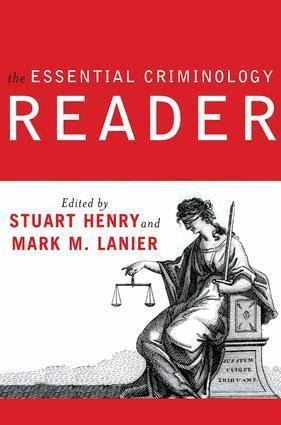
    Essential Criminology Reader

    AvMark Lanier,Stuart Henry

    Häftad, Engelska, 2005

    934 kr

    Beställningsvara. Skickas inom 10-15 vardagar. Fri frakt över 249 kr.

    Beskrivning

    Initially designed to accompany Mark Lanier and Stuart Henry's best-selling Essential Criminology textbook, this new reader is an up-to-date companion text perfect for all students of introductory criminology and criminological theory courses. The Essential Criminology Reader contains 30 original articles on current developments in criminological theory. Commissioned specifically for The Reader , these short essays were written by leading scholars in the field. Each chapter complements one of 13 different theoretical perspectives covered in Lanier and Henry's Essential Criminology text and contains between two and three articles from leading theorists on each perspective. Each chapter of The Reader features: a brief summary of the main ideas of the theory the ways the author's theory has been misinterpreted istorted criticisms by others of the theory and how the author has responded a summary of the balance of the empirical findings the latest developments in their theoretical position policy implications/practice of their theory

    Produktinformation

    • Utgivningsdatum:2005-08-05
    • Mått:152 x 229 x 21 mm
    • Vikt:506 g
    • Format:Häftad
    • Språk:Engelska
    • Antal sidor:400
    • Förlag:Taylor & Francis Inc
    • ISBN:9780813343198

    Utforska kategorier

    • Brottslighet och kriminologi inom Samhälle och politik

    Mer om författaren

    Mark Lanier is professor and chair of the department of Criminal Justice at the University of Alabama. He is the author or editor of multiple books on crime, including The Essential Criminology Reader (with Stuart Henry). Stuart Henry is professor of criminal justice and director of the School of Public Affairs at San Diego State University and visiting professor of criminology at the University of Kent, Canterbury, England. He is the author of more than twenty books including the classic The Hidden Economy.

    Innehållsförteckning

    • 1. Classical and Rational Choice Theories * 1.1 Free Will and Determinism? Reading Beccarias Of Crimes and Punishments (1764) as a Text of Enlightenment, by Piers Beirne * 1.2 Rational and Situational Choice Theory, by Derek B Cornish and Ronald V. Clarke 2. Biological and Biosocial Theories * 2.1 Cesare Lombroso and the Origins of Criminology: Rethinking Criminological Tradition, by Nicole Rafter * 2.2 Integrating Findings from Neurobiology into Criminological Thought: Issues, Solutions, and Implications, by Diana Fishbein 3. Psychological Theories * 3.1 Forty Years of the Yochelson/Samenow Work: A Perspective, by Stanton E. Samenow * 3.2 Contributions of Community Psychology to Criminal Justice: Prevention Research and Intervention, by Sarah Livsey and William S. Davidson II 4. Social Learning and Neutralization Theories * 4.1 Social Learning Theory: Correcting Misconceptions, by Christine S. Sellers and Ronald L. Akers * 4.2 Techniques of Neutralization, by W. William Minor 5. Social Control Theories * 5.1 Social Control and Self-Control Theory, by Travis Hirschi and Michael Gottfredson * 5.2 Social Control Theory and Direct Parental Controls, by Joseph H. Rankin and L. Edward Wells 6. Social Ecology and Subcultural Theories * 6.1 Social Ecology and Collective Efficacy Theory, by Robert J. Sampson * 6.2 Gangs as Social Actors, by John M. Hagedorn 7. Anomie and Strain Theories * 7.1 General Strain Theory, by Robert Agnew * 7.2 The Origins, Nature, and Prospects of Institutional-Anomie Theory, by Richard Rosenfeld and Steven F. Messner * 7.3 Global Anomie Theory, by Nikos Passas 8. Conflict and Radical Theories * 8.1 Criminology and Conflict Theory, by Austin T. Turk * 8.2 The New Radical Criminology and the Same Old Criticisms, by Michael J. Lynch and Paul B. Stretesky 9. Feminist and Gender Theories * 9.1 Feminist Thinking About Crime, by Kathleen Daly * 9.2 Masculinities and Theoretical Criminology, by James W. Messerschmidt 10. Postmodernist and Critical Culture Theory * 10.1 Postmodernist Theory and Criminology, by Bruce Arrigo * 10.2 Edgework: Negotiating Boundaries, by Dragan Milovanovic * 10.3 Cultural Criminology, by Jeff Ferrell 11. Anarchist, Peacemaking, and Restorative Justice Theories * 11.1 Needs-Based Anarchist Criminology, by Larry Tifft and Dennis Sullivan * 11.2 Peacemaking, by Hal Pepinsky * 11.3 Reintegrational Shaming, by John Braithwaite, Valerie Braithwaite, and Eliza Ahmed 12. Left Realist Theory * 12.1 Inequality, Community, and Crime, by Elliott Currie * 12.2 Left Realist Theory, by Walter DeKeseredy and Martin D. Schwartz 13. Integrative Theories * 13.1 The Integrated Systems Theory of Antisocial Behavior, by Matthew Robinson * 13.2 Applying Integrated Theory: A Reciprocal Theory of Violence and Nonviolence, by Gregg Barak * 13.3 Criminologist as Witness, by Richard Quinney