• Fri frakt över 249 kr
  • •
  • Snabba leveranser
  • •
  • Billiga böcker
Kundservice

Du är på sajten för privatpersoner.

Företag, bibliotek eller offentlig verksamhet?

Du handlar på classic.bokus.com, där alla dina funktioner finns intakta.
Till classic.bokus.com
Bokus logotyp. Gå till startsidan.
  • Erbjudanden
  • Nyheter
  • Student
  • Topplistor
  • Barn & ungdom
  • Bokus Play
  • E-böcker
  • Pocketböcker
  • Spel & pussel

10% rabatt på allt med kod: NYSTART10 →

Sidfot

Mina sidor

    Hjälp

    • Kundservice
    • Vanliga frågor och svar
    • Frakt och leverans
    • Retur vid ångerrätt
    • Reklamera vara
    • Betalning
    • Köpvillkor
    • Allmänna villkor
    • Information om webbplatsens tillgänglighet

    Om Bokus

    • Om oss
    • Pressrum
    • För studenter
    • För företag
    • För bibliotek och offentlig verksamhet
    • För leverantörer
    • Hållbarhet

    Populärt

    • Aktuella erbjudanden
    • Presentkort
    • Studentlitteratur
    • Nya böcker
    • Topplistor
    • Signerade böcker
    • Engelska böcker

    Inspiration

    • Boktips
    • BookTok
    • Populära bokserier
    • Barnbokskaraktärer
    • Populära författare
    Logotyp för Bokus
    Följ oss på Facebook (extern länk)Följ oss på Instagram (extern länk)Följ oss på YouTube (extern länk)Följ oss på TikTok (extern länk)
    bokus @ CookiesAnpassa cookiesIntegritetspolicyKöpvillkor
    Till Citymail hemsida (extern länk)Till Budbee hemsida (extern länk)Till Postnord hemsida (extern länk)Till Schenker hemsida (extern länk)Till Early Bird hemsida (extern länk)Till Walleys hemsida (extern länk)
    1. Naturvetenskap och teknik
    2. Matematik och naturvetenskap
    3. Naturvetenskap:allmänt

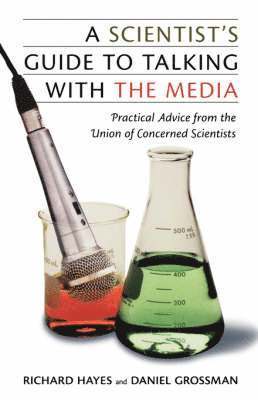
    Scientist's Guide to Talking with the Media

    Practical Advice from the Union of Concerned Scientists

    AvDaniel Grossman,Richard Hayes

    Häftad, Engelska, 2006

    338 kr

    Beställningsvara. Skickas inom 5-8 vardagar. Fri frakt över 249 kr.

    Beskrivning

    Research in most scientific disciplines calls for painstaking accuracy and a hesitation to generalize for fear of distorting the truth. Given this penchant for nuance, scientists often feel uneasy about a relationship with anyone in the media who is seeking an eye-catching lead, usually with limited space to express subtleties. Researchers who give interviews often feel that their findings are distorted or sensationalized, and shun future media contact. By avoiding potential misrepresentations, however, scientists also sacrifice opportunities to educate the public on important issues related to health, the environment, outer space, and much more.In A Scientist's Guide to Talking with the Media, Richard Hayes and Daniel Grossman draw on their expertise in public relations and journalism to empower researchers in a variety of fields to spread their message on their own terms. The authors provide tips on how to translate abstract concepts into concrete metaphors, craft soundbites, and prepare for interviews. For those looking for a higher profile, the authors explain how to become a reporter's trusted source-the first card in the Rolodex-on controversial issues.A must-read for all scientists, this book shows how it is possible for the discoveries that hibernate in lecture halls and academic journals to reach a broader audience in a way that is accurate and effective.

    Produktinformation

    • Utgivningsdatum:2006-08-16
    • Mått:140 x 216 x 18 mm
    • Vikt:312 g
    • Format:Häftad
    • Språk:Engelska
    • Antal sidor:222
    • Förlag:Rutgers University Press
    • ISBN:9780813538587

    Utforska kategorier

    • Naturvetenskap:allmänt inom Naturvetenskap och teknik
    • Media och underhållning inom Ekonomi och Ledarskap

    Mer om författaren

    RICHARD HAYES is media director of the Union of Concerned Scientists, an independent nonprofit alliance of more than 100,000 citizens and scientists. He lives in Arlington, Virginia.DANIEL GROSSMAN is a science journalist, radio and Web producer, and educator who has covered the science beat for more than eighteen years. He lives in Watertown, Massachusetts.

    Recensioner i media

    This is an invaluable guide for scientists seeking to learn how to better communicate with - and through - the media. The book gives the kind of insight into news operations that will allow researchers to better understand the process and to feel more comfortable talking with reporters. And the timing is just right - now more than ever we need an improved public understanding of science and the way it affects our lives. - Deborah Blum, 1992 Pulitzer Prize winner for beat reporting on primate research

    Innehållsförteckning

    • AcknowledgmentsIntroductionChapter 1. We Need to TalkChapter 2. Hope for the Best, Prepare for the WorstChapter 3. Why Reporters Do What They DoChapter 4. Do You Hear What You're Saying?Chapter 5. Mastering the InterviewChapter 6. A Reporter's Most Trusted Source: YouChapter 7. Choosing the Right Communication ToolsChapter 8. The Scientist as Celebrity and ActivistNotesResourcesIndex