• Fri frakt över 249 kr
  • •
  • Snabba leveranser
  • •
  • Billiga böcker
Kundservice

Du är på sajten för privatpersoner.

Företag, bibliotek eller offentlig verksamhet?

Du handlar på classic.bokus.com, där alla dina funktioner finns intakta.
Till classic.bokus.com
Bokus logotyp. Gå till startsidan.
  • Erbjudanden
  • Nyheter
  • Student
  • Topplistor
  • Barn & ungdom
  • Bokus Play
  • E-böcker
  • Pocketböcker
  • Spel & pussel

10% rabatt på allt med kod NYSTART10 →

Sidfot

Mina sidor

    Hjälp

    • Kundservice
    • Vanliga frågor och svar
    • Frakt och leverans
    • Retur vid ångerrätt
    • Reklamera vara
    • Betalning
    • Köpvillkor
    • Allmänna villkor
    • Information om webbplatsens tillgänglighet

    Om Bokus

    • Om oss
    • Pressrum
    • För studenter
    • För företag
    • För bibliotek och offentlig verksamhet
    • För leverantörer
    • Hållbarhet

    Populärt

    • Aktuella erbjudanden
    • Presentkort
    • Studentlitteratur
    • Nya böcker
    • Topplistor
    • Signerade böcker
    • Engelska böcker

    Inspiration

    • Boktips
    • BookTok
    • Populära bokserier
    • Barnbokskaraktärer
    • Populära författare
    Logotyp för Bokus
    Följ oss på Facebook (extern länk)Följ oss på Instagram (extern länk)Följ oss på YouTube (extern länk)Följ oss på TikTok (extern länk)
    bokus @ CookiesAnpassa cookiesIntegritetspolicyKöpvillkor
    Till Citymail hemsida (extern länk)Till Budbee hemsida (extern länk)Till Postnord hemsida (extern länk)Till Schenker hemsida (extern länk)Till Early Bird hemsida (extern länk)Till Walleys hemsida (extern länk)
    1. Naturvetenskap och teknik
    2. Matematik och naturvetenskap
    3. Biologi
    4. Biovetenskap

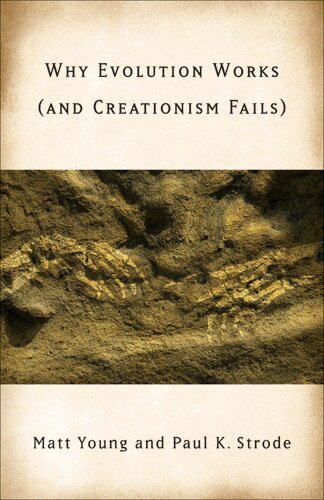
    Why Evolution Works (and Creationism Fails)

    AvMatt Young,Paul Strode

    Häftad, Engelska, 2009

    338 kr

    Beställningsvara. Skickas inom 5-8 vardagar. Fri frakt över 249 kr.

    Beskrivning

    Why Evolution Works (and Creationism Fails) is an impassioned argument in favor of science-primarily the theory of evolution-and against creationism. Why impassioned? Should not scientists be dispassionate in their work? “Perhaps,” write the authors, “but it is impossible to remain neutral when our most successful scientific theories are under attack, for religious and other reasons, by laypeople and even some scientists who willfully distort scientific findings and use them for their own purposes.”Focusing on what other books omit, how science works and how pseudoscience works, Matt Young and Paul K. Strode demonstrate the futility of “scientific” creationism. They debunk the notion of intelligent design and other arguments that show evolution could not have produced life in its present form.Concluding with a frank discussion of science and religion, Why Evolution Works (and Creationism Fails) argues that science by no means excludes religion, though it ought tocast doubt on certain religious claims that are contrary to known scientific fact.

    Produktinformation

    • Utgivningsdatum:2009-05-15
    • Mått:152 x 229 x 15 mm
    • Vikt:399 g
    • Format:Häftad
    • Språk:Engelska
    • Antal sidor:224
    • Förlag:Rutgers University Press
    • Medarbetare:Kevin Padian
    • ISBN:9780813545509

    Utforska kategorier

    • Biovetenskap inom Naturvetenskap och teknik

    Mer om författaren

    Matt Young is a senior lecturer in the department of physics at the Colorado School of Mines. A prolific writer, he is the coauthor of Why Intelligent Design Fails: A Scientific Critique of the New Creationism (Rutgers University Press).Paul K. Strode is a biology teacher in Boulder, Colorado, and an instructor in the department of ecology and evolutionary biology at the University of Colorado at Boulder, with a doctoral degree in ecology and environmental science.

    Recensioner i media

    "In this superb overview, Young and Strode tackle the most vexing issues in the public's understanding of biological evolution and earth history. With clear, readable text, Young and Strode detail requisite concepts while providing a conversational response to creationists' objections to evolution, which are frequently based on profound misunderstandings of how science works. Young and Strode provide a thorough explanation of the concept of biological fitness, showing that evolution, hardly random, is a process of interaction between organisms and the environment. They also take a good look at creationism, using the publications of prominent believers to show that it's a movement divided against itself. Much of this work developed from Strode's teaching experience, and it may be the best book yet written for teaching citizens what science really does, and what religion really is in relation." (Publishers Weekly (starred review)) "This work carefully explains the difference between science and pseudoscience, and how the so-called alternative theories fail to be scientific. Young and Strode additionally argue about the compatibility of science and religion. This work attempts to make an argument to those who have not accepted the facts of evolution and to those who may not possess a more general understanding of the science. Highly recommended." (Choice) "This book provides compelling examples of how science works. With any luck, it will entice its readers to delve further into these impossible, yet compelling and empirically-based, ideas, and help them to recognize what distinguishes the 'impossible' ideas of science from the impossible ideas of religion and other ideologies."(Reports of the National Center for Science Education) "Of similar books I have seen on this subject, this one is the best. Its discussions of evolution and refutation of creationism are clear, concise, and powerful. Matt Young and Paul Strode offer a unique, introductory-level book for students, scientists, or anyone who is open to thinking about the topic." - Alan D. Gishlick (Gustavus Adolphus College) "Strictly following facts and applying impeccable logic, Young and Strode lead the reader, step by step, through a variety of topics, from evolution theory to cosmology and from psychology to medicine, convincingly demonstrating the power of genuine science versus the fallacies of pseudo-science. An excellent addition to every school library." - Mark Perakh (author of Unintelligent Design) "A passionate argument for the importance of evolution both in nature and in the classroom." (Daily Kos) "This is not just another book on the evolution-creation controversy. This is actually a book on the Nature of Science, which aims to explain what counts as science and what does not. It is a valuable resource and deserves to be widely read."(Science and Education) "In this superb overview, Young and Strode tackle the most vexing issues in the public's understanding of biological evolution and earth history. With clear, readable text, Young and Strode detail requisite concepts while providing a conversational response to creationists' objections to evolution, which are frequently based on profound misunderstandings of how science works. Young and Strode provide a thorough explanation of the concept of biological fitness, showing that evolution, hardly random, is a process of interaction between organisms and the environment. They also take a good look at creationism, using the publications of prominent believers to show that it's a movement divided against itself. Much of this work developed from Strode's teaching experience, and it may be the best book yet written for teaching citizens what science really does, and what religion really is in relation." (Publishers Weekly (starred review)) "This work carefully explains the difference between science and pseudoscience, and how the so-called alternative theories fail to be scientific. Young and Strode additionally argue about the compatibility of science and religion. This work attempts to make an argument to those who have not accepted the facts of evolution and to those who may not possess a more general understanding of the science. Highly recommended." (Choice) "This book provides compelling examples of how science works. With any luck, it will entice its readers to delve further into these impossible, yet compelling and empirically-based, ideas, and help them to recognize what distinguishes the 'impossible' ideas of science from the impossible ideas of religion and other ideologies."(Reports of the National Center for Science Education) "Of similar books I have seen on this subject, this one is the best. Its discussions of evolution and refutation of creationism are clear, concise, and powerful. Matt Young and Paul Strode offer a unique, introductory-level book for students, scientists, or anyone who is open to thinking about the topic." - Alan D. Gishlick (Gustavus Adolphus College) "Strictly following facts and applying impeccable logic, Young and Strode lead the reader, step by step, through a variety of topics, from evolution theory to cosmology and from psychology to medicine, convincingly demonstrating the power of genuine science versus the fallacies of pseudo-science. An excellent addition to every school library." - Mark Perakh (author of Unintelligent Design) "A passionate argument for the importance of evolution both in nature and in the classroom." (Daily Kos) "This is not just another book on the evolution-creation controversy. This is actually a book on the Nature of Science, which aims to explain what counts as science and what does not. It is a valuable resource and deserves to be widely read."(Science and Education)

    Innehållsförteckning

    • List of FiguresList of TablesList of BoxesForewordPrefaceAcknowledgmentsPart I.IntroductionThe Structure of This BookHistory of Creationism and Evolutionary Science in the United StatesPart II.How Science WorksHow Pseudoscience WorksWhy Creationism FailsThe Argument from DesignWhy Intelligent-Design Creationism FailsPart III.The Father of EvolutionHow Evolution WorksRecapitulationEvo Devo: How Evolution Constantly RemodelsPhylogeneticsDesign by Committee: The Twists, Turns, and Flips of Human AnatomyPart IV.How We Know the Age of the EarthIs the Universe Fine-Tuned for Life?Part V.Evolution and EthicsWhy Science and Religion Are CompatibleSummary and ConclusionGlossaryBibliographyIndex