• Fri frakt över 249 kr
  • •
  • Snabba leveranser
  • •
  • Billiga böcker
Kundservice

Du är på sajten för privatpersoner.

Företag, bibliotek eller offentlig verksamhet?

Du handlar på classic.bokus.com, där alla dina funktioner finns intakta.
Till classic.bokus.com
Bokus logotyp. Gå till startsidan.
  • Erbjudanden
  • Nyheter
  • Student
  • Topplistor
  • Barn & ungdom
  • Bokus Play
  • E-böcker
  • Pocketböcker
  • Spel & pussel

10% rabatt på allt med kod NYSTART10 →

Sidfot

Mina sidor

    Hjälp

    • Kundservice
    • Vanliga frågor och svar
    • Frakt och leverans
    • Retur vid ångerrätt
    • Reklamera vara
    • Betalning
    • Köpvillkor
    • Allmänna villkor
    • Information om webbplatsens tillgänglighet

    Om Bokus

    • Om oss
    • Pressrum
    • För studenter
    • För företag
    • För bibliotek och offentlig verksamhet
    • För leverantörer
    • Hållbarhet

    Populärt

    • Aktuella erbjudanden
    • Presentkort
    • Studentlitteratur
    • Nya böcker
    • Topplistor
    • Signerade böcker
    • Engelska böcker

    Inspiration

    • Boktips
    • BookTok
    • Populära bokserier
    • Barnbokskaraktärer
    • Populära författare
    Logotyp för Bokus
    Följ oss på Facebook (extern länk)Följ oss på Instagram (extern länk)Följ oss på YouTube (extern länk)Följ oss på TikTok (extern länk)
    bokus @ CookiesAnpassa cookiesIntegritetspolicyKöpvillkor
    Till Citymail hemsida (extern länk)Till Budbee hemsida (extern länk)Till Postnord hemsida (extern länk)Till Schenker hemsida (extern länk)Till Early Bird hemsida (extern länk)Till Walleys hemsida (extern länk)
    1. Historia och arkeologi
    2. Historia
    3. Historia: särskilda händelser och ämnen
    4. Folkmord och etnisk rensning

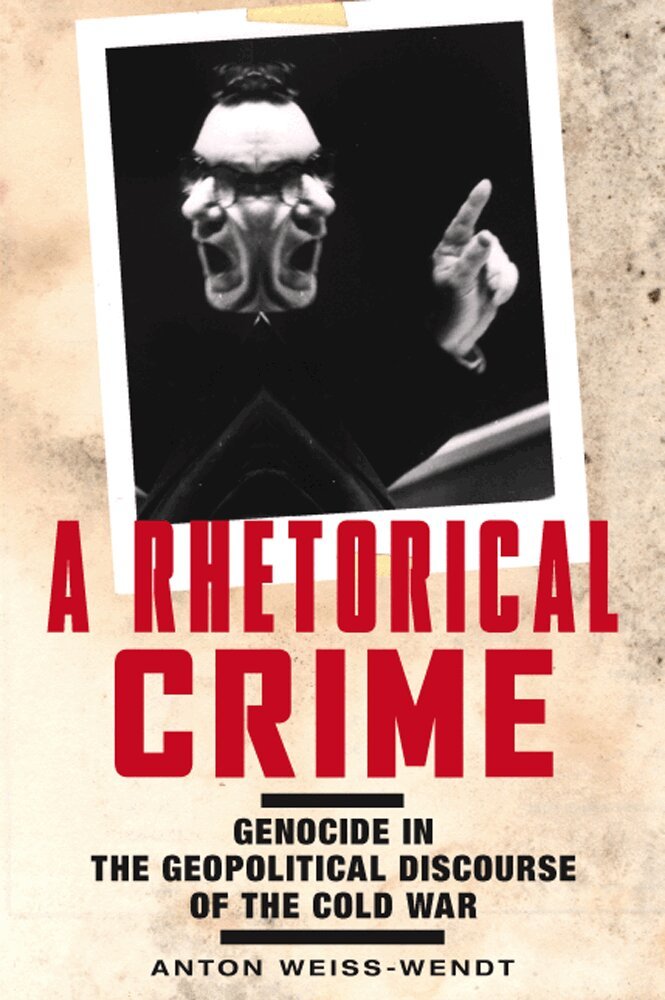
    Rhetorical Crime

    Genocide in the Geopolitical Discourse of the Cold War

    AvAnton Weiss-Wendt

    Häftad, Engelska, 2018

    Del i serien Genocide, Political Violence,

    469 kr

    Beställningsvara. Skickas inom 11-20 vardagar. Fri frakt över 249 kr.

    Beskrivning

    The Genocide Convention was drafted by the United Nations in the late 1940s, as a response to the horrors of the Second World War. But was the Genocide Convention truly effective at achieving its humanitarian aims, or did it merely exacerbate the divisive rhetoric of Cold War geopolitics? A Rhetorical Crime shows how genocide morphed from a legal concept into a political discourse used in propaganda battles between the United States and the Soviet Union. Over the course of the Cold War era, nearly eighty countries were accused of genocide, and yet there were few real-time interventions to stop the atrocities committed by genocidal regimes like the Cambodian Khmer Rouge.  Renowned genocide scholar Anton Weiss-Wendt employs a unique comparative approach, analyzing the statements of Soviet and American politicians, historians, and legal scholars in order to deduce why their moral posturing far exceeded their humanitarian action.

    Produktinformation

    • Utgivningsdatum:2018-05-10
    • Mått:152 x 229 x 18 mm
    • Vikt:399 g
    • Format:Häftad
    • Språk:Engelska
    • Serie:Genocide, Political Violence,
    • Antal sidor:272
    • Förlag:Rutgers University Press
    • Medarbetare:Douglas Irvin-Erickson
    • ISBN:9780813594651

    Utforska kategorier

    • Folkmord och etnisk rensning inom Historia och arkeologi
    • Internationella relationer inom Samhälle och politik
    • Kalla krig och ombudskrig inom Historia och arkeologi

    Mer om författaren

    ANTON WEISS-WENDT is a research professor at the Center for the Study of the Holocaust and Religious Minorities in Oslo, Norway. He is the author of many books, including The Soviet Union and the Genocide Convention, 1945–1954.

    Recensioner i media

    "New Scholarly Books: Weekly Book List, June 8," by Nina C. Ayoub— Chronicle of Higher Education"Anton Weiss-Wendt has presented clear and innovative arguments on a crucial topic and scrupulously supported them with relevant documents and other evidence. In so doing, he has written a salutary alternative narrative of human rights in the Cold War, one that has the potential to improve our understanding of Cold War dynamics as a whole."— Michigan War Studies"No one to date has documented the history of the concept of genocide with the same level of sophistication as Weiss-Wendt. A Rhetorical Crime stands as the definitive study of this period in the evolution of international criminal law."— David Crowe, author of War Crimes, Genocide, and Justice: A Global History

    Innehållsförteckning

    • Foreword by Douglas Irvin-EricksonList of AbbreviationsIntroduction1    Soviet Scholars of International Law as Foot Soldiers in the Cold War2    Trial by Word: The Gulag Condemned3    Soviet Satellites Shift Allegiances: Hungary, Yugoslavia4    The Struggle for Influence in Postcolonial Africa and the Middle East: Algeria, Congo, Nigeria, Iraq5    Southeast Asia and the Rise of Communist China: Tibet, Bangladesh, Cambodia6    (Soviet) Piggy in the Middle: American Liberal Left versus Radical Right on US Ratification of the Genocide Convention7    Moscow Taps the New Left: The Vietnam Antiwar Movement, Black Panthers, and the American Indian Movement8    Soviet-Turkish Relations and Socialist Armenia9    The Israeli-Palestinian Conflict10    An Uncertain End to the Cold War and the Reactivation of the Genocide TreatyConclusionAfterword: Genocide Rhetoric and a New Cold WarAppendix A: Articles in Pravda with Reference to Genocide, 1948‒1988Appendix B: Articles in the New York Times with Reference to Genocide, 1948–1988AcknowledgmentsNotesBibliographyIndex