• Fri frakt över 249 kr
  • •
  • Snabba leveranser
  • •
  • Billiga böcker
Kundservice

Du är på sajten för privatpersoner.

Företag, bibliotek eller offentlig verksamhet?

Du handlar på classic.bokus.com, där alla dina funktioner finns intakta.
Till classic.bokus.com
Bokus logotyp. Gå till startsidan.
  • Erbjudanden
  • Nyheter
  • Student
  • Topplistor
  • Barn & ungdom
  • Bokus Play
  • E-böcker
  • Pocketböcker
  • Spel & pussel

10% rabatt på allt med kod NYSTART10 →

Sidfot

Mina sidor

    Hjälp

    • Kundservice
    • Vanliga frågor och svar
    • Frakt och leverans
    • Retur vid ångerrätt
    • Reklamera vara
    • Betalning
    • Köpvillkor
    • Allmänna villkor
    • Information om webbplatsens tillgänglighet

    Om Bokus

    • Om oss
    • Pressrum
    • För studenter
    • För företag
    • För bibliotek och offentlig verksamhet
    • För leverantörer
    • Hållbarhet

    Populärt

    • Aktuella erbjudanden
    • Presentkort
    • Studentlitteratur
    • Nya böcker
    • Topplistor
    • Signerade böcker
    • Engelska böcker

    Inspiration

    • Boktips
    • BookTok
    • Populära bokserier
    • Barnbokskaraktärer
    • Populära författare
    Logotyp för Bokus
    Följ oss på Facebook (extern länk)Följ oss på Instagram (extern länk)Följ oss på YouTube (extern länk)Följ oss på TikTok (extern länk)
    bokus @ CookiesAnpassa cookiesIntegritetspolicyKöpvillkor
    Till Citymail hemsida (extern länk)Till Budbee hemsida (extern länk)Till Postnord hemsida (extern länk)Till Schenker hemsida (extern länk)Till Early Bird hemsida (extern länk)Till Walleys hemsida (extern länk)
    1. Juridik
    2. Internationell rätt
    3. Folkrätt

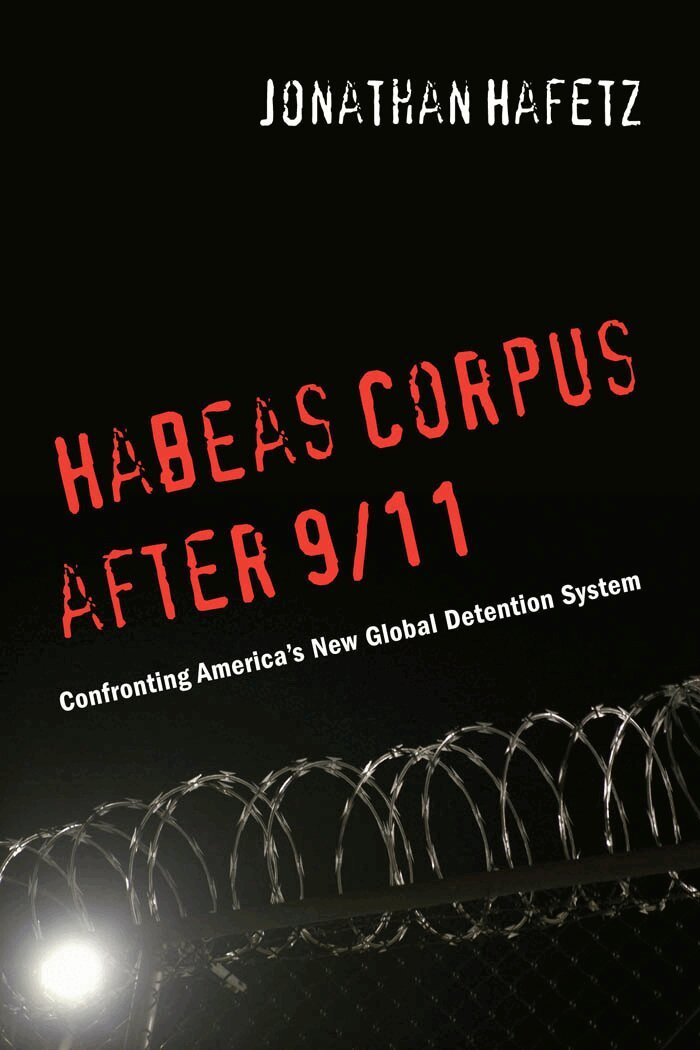
    Habeas Corpus After 9/11

    Confronting America's New Global Detention System

    AvJonathan Hafetz

    Häftad, Engelska, 2012

    384 kr

    Beställningsvara. Skickas inom 5-8 vardagar. Fri frakt över 249 kr.

    Fler format och utgåvor

    Inbunden

    811 kr

    Beskrivning

    2012 American Bar Association Gavel Award Honorable Mention for Books 2012 Scribes Book Silver Medal Award presented by the American Society of Legal Writers The U.S. detention center at Guantánamo Bay has long been synonymous with torture, secrecy, and the abuse of executive power. It has come to epitomize lawlessness and has sparked protracted legal battles and political debate. For too long, however, Guantánamo has been viewed in isolation and has overshadowed a larger, interconnected global detention system that includes other military prisons such as Bagram Air Base in Afghanistan, secret CIA jails, and the transfer of prisoners to other countries for torture. Guantánamo is simply—and alarmingly—the most visible example of a much larger prison system designed to operate outside the law.Habeas Corpus after 9/11 examines the rise of the U.S.-run global detention system that emerged after 9/11 and the efforts to challenge it through habeas corpus (a petition to appear in court to claim unlawful imprisonment). Habeas expert and litigator Jonathan Hafetz gives us an insider's view of the detention of "enemy combatants" and an accessible explanation of the complex forces that keep these systems running. In the age of terrorism, some argue that habeas corpus is impractical and unwise. Hafetz advocates that it remains the single most important check against arbitrary and unlawful detention, torture, and the abuse of executive power.

    Produktinformation

    • Utgivningsdatum:2012-08-20
    • Mått:152 x 229 x 22 mm
    • Vikt:454 g
    • Format:Häftad
    • Språk:Engelska
    • Antal sidor:331
    • Förlag:New York University Press
    • ISBN:9780814724408

    Utforska kategorier

    • Folkrätt inom Juridik

    Mer om författaren

    Jonathan Hafetz is Associate Professor at Seton Hall Law School and has litigated numerous landmark habeas corpus detention cases. He also is the co-editor (with Mark Denbeaux) of The Guantánamo Lawyers: Inside a Prison Outside the Law (NYU Press, 2009).

    Recensioner i media

    Deftly connecting Guantánamo to other secret prisons, law to politics, secrecy to terror, and the efforts of the courts to frame and reframe the ancient writ of habeas corpus for a modern era, Hafetz explores what was lost when habeas became a legal question as opposed to an answer. Anyone seeking a way forward on the issues of detention, incarceration, and the rule of law that continue to plague us would be well advised to start looking here for the answers. - Dahlia Lithwick (Slate) Hafetzs incisive and insightful volume is more than just a summary of where we have been; it is an impassioned case for the proper way forward with regard both to the substance of national security detention policy and the role courts should play in reviewing and constraining it. Certain to become one of the indispensable accounts of the role that the & Great Writ has played both historically and after September 11, this book provides a powerful and timely testament to the foresight of the Founding Fathers in expressly enshrining the & privilege of the writ of habeas corpus in our Constitution. - Stephen Vladeck,Professor of Law, American University The right to habeas corpus is the linchpin of a free nation, and the post-9/11 attack on this safeguard is thus one of the most significant erosions of freedom in many decades. Jonathan Hafetz provides the most thorough account yet of why this right matters so much and what should be done to preserve it. - Glenn Greenwald (Salon) We all have snatches of the conversation in our heads: Guantánamo, habeas corpus, enemy combatant, military commissions, Bagram, rendition and torture. This book by one of the key lawyers on the front lines in the post-9/11 legal battles puts these pieces together; what emerges is not pretty. If you want to understand how a country that claimed it was the paradigm of fair treatment in its criminal justice system has tailored its laws to expediency, read this disturbing book. - Michael Ratner,President, Center for Constitutional Rights Hafetz's book is an excellent account of the five major Supreme Court cases addressing habeas corpus and constitutional rights to a fair trial after 9/11. (Choice) Habeas Corpus after 9/11 is an impassioned and exhaustive examination of the lack of legal safeguards afforded to detainees at such places as Guantánamo, Bagram, Abu Ghraib, and to those who were the subjects of extraordinary rendition. . . .Thoughtful and well-researched responses to the conditions of the time . . . provide[s] political scientists and historians with perspectives on habeas corpus that they need to consider. (Law and Politics Book Review)

    Innehållsförteckning

    • Acknowledgments Introduction Part 1 1 Laying the Foundation for the "War on Terror" 2 Guantanamo: Microcosm of a Prison beyond the Law 3 Guantanamo beyond Guantanamo: Toward a Global Detention System 4 Crossing a Constitutional Rubicon: The Domestic "Enemy Combatant" CasesPart 2 5 Habeas Corpus and the Right to Challenge Unlawful Imprisonment 6 The Seeds of a Global Constitution Part 3 7 A Modest Judicial Intervention: The First Supreme Court "Enemy Combatant" Decisions 8 The Battle for Habeas Corpus Continues 9 Tackling Prisons beyond the Law: Guantanamo Revisited ContentsPart 4 10 Toward a Better Understanding of Habeas Corpus: Individual Rights and the Role of the Judiciary during Wartime 11 The Elusive Custodian: Some Potential Limits of Habeas Corpus 12 Terrorism as Crime: Toward a Lawful and Sustainable Detention Policy 13 Continuity and Change: The Detention Policy of a New Administration Notes Index About the Author