• Fri frakt över 249 kr
  • •
  • Snabba leveranser
  • •
  • Billiga böcker
Kundservice

Du är på sajten för privatpersoner.

Företag, bibliotek eller offentlig verksamhet?

Du handlar på classic.bokus.com, där alla dina funktioner finns intakta.
Till classic.bokus.com
Bokus logotyp. Gå till startsidan.
  • Erbjudanden
  • Nyheter
  • Student
  • Topplistor
  • Barn & ungdom
  • Bokus Play
  • E-böcker
  • Pocketböcker
  • Spel & pussel

10% rabatt på allt med kod: NYSTART10 →

Sidfot

Mina sidor

    Hjälp

    • Kundservice
    • Vanliga frågor och svar
    • Frakt och leverans
    • Retur vid ångerrätt
    • Reklamera vara
    • Betalning
    • Köpvillkor
    • Allmänna villkor
    • Information om webbplatsens tillgänglighet

    Om Bokus

    • Om oss
    • Pressrum
    • För studenter
    • För företag
    • För bibliotek och offentlig verksamhet
    • För leverantörer
    • Hållbarhet

    Populärt

    • Aktuella erbjudanden
    • Presentkort
    • Studentlitteratur
    • Nya böcker
    • Topplistor
    • Signerade böcker
    • Engelska böcker

    Inspiration

    • Boktips
    • BookTok
    • Populära bokserier
    • Barnbokskaraktärer
    • Populära författare
    Logotyp för Bokus
    Följ oss på Facebook (extern länk)Följ oss på Instagram (extern länk)Följ oss på YouTube (extern länk)Följ oss på TikTok (extern länk)
    bokus @ CookiesAnpassa cookiesIntegritetspolicyKöpvillkor
    Till Citymail hemsida (extern länk)Till Budbee hemsida (extern länk)Till Postnord hemsida (extern länk)Till Schenker hemsida (extern länk)Till Early Bird hemsida (extern länk)Till Walleys hemsida (extern länk)
    1. Historia och arkeologi
    2. Historia
    3. Amerikas historia

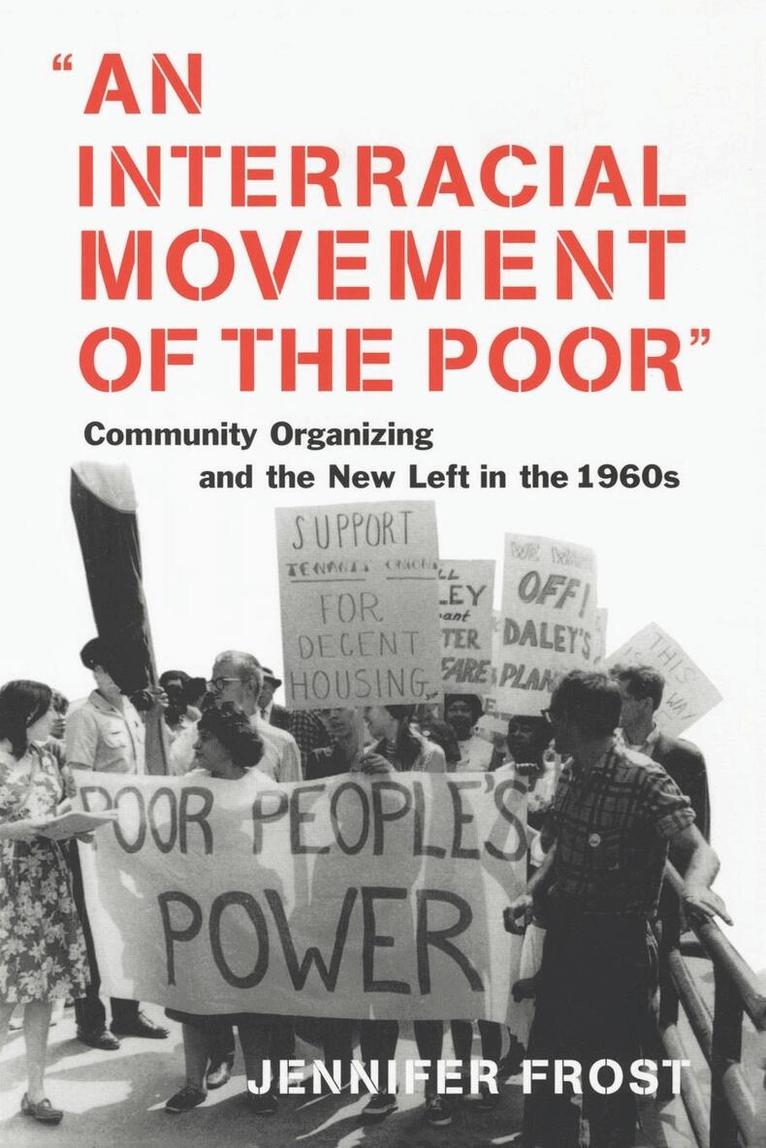
    Interracial Movement of the Poor

    Community Organizing and the New Left in the 1960s

    AvJennifer Frost

    Häftad, Engelska, 2005

    303 kr

    Beställningsvara. Skickas inom 5-8 vardagar. Fri frakt över 249 kr.

    Fler format och utgåvor

    Inbunden

    1 236 kr

    Beskrivning

    Choice Outstanding Academic Title 2002Community organizing became an integral part of the activist repertoire of the New Left in the 1960s. Students for a Democratic Society, the organization that came to be seen as synonymous with the white New Left, began community organizing in 1963, hoping to build an interracial movement of the poor through which to demand social and political change. SDS sought nothing less than to abolish poverty and extend democratic participation in America.Over the next five years, organizers established a strong presence in numerous low-income, racially diverse urban neighborhoods in Chicago, Cleveland, Newark, and Boston, as well as other cities. Rejecting the strategies of the old left and labor movement and inspired by the Civil Rights Movement, activists sought to combine a number of single issues into a broader, more powerful coalition. Organizers never limited themselves to today's simple dichotomies of race vs. class or of identity politics vs. economic inequality. They actively synthesized emerging identity politics with class and coalition politics and with a drive for a more participatory welfare state, treating these diverse political approaches as inextricably intertwined. While common wisdom holds that the New Left rejected all state involvement as cooptative at best, Jennifer Frost traces the ways in which New Left and community activists did in fact put forward a prescriptive, even visionary, alternative to the welfare state.After Students for a Democratic Society and its community organizing unit, the Economic Research and Action Project, disbanded, New Left and community participants went on to apply their strategies and goals to the welfare rights, women's liberation, and the antiwar movements. In her study of activism before the age of identity politics, Frost has given us the first full-fledged history of what was arguably the most innovative community organizing campaign in post-war American history.

    Produktinformation

    • Utgivningsdatum:2005-11-01
    • Mått:153 x 229 x 17 mm
    • Vikt:513 g
    • Format:Häftad
    • Språk:Engelska
    • Antal sidor:257
    • Förlag:New York University Press
    • ISBN:9780814726983

    Utforska kategorier

    • Amerikas historia inom Historia och arkeologi
    • Socialism och vänsterideologier inom Samhälle och politik

    Mer om författaren

    Jennifer Frost is Associate Professor of History at the University of Auckland in New Zealand, and author of "An Interracial Movement of the Poor": Community Organizing and the New Left in the 1960s, Hedda Hopper's Hollywood: Celebrity Gossip and American Conservativism, and Producer of Controversy: Stanley Kramer, Hollywood Liberalism, and the Cold War.

    Recensioner i media

    Frost contributes to a more nuanced understanding of the era and pushes past stereotypes of the sixties. (Journal of Social History) “:Frost has created a usable past capable of enriching our understanding of the difficulties of democracy and the tough realities of American politics (Peace & Change) A thoughtful, illuminating, and compelling study. Frost has mined original sources, including a range of oral history interviews. . . . A vitally important book for scholars and students of the '60s, of community organizing, and of the politics of urban America since World War Two. . . . easily the best feminist treatment of SDS to appear in over twenty years. The appearance of works such as this marks the coming of age of a new generation of scholars who treat the 1960s in genuinely historical terms. Frost performs the considerable feat of treating this still-controversial period both critically and appreciatively. - Felicia Kornbluh,Duke University The finest study to date on the ill-fated Economic research and Action Project. . . . An outstanding work. (Choice) Frost has provided a coherent examination of the role of American women during the poor people's movement of the 1960s...there are many different things for scholars to admire about this book (American Historical Review)

    Innehållsförteckning

    • AcknowledgmentsList of Abbreviations Introduction 1 From Campus to Community 2 Building a Social Movement 3 Communities and Constituents 4 Organizing from the Bottom Up 5 Strategic Revisions 6 Rede?ning Goals7 Disbanding Projects, Gathering Movements Conclusion Notes Selected Bibliography Index About the Author