• Fri frakt över 249 kr
  • •
  • Snabba leveranser
  • •
  • Billiga böcker
Kundservice

Du är på sajten för privatpersoner.

Företag, bibliotek eller offentlig verksamhet?

Du handlar på classic.bokus.com, där alla dina funktioner finns intakta.
Till classic.bokus.com
Bokus logotyp. Gå till startsidan.
  • Erbjudanden
  • Nyheter
  • Student
  • Topplistor
  • Barn & ungdom
  • Bokus Play
  • E-böcker
  • Pocketböcker
  • Spel & pussel

10% rabatt på allt med kod NYSTART10 →

Sidfot

Mina sidor

    Hjälp

    • Kundservice
    • Vanliga frågor och svar
    • Frakt och leverans
    • Retur vid ångerrätt
    • Reklamera vara
    • Betalning
    • Köpvillkor
    • Allmänna villkor
    • Information om webbplatsens tillgänglighet

    Om Bokus

    • Om oss
    • Pressrum
    • För studenter
    • För företag
    • För bibliotek och offentlig verksamhet
    • För leverantörer
    • Hållbarhet

    Populärt

    • Aktuella erbjudanden
    • Presentkort
    • Studentlitteratur
    • Nya böcker
    • Topplistor
    • Signerade böcker
    • Engelska böcker

    Inspiration

    • Boktips
    • BookTok
    • Populära bokserier
    • Barnbokskaraktärer
    • Populära författare
    Logotyp för Bokus
    Följ oss på Facebook (extern länk)Följ oss på Instagram (extern länk)Följ oss på YouTube (extern länk)Följ oss på TikTok (extern länk)
    bokus @ CookiesAnpassa cookiesIntegritetspolicyKöpvillkor
    Till Citymail hemsida (extern länk)Till Budbee hemsida (extern länk)Till Postnord hemsida (extern länk)Till Schenker hemsida (extern länk)Till Early Bird hemsida (extern länk)Till Walleys hemsida (extern länk)
    1. Psykologi och pedagogik
    2. Pedagogik
    3. Högskola och universitet

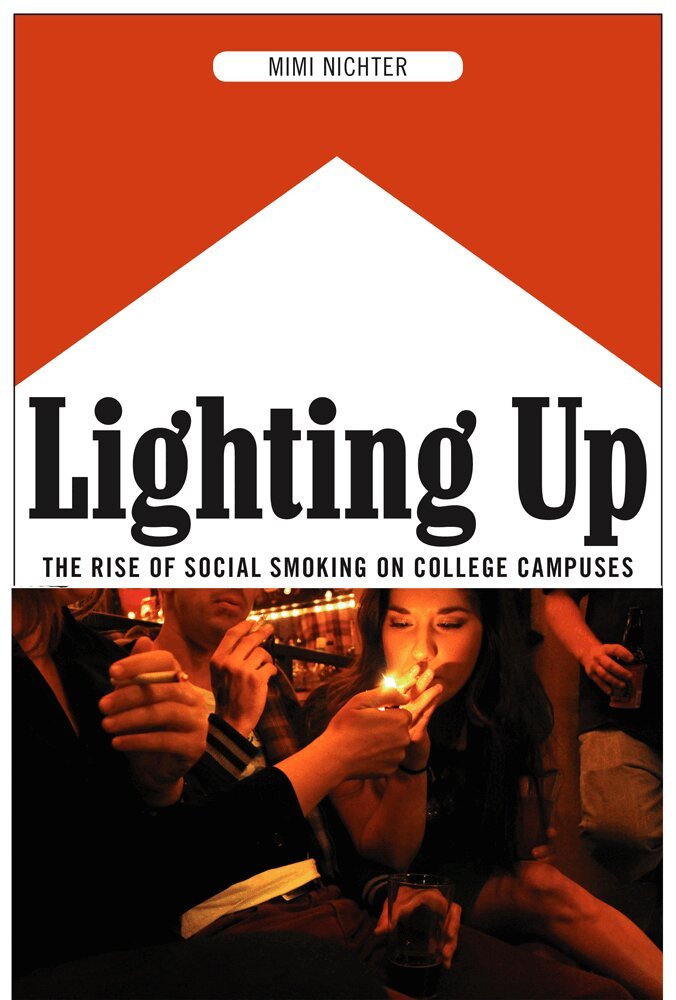
    Lighting Up

    The Rise of Social Smoking on College Campuses

    AvMimi Nichter

    Häftad, Engelska, 2015

    366 kr

    Beställningsvara. Skickas inom 5-8 vardagar. Fri frakt över 249 kr.

    Fler format och utgåvor

    Inbunden

    1 169 kr

    Beskrivning

    While the past 40 years have seen significant declines in adult smoking, this is not the case among young adults, who have the highest prevalence of smoking of all other age groups. At a time when just about everyone knows that smoking is bad for you, why do so many college students smoke? Is it a short lived phase or do they continue throughout the college years? And what happens after college, when they enter the "real world"? Drawing on interviews and focus groups with hundreds of young adults, Lighting Up takes the reader into their everyday lives to explore social smoking. Mimi Nichter argues that we must understand more about the meaning of social and low level smoking to youth, the social contexts that cause them to take up (or not take up) the habit, and the way that smoking plays a large role in students' social lives. Nichter examines how smoking facilitates social interaction, helps young people express and explore their identity, and serves as a means for communicating emotional states. Most college students who smoked socially were confident that "this was no big deal." After all, they were "not really smokers" and they would only be smoking for a short time. But, as graduation neared, they expressed ambivalence or reluctance to quit. As many grads today step into an uncertain future, where the prospect of finding a good job in a timely manner is unlikely, their 20s may be a time of great stress and instability. For those who have come to depend on the comfort of cigarettes during college, this array of life stressors may make cutting back or quitting more difficult, despite one's intentions and understandings of the harms of tobacco. And emerging products on the market, like e-cigarettes, offer an opportunity to move from smoking to vaping. Lighting Up considers how smoking fits into the lives of young adults and how uncertain times may lead to uncertain smoking trajectories that reach into adulthood.

    Produktinformation

    • Utgivningsdatum:2015-02-13
    • Mått:152 x 229 x 15 mm
    • Vikt:363 g
    • Format:Häftad
    • Språk:Engelska
    • Antal sidor:272
    • Förlag:New York University Press
    • ISBN:9780814758397

    Utforska kategorier

    • Högskola och universitet inom Psykologi och pedagogik
    • Sociala och etiska frågor inom Samhälle och politik
    • Utbildningsstrategier och utbildningspolitik inom Psykologi och pedagogik

    Mer om författaren

    Mimi Nichter is Professor in the School of Anthropology, University of Arizona where she holds joint appointments in the Norton School of Family and Consumer Sciences and the College of Public Health. She is the author of Fat Talk: What Girls and Their Parents Say About Dieting.

    Recensioner i media

    "Why does college-age smoking persist at notable and alarming levels while smoking in the adult US population has significantly declined over the past four decades? Mimi Nichter disentangles and illuminates the lure and social gains of smoking on campus through rich ethnographic accounts. This book helps to unravel the complexity of incentives to smoke among college-age students." - Linda A. Bennett,author of The Alcoholic Family "Anthropologist Nichter presents an important new contribution to the literature on youth smoking of interest to both tobacco researchers and general readers." (Choice) "Lighting Upbrings voice to the young adult college & smoker and nuanced meanings and interpretation of labels, exploring variations in smoking profile even within this defined population.Lighting Upis a good introduction to understanding the multiplicity of voices and the benefits of using alternative methods to reveal subtleties in meanings and identities of young adult smokers." (PsycCRITIQUES)

    Innehållsförteckning

    • Contents Acknowledgments ix 1. "It's No Big Deal" 1 2. Profiles and Progressions 24 3. Smoking and Drinking: "It's Like Milk and Cookies!" 45 4. What's Gender Got to Do with It? 74 5. Reconsidering Smoking as a Weight-Control Strategy 101 6. The Slippery Slope 120 7. Tipping Points: Stress, Boredom, and Romance 148 8. Quit Talk 169 9. Looking Forward: Uncertain Trajectories 194 Appendix: Methods 207 Notes 219 References 233 Index 253 About the Author 263