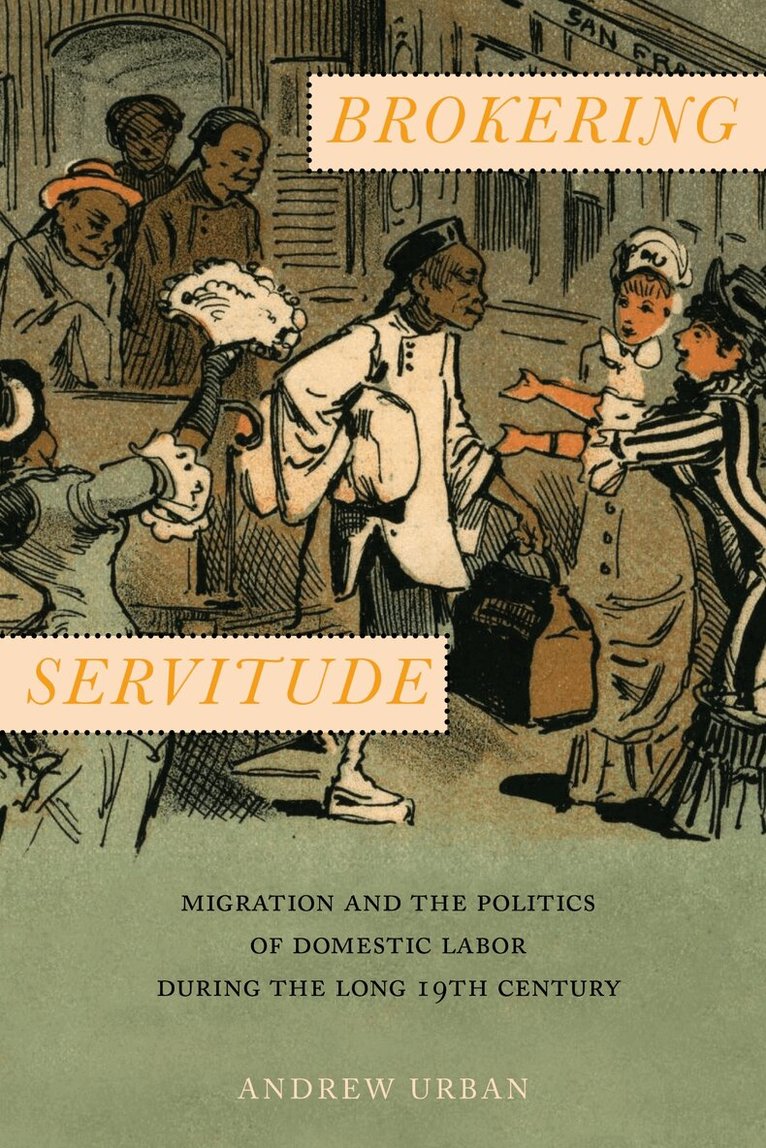
Inbunden, Engelska, 2017
Brokering Servitude
Av Andrew Urban
555 kr
Beställningsvara. Skickas inom 5-8 vardagar. Fri frakt över 249 kr.
Beskrivning
The history of domestic labor markets in 19th century America From the era of Irish Famine migration to the passage of quota restrictions in the 1920s, household domestic service was the single largest employer of women in the United States, and, in California, a pivotal occupation for male Chinese immigrants. Servants of both sexes accounted for eight percent of the total labor force – about one million people. In Brokering Servitude, Andrew Urban offers a history of these domestic servants, focusing on how Irish immigrant women, Chinese immigrant men, and American-born black women navigated the domestic labor market in the nineteenth century – a market in which they were forced to grapple with powerful racial and gendered discrimination. Through vivid examples like how post-famine Irish immigrants were enlisted to work as servants in exchange for relief, this book examines how race, citizenship, and the performance of domestic labor relate to visions of American expansion. Because household service was undesirable work stigmatized as unfree, brokers were integral to steering and compelling women, men, and children into this labor. By the end of the nineteenth century, the federal government became a major broker of domestic labor through border controls, and immigration officials became important actors in dictating which workers were available for domestic labor and under what conditions they could be contracted.Drawing on a range of sources – from political cartoons to immigrant case files to novels – Brokering Servitude connects Asian immigration, European immigration, and internal, black migration. The book ultimately demonstrates the ways in which employers pitted these groups against each other in competition for not only servant positions, but also certain forms of social inclusion, offering important insights into an oft-overlooked area of American history.
Produktinformation
- Utgivningsdatum: 2017-12-26
- Mått: 152 x 229 x 30 mm
- Vikt: 680 g
- Format: Inbunden
- Språk: Engelska
- Serie: Culture, Labor, History
- Antal sidor: 352
- Förlag: New York University Press
- ISBN: 9780814785843
Utforska kategorier
Betyg & recensioner
0 recensioner
Inga recensioner tillgängliga.