• Fri frakt över 249 kr
  • •
  • Snabba leveranser
  • •
  • Billiga böcker
Kundservice

Du är på sajten för privatpersoner.

Företag, bibliotek eller offentlig verksamhet?

Du handlar på classic.bokus.com, där alla dina funktioner finns intakta.
Till classic.bokus.com
Bokus logotyp. Gå till startsidan.
  • Erbjudanden
  • Student
  • Topplistor
  • Barn & ungdom
  • Bokus Play
  • E-böcker
  • Ljudböcker
  • Pocketböcker
  • Spel och pussel

5% studentrabatt – använd koden KURSBOK27 →

Sidfot

Mina sidor

    Hjälp

    • Kundservice
    • Vanliga frågor och svar
    • Frakt och leverans
    • Retur vid ångerrätt
    • Reklamera vara
    • Betalning
    • Köpvillkor
    • Allmänna villkor
    • Information om webbplatsens tillgänglighet

    Om Bokus

    • Om oss
    • Pressrum
    • För studenter
    • För företag
    • För bibliotek och offentlig verksamhet
    • För leverantörer
    • Hållbarhet

    Populärt

    • Aktuella erbjudanden
    • Presentkort
    • Studentlitteratur
    • Nya böcker
    • Topplistor
    • Signerade böcker
    • Engelska böcker

    Inspiration

    • Boktips
    • BookTok
    • Barnbokskaraktärer
    • Populära författare
    Logotyp för Bokus
    Följ oss på Facebook (extern länk)Följ oss på Instagram (extern länk)Följ oss på YouTube (extern länk)Följ oss på TikTok (extern länk)
    bokus @ CookiesAnpassa cookiesIntegritetspolicyKöpvillkor
    Till Citymail hemsida (extern länk)Till Budbee hemsida (extern länk)Till Postnord hemsida (extern länk)Till Schenker hemsida (extern länk)Till Early Bird hemsida (extern länk)Till Walleys hemsida (extern länk)
    1. Samhälle och politik
    2. Samhälle och kultur
    3. Kultur och medier
    4. Referensverk och tvärvetenskap

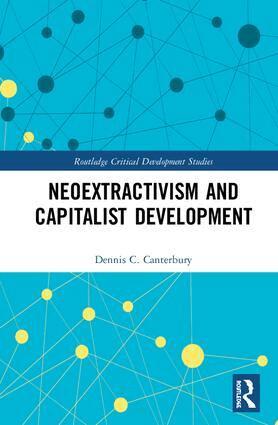
    Neoextractivism and Capitalist Development

    AvDennis C. Canterbury

    Inbunden, Engelska, 2018

    Del i serien Routledge Critical Development Studies

    2 413 kr

    Beställningsvara. Skickas inom 10-15 vardagar. Fri frakt över 249 kr.

    Fler format och utgåvor

    Häftad

    691 kr

    E-bok

    846 kr

    E-bok

    849 kr

    Beskrivning

    The large-scale extraction of natural resources for sale in capitalist markets is not a new phenomenon, but in recent years global demand for resources has increased, leading to greater attention to the role of resource extraction in the development of the exporting countries. The term neoextractivism was coined to refer to the complex of state-private sector policies intended to utilize the income from natural resources sales for development objectives and for improving the lives of a country's citizens. However, this book argues that neoextractivism is merely another conduit for capitalist development, reinforcing the position of elites, with few benefits for working people.With particular reference to the role of neoextractivism within Latin America and the Caribbean, using Guyana as a case study, the book aims to provide readers with the tools they need to critically analyze neoextractivism as a development model, identifying alternative paths for improving the human condition. This book will be of interest to academics and students in the fields of international development, political economy, sociology, and globalization, as well as to policymakers and political activists engaged in social movements in the natural resources sector.

    Produktinformation

    • Utgivningsdatum:2018-05-31
    • Mått:156 x 234 x 19 mm
    • Vikt:498 g
    • Format:Inbunden
    • Språk:Engelska
    • Serie:Routledge Critical Development Studies
    • Antal sidor:256
    • Förlag:Taylor & Francis Inc
    • ISBN:9780815356776

    Utforska kategorier

    • Referensverk och tvärvetenskap inom Samhälle och politik
    • Politik och statsskick inom Samhälle och politik
    • Etnicitet inom Samhälle och politik

    Mer om författaren

    Dennis C. Canterbury is a Professor of Sociology at Eastern Connecticut State University, USA

    Recensioner i media

    "Neoextractivism and Capitalist Development is a brilliant synthesis of economic structures, class relations and state power embedded in a historical analysis. Canterbury provides an insightful critique of the regressive role and impact of international extractive capitalist development. His incisive discussion provides a framework for identifying a progressive and dynamic alternative development model which will be of interest to students, academics and policymakers." James Petras, Bartle Professor (Emeritus), Binghamton University, USA"Karl Marx chronicled how human activity is essentially the interaction with nature to produce the basic needs for reproduction, and each epoch is characterized by who controls both the process and the outcome of those interactions. Capitalism, as a system of production, is predicated on private ownership of productive forces that appropriates the surplus generated by working men and women. With the expansion of capitalist development worldwide comes the appropriation of natural resources from former colonies masked as beneficial to local populations by a range of development theories. Dennis Canterbury reveals how neoextractivism is but one more iteration of development theory, one informed by neoliberal policies that does little to benefit society. His important case study of Guyana details how neoextractivism creates the false illusion that developing countries have escaped capitalist exploitation through the natural resource extraction of the past, and instead undermines the struggles of working people in their opposition to the ravages of capitalism." David Fasenfest, Department of Sociology, Wayne State University, USA"This is a work of consummate scholarship that will be of especial interest to members and supporters of left-wing social movements in developing countries. It reveals the limits of progressive development strategies

    Innehållsförteckning

    • IntroductionPart 1: The Debate on Neoextractivism 1. Neoextractivism and Capitalist Development: An Outline 2. Development Theory and Capitalist Development 3. Extractivism and Neoextractivism 4. Neoextractivism: Myth or Reality 5. Extractive Capitalism, Extractive Imperialism and Imperialism Part 2: Neoextractivism and Capitalist Centre-Periphery Relations 6. Natural Resources Extraction and Expanded Capitalist Relations 7. The Foundations of Post-Colonial 'New' Extractivism 8. The Post-Colonial Authoritarian State 9. The Criminalized Authoritarian State 10. Political Change and Foreign InterventionConclusion