• Fri frakt över 249 kr
  • •
  • Snabba leveranser
  • •
  • Billiga böcker
Kundservice

Du är på sajten för privatpersoner.

Företag, bibliotek eller offentlig verksamhet?

Du handlar på classic.bokus.com, där alla dina funktioner finns intakta.
Till classic.bokus.com
Bokus logotyp. Gå till startsidan.
  • Erbjudanden
  • Nyheter
  • Student
  • Topplistor
  • Barn & ungdom
  • Bokus Play
  • E-böcker
  • Pocketböcker
  • Spel & pussel

10% rabatt på allt med kod: NYSTART10 →

Sidfot

Mina sidor

    Hjälp

    • Kundservice
    • Vanliga frågor och svar
    • Frakt och leverans
    • Retur vid ångerrätt
    • Reklamera vara
    • Betalning
    • Köpvillkor
    • Allmänna villkor
    • Information om webbplatsens tillgänglighet

    Om Bokus

    • Om oss
    • Pressrum
    • För studenter
    • För företag
    • För bibliotek och offentlig verksamhet
    • För leverantörer
    • Hållbarhet

    Populärt

    • Aktuella erbjudanden
    • Presentkort
    • Studentlitteratur
    • Nya böcker
    • Topplistor
    • Signerade böcker
    • Engelska böcker

    Inspiration

    • Boktips
    • BookTok
    • Populära bokserier
    • Barnbokskaraktärer
    • Populära författare
    Logotyp för Bokus
    Följ oss på Facebook (extern länk)Följ oss på Instagram (extern länk)Följ oss på YouTube (extern länk)Följ oss på TikTok (extern länk)
    bokus @ CookiesAnpassa cookiesIntegritetspolicyKöpvillkor
    Till Citymail hemsida (extern länk)Till Budbee hemsida (extern länk)Till Postnord hemsida (extern länk)Till Schenker hemsida (extern länk)Till Early Bird hemsida (extern länk)Till Walleys hemsida (extern länk)
    1. Ekonomi och Ledarskap
    2. Industrier och branscher
    3. Tillverkningsindustri

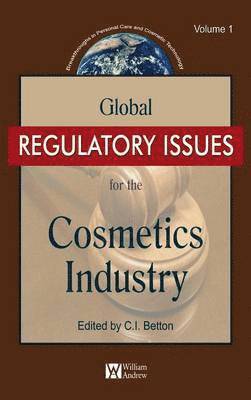
    Global Regulatory Issues for the Cosmetics Industry

    AvC.E. Betton,C. I. Betton

    Inbunden, Engelska, 2007

    Del i serien Personal Care and Cosmetic Technology

    1 386 kr

    Beställningsvara. Skickas inom 10-15 vardagar. Fri frakt över 249 kr.

    Fler format och utgåvor

    E-bok

    1 544 kr

    Beskrivning

    Global Regulatory Issues for the Cosmetics Industry, Volume 1, emerged from the first annual Cosmetic Regulatory Forum organized by Health and Beauty America (HBA) in September 2006. It is the first of an annual book mini-series surveying issues in this critical and rapidly changing area. These changes affect the health, safety, and well-being of literally billions of consumers, their governments, and the corporations involved in the prodigious task of not only creating novel, effective and safe products, but also complying with regulations, that vary from country to country. This book begins with a discussion of the risks assessment of cosmetic products. This is followed by separate chapters on the regulatory system in some of the major export markets of Canada and Australasia; the evolution and purpose of the EU's REACH (Registration, Evaluation, Authorization of Chemicals); the issue of cosmetic toxicity; and regulatory requirements and warnings for cosmetic products. Subsequent chapters cover the challenges of global chemical compliance; the development of nanotechnology-based products and their potential impact on human health and the environment; and the various packaging regulations relating to colors and additives for products marketed in North America, the EU, and Asia.

    Produktinformation

    • Utgivningsdatum:2007-08-11
    • Mått:152 x 229 x 17 mm
    • Vikt:420 g
    • Format:Inbunden
    • Språk:Engelska
    • Serie:Personal Care and Cosmetic Technology
    • Antal sidor:232
    • Förlag:Elsevier Science
    • ISBN:9780815515678

    Utforska kategorier

    • Tillverkningsindustri inom Ekonomi och Ledarskap
    • Internationell ekonomi inom Ekonomi och Ledarskap
    • Tillverkningsteknik inom Naturvetenskap och teknik

    Innehållsförteckning

    • Contributors Preface Introduction 1 Risk Assessment and Cosmetics 1.1 Introduction: Risk Perception and Regulation 1.2 Risk and Cosmetics 1.3 The Risk Assessment Process 1.3.1 Regulations 1.3.2 Role of the Safety Assessor 1.3.3 Guidance 1.3.4 Safety Assessment 1.3.5 Assessment Contents 1.3.6 Other Tests 1.4 Conclusion References 2 Regulatory Developments in Canada, Japan, Australia, China, and India 2.1 Introduction 2.2 Canada 2.3 Japan 2.4 Australia 2.5 China 2.6 India 2.7 Trade Alliances 2.8 California 2.9 Conclusion 3 The REACH Regulation of the European Union 3.1 Introduction 3.2 Why REACH? 3.3 REACH: Overview 3.4 REACH: Aims 3.4.1 Pre-registration 3.4.2 Substance Information Exchange Fora (SIEF) 3.5 Exemptions: Cosmetics? 3.6 Registration References 4 REACH: An Example of the New Paradigm in Global Product Regulation 4.1 Introduction 4.2 REACH: "No Data, No Market" 4.2.1 What is REACH? 4.2.2 How Does REACH Affect the Cosmetics Industry? 4.2.3 How Will REACH Work? 4.3 What Should Companies Be Doing Now? References 5 Developing a Global Regulatory Strategy: Leveraging Local Knowledge to Drive Rapid Market Entry 5.1 Introduction 5.2 Globalization: "One Size Does Not Fit All!" 5.3 Using Regulatory Compliance for Competitive Advantage 5.3.1 Organizational Design 5.3.2 Targeted Capability 5.3.3 Local Knowledge 5.3.4 Business Engagement 5.3.5 Cross-Functional Processes, Systems, and Tools 5.3.6 Communication Plan 5.4 The Global Launch: "Driving with Insights and Regulations" 5.5 Conclusions 6 Cosmetics: Toxicity and Regulatory Requirements in the US 6.1 Introduction 6.2 Regulatory Requirements for Cosmetics 6.2.1 Warning Statement 6.2.2 Ingredient Declaration 6.3 California Proposition 65 and California Safe Cosmetics Act of 2005 6.4 EU Cosmetics Regulation 6.5 The Future of Cosmetics Regulatory Requirements 7 Restricted Substances in Consumer Products: The Challenge of Global Chemical Compliance 7.1 Introduction 7.2 Addressing the Challenges of Emerging Globally Restricted Substances Regulations 7.3 Restricted Substances: Strategy Definition 7.3.1 Steps to Meeting Global Compliance Directives 7.4 Best Practices 7.5 Recommendation and Conclusions 8 In Vitro Toxicology for Cosmetics: Regulatory Requirements, Biological Limitations 8.1 Introduction 8.2 EU Cosmetic Legislation and Animal Testing 8.3 A Viable Timeline? 8.4 Acute Toxicity 8.5 Skin Corrosion 8.6 Skin Irritation 8.7 Eye Irritation 8.8 Skin Sensitization 8.9 Carcinogenicity 8.10 Reproductive/Developmental Toxicity 8.11 Toxicokinetics 8.11.1 Absorption 8.11.2 Distribution 8.11.3 Metabolism 8.11.4 Excretion 8.11.5 Toxicokinetics 8.12 Other Considerations 8.13 Conclusions References 9 Nanotechnology and Nanomaterial Personal Care Products: Necessary Oversight and Recommendations 9.1 Introduction 9.2 What is Nanotechnology Anyway? A New World of Tiny Technology 9.2.1 Nano Means Fundamentally Different 9.2.2 Manufactured and Engineered Nanomaterials vs. Natural Nanoparticles 9.2.3 The Next Industrial Revolution? The Stages of Nanotechnology's Predicted Development 9.3 Nanomaterials in Consumer Products: The Future is Now 9.3.1 Measures of Nanotechnology’s Maturation 9.4 What are the Human Health Risks of Nanotechnology and Nanomaterials in Personal Care Products? 9.4.1 Nanotoxicity 9.4.2 Unprecedented Mobility 9.4.3 The Public at Large 9.4.4 The Question of Skin Penetration 9.4.5 Nanomaterial Worker and Workplace Risks 9.5 What are the Environmental Risks of Nanotechnology and Nanomaterials in Personal Care Products? 9.5.1 Huge EHS Unknowns 9.6 FDA’s Regulatory Stance on Nanotechnology and Nanomaterial Personal Care Products 9.7 Nanotoxicology: Nano-specific Testing Paradigms Are Required 9.8 Nanomaterial Oversight Developments from FDA 9.9 Conclusions and Recommendations for Government and Industry 9.9.1 Support Much More Vigorous EHS Research 9.9.2 Acknowledge the Unknowns and Fundamental Differences of Nanomaterials and Act Accordingly 9.9.3 Prepare to Meet the EU Standards: The Burden of Proof is on Industry 9.9.4 Transparency 9.9.5 Repeating Past Mistakes: Running From Your Product's Label is Not a Business Plan 9.9.6 Lifecycle 9.9.7 See the Big Picture: The Question is Not if, But When 9.9.8 Learn from the Past References 10 Navigating the Turbulent Waters of Global Colorant Regulations for Packaging 10.1 Introduction 10.1.1 Authors's Note 10.2 Definitions 10.2.1 United States 10.2.2 Canada 10.2.3 European Union 10.2.4 Asia 10.3 Regulations 10.3.1 United States 10.3.2 Canada 10.3.3 European Union 10.4 Choosing the Right Colorants for Your Product 10.4.1 Dyes 10.4.2 Pigments 10.4.3 FD&C Colorants 10.4.4 Migration 10.5 Meeting the Design Challenge 10.5.1 Risk Assessment 10.5.2 The Quandry of Non-Regulation Regulations 10.5.3 Allergens 10.5.4 Testing 10.6 Importing Packaging 10.6.1 Liability Issues 10.7 Regulations at a Glance Index