• Fri frakt över 249 kr
  • •
  • Snabba leveranser
  • •
  • Billiga böcker
Kundservice

Du är på sajten för privatpersoner.

Företag, bibliotek eller offentlig verksamhet?

Du handlar på classic.bokus.com, där alla dina funktioner finns intakta.
Till classic.bokus.com
Bokus logotyp. Gå till startsidan.
  • Erbjudanden
  • Nyheter
  • Student
  • Topplistor
  • Barn & ungdom
  • Bokus Play
  • E-böcker
  • Pocketböcker
  • Spel & pussel

10% rabatt på allt med kod NYSTART10 →

Sidfot

Mina sidor

    Hjälp

    • Kundservice
    • Vanliga frågor och svar
    • Frakt och leverans
    • Retur vid ångerrätt
    • Reklamera vara
    • Betalning
    • Köpvillkor
    • Allmänna villkor
    • Information om webbplatsens tillgänglighet

    Om Bokus

    • Om oss
    • Pressrum
    • För studenter
    • För företag
    • För bibliotek och offentlig verksamhet
    • För leverantörer
    • Hållbarhet

    Populärt

    • Aktuella erbjudanden
    • Presentkort
    • Studentlitteratur
    • Nya böcker
    • Topplistor
    • Signerade böcker
    • Engelska böcker

    Inspiration

    • Boktips
    • BookTok
    • Populära bokserier
    • Barnbokskaraktärer
    • Populära författare
    Logotyp för Bokus
    Följ oss på Facebook (extern länk)Följ oss på Instagram (extern länk)Följ oss på YouTube (extern länk)Följ oss på TikTok (extern länk)
    bokus @ CookiesAnpassa cookiesIntegritetspolicyKöpvillkor
    Till Citymail hemsida (extern länk)Till Budbee hemsida (extern länk)Till Postnord hemsida (extern länk)Till Schenker hemsida (extern länk)Till Early Bird hemsida (extern länk)Till Walleys hemsida (extern länk)
    1. Historia och arkeologi
    2. Historia
    3. Europas historia

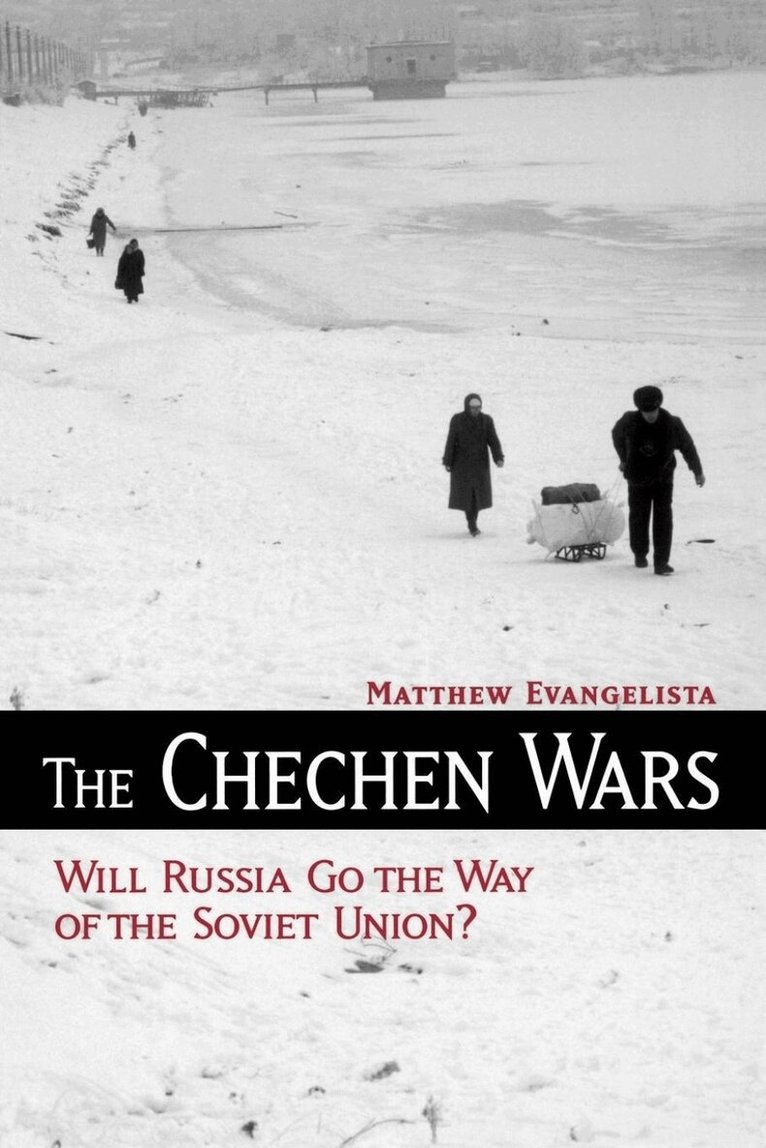
    Chechen Wars

    Will Russia Go the Way of the Soviet Union?

    AvMatthew Evangelista

    Häftad, Engelska, 2002

    308 kr

    Beställningsvara. Skickas inom 10-15 vardagar. Fri frakt över 249 kr.

    Fler format och utgåvor

    E-bok

    327 kr

    Beskrivning

    Following the breakup of the Soviet Union, Boris Yeltsin improvised a system of ""asymmetric federalism"" to help maintain its successor state, the Russian Federation. However, when sparks of independence flared up in Chechnya, Yeltsin and, later, Vladimir Putin chose military action to deal with a ""brushfire"" that they feared would spread to other regions and eventually destroy the federation. Matthew Evangelista examines the causes of the Chechen Wars of 1994 and 1999 and challenges Moscow's claims that the Russian Federation was too fragile to withstand the potential loss of one rebellious republic. He suggests that the danger for Russia lies less in a Soviet-style disintegration than in a misguided attempt at authoritarian recentralization, something that would jeopardize Russia's fledgling democratic institutions. He also contends that well-documented acts of terrorism by some Chechen fighters should not serve as an excuse for Russia to commit war crimes and atrocities. Evangelista urges emerging democracies like Russia to deal with violent internal conflict and terrorism without undermining the fundamental rights and freedoms of their citizens. He recommends that the United States and other democracies be more attentive to Moscow's violations of human rights and, in their own struggle against terrorism, provide a kind of role model.

    Produktinformation

    • Utgivningsdatum:2002-11-12
    • Mått:152 x 228 x 16 mm
    • Vikt:413 g
    • Format:Häftad
    • Språk:Engelska
    • Antal sidor:260
    • Förlag:Bloomsbury Publishing Plc
    • ISBN:9780815724995

    Utforska kategorier

    • Europas historia inom Historia och arkeologi
    • Militära operationer inom Samhälle och politik
    • Internationella relationer inom Samhälle och politik

    Mer om författaren

    Matthew Evangelista is professor of government and director of the Peace Studies Program at Cornell University, New York, USA. He is the author of the award-winning Unarmed Forces: The Transnational Movement to End the Cold War (Cornell University Press).

    Recensioner i media

    "It is... well researched, drawing on both a sizeable secondary literature and numerous Russian language sources.... his arguments are convincing and any who believe that Russia under Putin is still on a reform path or moving towards democracy must engage with the points raised in this work, as the war in Chechnya remains central to the development of post-communist Russia." —Paul Kubicek, Oakland University, International Affairs, 1/1/2004|"... provides a fascinating and well structured picture of the background for and events leading up to the two wars. Evangelista's work should be required reading for anyone with an interest in Russia and its relationships with its federal partners.... This is an important book, and makes a significant contribution to the limited library of literature on Chechnya.... It is not only for experts, even those who have a very limited knowledge of the situation will be enlightened by it." —Graham Dyson, Centre for Peacebuilding and Conflict, International Journal on World Peace, 12/1/2003|"[letter to editor]" —Matthew Evangelista, Foreign Affairs, 5/1/2003|"[Evangelista] offers one of the few original, systematic discussions of a question that has attracted mostly sloganeering from both supporters and opponents of Chechen independence." —Lawrence A. Uzzell, Chechnya Weekly, 2/20/2003|"A close, meticulous study of the root causes of the Chechen Wars of 1994 and 1999, and an informative, scholarly examination of the impact these conflicts had on both Chechnya and Russia." — The Bookwatch, 4/1/2003|"Evangelista provides a clear, focused analysis of Russia's ongoing war in Chechnya -- why the two wars were launched (in 1994 and 1999) and what they imply for the Russian political system as a whole." —P. Rutland, Wesleyan University, Choice|"[An] impressive new book.... a compelling synthesis of new insights from Russian soldiers, scholars, and policymakers." —Charles King, Georgetown University, Foreign Affairs, 3/1/2003