• Fri frakt över 249 kr
  • •
  • Snabba leveranser
  • •
  • Billiga böcker
Kundservice

Du är på sajten för privatpersoner.

Företag, bibliotek eller offentlig verksamhet?

Du handlar på classic.bokus.com, där alla dina funktioner finns intakta.
Till classic.bokus.com
Bokus logotyp. Gå till startsidan.
  • Erbjudanden
  • Nyheter
  • Student
  • Topplistor
  • Barn & ungdom
  • Bokus Play
  • E-böcker
  • Pocketböcker
  • Spel & pussel

10% rabatt på allt med kod: NYSTART10 →

Sidfot

Mina sidor

    Hjälp

    • Kundservice
    • Vanliga frågor och svar
    • Frakt och leverans
    • Retur vid ångerrätt
    • Reklamera vara
    • Betalning
    • Köpvillkor
    • Allmänna villkor
    • Information om webbplatsens tillgänglighet

    Om Bokus

    • Om oss
    • Pressrum
    • För studenter
    • För företag
    • För bibliotek och offentlig verksamhet
    • För leverantörer
    • Hållbarhet

    Populärt

    • Aktuella erbjudanden
    • Presentkort
    • Studentlitteratur
    • Nya böcker
    • Topplistor
    • Signerade böcker
    • Engelska böcker

    Inspiration

    • Boktips
    • BookTok
    • Populära bokserier
    • Barnbokskaraktärer
    • Populära författare
    Logotyp för Bokus
    Följ oss på Facebook (extern länk)Följ oss på Instagram (extern länk)Följ oss på YouTube (extern länk)Följ oss på TikTok (extern länk)
    bokus @ CookiesAnpassa cookiesIntegritetspolicyKöpvillkor
    Till Citymail hemsida (extern länk)Till Budbee hemsida (extern länk)Till Postnord hemsida (extern länk)Till Schenker hemsida (extern länk)Till Early Bird hemsida (extern länk)Till Walleys hemsida (extern länk)
    1. Samhälle och politik
    2. Politik och statsskick
    3. Statsvetenskap och politisk teori

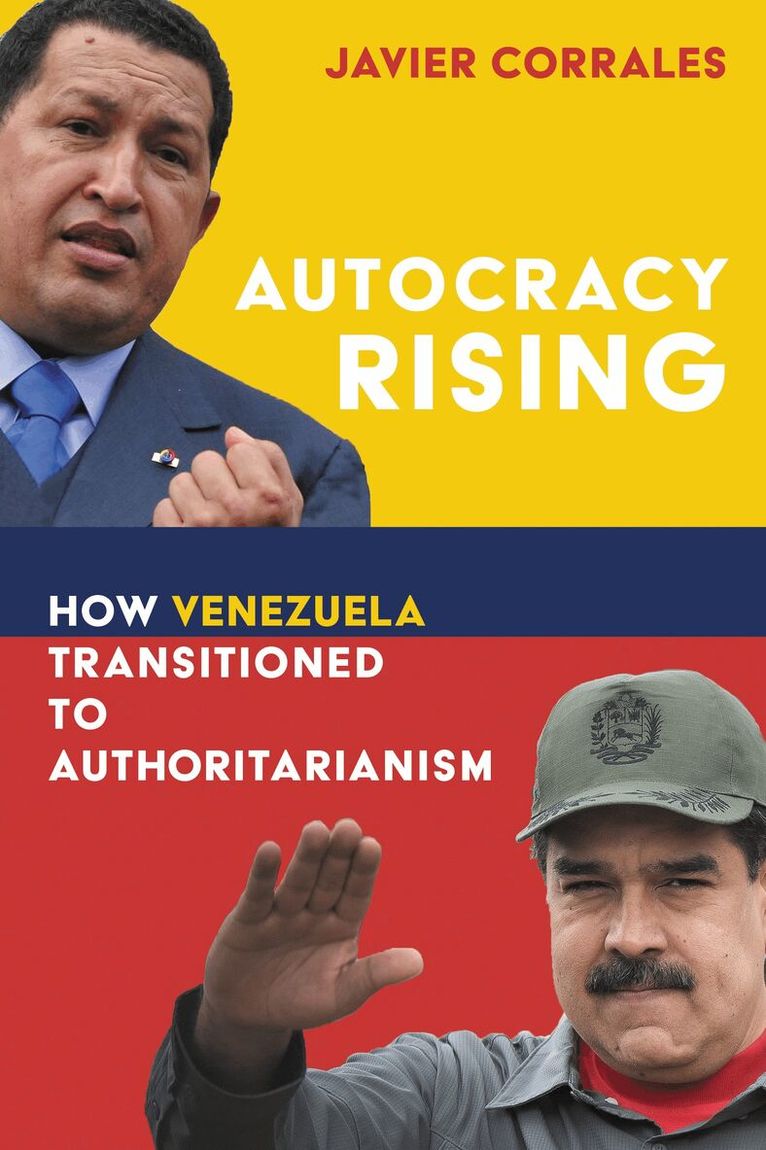
    Autocracy Rising

    How Venezuela Transitioned to Authoritarianism

    AvJavier Corrales

    Häftad, Engelska, 2023

    368 kr

    Beställningsvara. Skickas inom 10-15 vardagar. Fri frakt över 249 kr.

    Fler format och utgåvor

    E-bok

    393 kr

    Inbunden

    909 kr

    Beskrivning

    How Nicolás Maduro reinvented authoritarianism for the twenty-first centurVenezuela, which once enjoyed periods of democratically elected governments in the latter half of the twentieth century, has descended into autocratic rule, coupled with economic collapse. In his new book, Autocracy Rising, veteran scholar of Latin American politics Javier Corrales explores how and why this happened.Corrales focuses on two themes: party systems and institutional capacity. He argues that Venezuela’s democratic backsliding advanced when the ruling party obtained far too much electoral clout while the opposition fragmented. The state then took control of formerly independent agencies of the state. This allowed the ruling party to use and abuse of the law to favor the president—which in turn generated a permanent economic crisis. After succeeding Hugo Chávez in 2013, Nicolás Maduro confronted, unexpectedly, another change in the party system: a rising opposition. This triggered deeper autocratization. To survive, the state was compelled to modernize autocratic practices and seek alliances with sinister partners. In short, Maduro concentrated power, paradoxically, by sharing power. Autocracy Rising compares what occurred in Venezuela to twenty other cases throughout Latin America where presidents were forced out of office. Corrales illuminates the depressing cycle in which semi-authoritarian regimes become increasingly autocratic in response to crisis, only to cause new crises that lead to even greater authoritarianism.

    Produktinformation

    • Utgivningsdatum:2023-03-01
    • Mått:154 x 223 x 14 mm
    • Vikt:349 g
    • Format:Häftad
    • Språk:Engelska
    • Antal sidor:256
    • Förlag:Bloomsbury Publishing Plc
    • ISBN:9780815738077

    Utforska kategorier

    • Statsvetenskap och politisk teori inom Samhälle och politik
    • Politik och statsskick inom Samhälle och politik
    • Statsskick och politiska processer inom Samhälle och politik

    Mer om författaren

    Javier Corrales is Dwight W. Morrow 1895 Professor of Political Science at Amherst College. He is the coauthor of Dragon in the Tropics: Venezuela and the Legacy of Hugo Chávez (Brookings, 2015).

    Recensioner i media

    A worthy sequel to Corrales’s earlier classic Dragon in the Tropics, Autocracy Rising rigorously examines the paradox of the perseverance of the Venezuelan dictator Nicolás Maduro in the midst of economic collapse and severe international sanctions. Corrales offers three compelling explanations for Maduro’s survival: asymmetric party system fragmentation, wherein the strength of the ruling party (rooted in deep networks of clientelism and cronyism) eclipses a fragmented opposition; institutional destruction and colonization, with the state exercising tremendous control over the electoral authorities, the coercive apparatus, and the courts (what Corrales labels ‘autocratic legalism’); and, most originally, institutional innovation (‘functional fusion’) in which institutions begin to multitask. The military acquires business functions, a constituent assembly becomes a legislature, local political councils become food distribution networks, and criminal syndicates acquire some of the functions of the state. In addition, Corrales provides valuable comparative case studies: Nicaragua offers a similar story of ascendant authoritarianism, but Colombia and Ecuador suggest that liberal democracy can fight back. Somewhat surprisingly, Corrales concludes that Maduro’s rule remains tenuous, well short of true autocratic consolidation.

    Innehållsförteckning

    • Preface Acknowledgments 1 Introduction: Party Systems, Institutional Capturing, and Autocratization2 Rethinking Democratic Backsliding: Politics before Maduro3 The Worst Economic Crisis outside of War: The Political Economy of Collapse4 Rising Opposition: Party-building in Times of Autocratization5 Rising Autocracy: Autocratic Tools to Survive Crises6 Comparisons: Nicaragua, Colombia, and Ecuador7 Function Fusion: A Survival Tool for Embattled States8 Conclusion: Vulnerable Autocracy, Collapsing NationNotesReferencesIndex