• Fri frakt över 249 kr
  • •
  • Snabba leveranser
  • •
  • Billiga böcker
Kundservice

Du är på sajten för privatpersoner.

Företag, bibliotek eller offentlig verksamhet?

Du handlar på classic.bokus.com, där alla dina funktioner finns intakta.
Till classic.bokus.com
Bokus logotyp. Gå till startsidan.
  • Erbjudanden
  • Nyheter
  • Student
  • Topplistor
  • Barn & ungdom
  • Bokus Play
  • E-böcker
  • Pocketböcker
  • Spel & pussel

10% rabatt på allt med kod NYSTART10 →

Sidfot

Mina sidor

    Hjälp

    • Kundservice
    • Vanliga frågor och svar
    • Frakt och leverans
    • Retur vid ångerrätt
    • Reklamera vara
    • Betalning
    • Köpvillkor
    • Allmänna villkor
    • Information om webbplatsens tillgänglighet

    Om Bokus

    • Om oss
    • Pressrum
    • För studenter
    • För företag
    • För bibliotek och offentlig verksamhet
    • För leverantörer
    • Hållbarhet

    Populärt

    • Aktuella erbjudanden
    • Presentkort
    • Studentlitteratur
    • Nya böcker
    • Topplistor
    • Signerade böcker
    • Engelska böcker

    Inspiration

    • Boktips
    • BookTok
    • Populära bokserier
    • Barnbokskaraktärer
    • Populära författare
    Logotyp för Bokus
    Följ oss på Facebook (extern länk)Följ oss på Instagram (extern länk)Följ oss på YouTube (extern länk)Följ oss på TikTok (extern länk)
    bokus @ CookiesAnpassa cookiesIntegritetspolicyKöpvillkor
    Till Citymail hemsida (extern länk)Till Budbee hemsida (extern länk)Till Postnord hemsida (extern länk)Till Schenker hemsida (extern länk)Till Early Bird hemsida (extern länk)Till Walleys hemsida (extern länk)
    1. Samhälle och politik
    2. Politik och statsskick
    3. Centralt styre och förvaltning

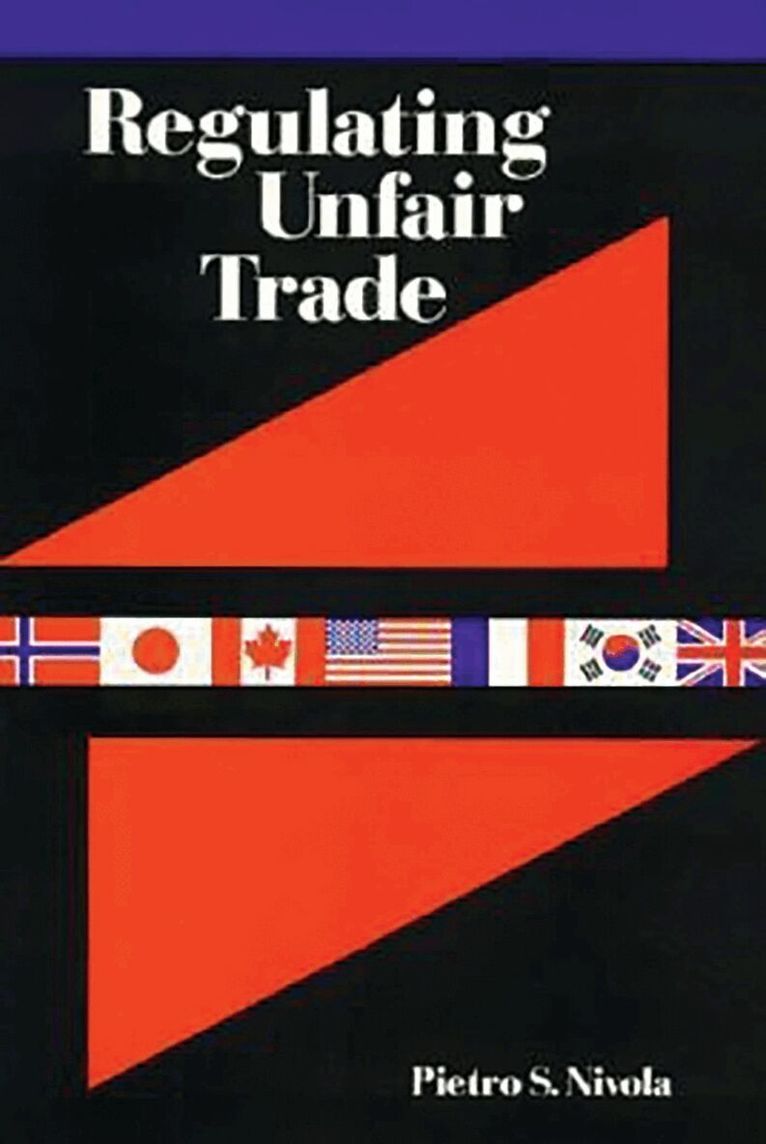
    Regulating Unfair Trade

    AvPietro S. Nivola

    Häftad, Engelska, 1993

    262 kr

    Beställningsvara. Skickas inom 10-15 vardagar. Fri frakt över 249 kr.

    Fler format och utgåvor

    E-bok

    278 kr

    Beskrivning

    In the early 1980s, American complaints about unfair trade practices began to intensify. Sunrise industries, such as manufacturers of semiconductors and telecommunications equipment, joined older complainants, including steel and textile producers, in seeking more safeguards against international competitors who priced their products too aggressively or whose governments subsidized exports or protected home markets. In this politically charged atmosphere, the U.S. government has devised increasingly stringent regulatory programs to address the claimed abuses and distortions. In this book, Pietro Nivola examines the strenuous effort to combat the objectionable trading practices of other countries. Through most of the postwar period, Nivola notes, policymakers had deemed it in the nation's economic and strategic interests to tolerate asymmetries and infractions in the international trading order. But that tolerance has been sharply lowered by heightened sensitivity to inequities, and a growing conviction that government should intervene, frequently and forcefully, to ensure a ""level playing field."" The book maintains that foreign protectionism lower East-West tensions, and alleged American decline in the face of international competition cannot fully explain the stiffening regulation of unfair trade. The world trading system, Nivola contends, is not more restrictive now than it was earlier. Cries about foreign commercial transgressions in recent years have remained shrill despite a formidable U.S. export boom and an improved current account valance. Much of the U.S. regulatory activity has acquired a political momentum of its own. The activity has increased not just because global competitive pressures have generally intensified but because we have developed more ways and inducement to complain about those pressures. Nivola cautions that trade regulations now bears too much of the burden for ameliorating economic imbalances and deficiencies. The tendency adds to a sense of frustration that fuels demands for additional regulations. While recognizing the need for an explicit and responsible trade policy, Nivola concludes that such a policy must be based, first and foremost, on realistic expectations. Trade actions need to compliment, not subordinate, a more basic agenda: improvement in the national rates of saving and investment, better preparation of the work force, control of runaway health care costs, less litigation, and more regulatory reform—all of which are likely to be far more consequential for the nation's long-term competitiveness and living standards.

    Produktinformation

    • Utgivningsdatum:1993-01-01
    • Mått:152 x 229 x 13 mm
    • Vikt:349 g
    • Format:Häftad
    • Språk:Engelska
    • Antal sidor:210
    • Förlag:Bloomsbury Publishing Plc
    • ISBN:9780815760894

    Utforska kategorier

    • Centralt styre och förvaltning inom Samhälle och politik
    • Internationell ekonomi inom Ekonomi och Ledarskap
    • Författningsrätt och förvaltningsrätt inom Juridik

    Mer om författaren

    Pietro S. Nivola is a vice president of the Brookings Institution, where he is the director of Governance Studies. Among his previous books are Tense Commandments: Federal Prescriptions and City Problems (Brookings, 2002) and Agenda for the Nation, coedited with Henry J. Aaron and James M. Lindsay (Brookings, 2003).

    Recensioner i media

    "An excellent account of trade regulation: balanced, informative, intelligent. Nivola captures the interplay among trade regulators as well as the effects of regulation. This is required reading for anyone interested in trade regulations." —Ronald A. Cass, Dean, Boston University School of Law|"Nivola has written an excellent book that addresses a complex subject in a scholarly yet highly readable fashion. It brings an original perspective to the unfair trade debate, by ably balancing the tension between persistent underlying pressures for trade relief (whether trade is fair or unfair) and genuine grievances that American Firms find with foreign trade practices" —Gary Clyde Hufbauer, Reginald Jones Senior Fellow, Institute for International Economics|"This is an exceptionally readable book. because of the author's engaging style, it is likely to be popular with a considerably larger audience than just academics, economics and political science students, and specialists in trade policy...An interesting and convincing analysis." —Robert A. Baldwin, Hilldale Professor of Economics, University of Wisconsin