• Fri frakt över 249 kr
  • •
  • Snabba leveranser
  • •
  • Billiga böcker
Kundservice

Du är på sajten för privatpersoner.

Företag, bibliotek eller offentlig verksamhet?

Du handlar på classic.bokus.com, där alla dina funktioner finns intakta.
Till classic.bokus.com
Bokus logotyp. Gå till startsidan.
  • Erbjudanden
  • Nyheter
  • Student
  • Topplistor
  • Barn & ungdom
  • Bokus Play
  • E-böcker
  • Pocketböcker
  • Spel & pussel

Må bättre, för mindre! Upp till 50% rabatt på hälsoböcker

Sidfot

Mina sidor

    Hjälp

    • Kundservice
    • Vanliga frågor och svar
    • Frakt och leverans
    • Retur vid ångerrätt
    • Reklamera vara
    • Betalning
    • Köpvillkor
    • Allmänna villkor
    • Information om webbplatsens tillgänglighet

    Om Bokus

    • Om oss
    • Pressrum
    • För studenter
    • För företag
    • För bibliotek och offentlig verksamhet
    • För leverantörer
    • Hållbarhet

    Populärt

    • Aktuella erbjudanden
    • Presentkort
    • Studentlitteratur
    • Nya böcker
    • Topplistor
    • Signerade böcker
    • Engelska böcker

    Inspiration

    • Boktips
    • BookTok
    • Populära bokserier
    • Barnbokskaraktärer
    • Populära författare
    Logotyp för Bokus
    Följ oss på Facebook (extern länk)Följ oss på Instagram (extern länk)Följ oss på YouTube (extern länk)Följ oss på TikTok (extern länk)
    bokus @ CookiesAnpassa cookiesIntegritetspolicyKöpvillkor
    Till Citymail hemsida (extern länk)Till Budbee hemsida (extern länk)Till Postnord hemsida (extern länk)Till Schenker hemsida (extern länk)Till Early Bird hemsida (extern länk)Till Walleys hemsida (extern länk)
    1. Djur och Natur
    2. Naturböcker
    3. Växtböcker

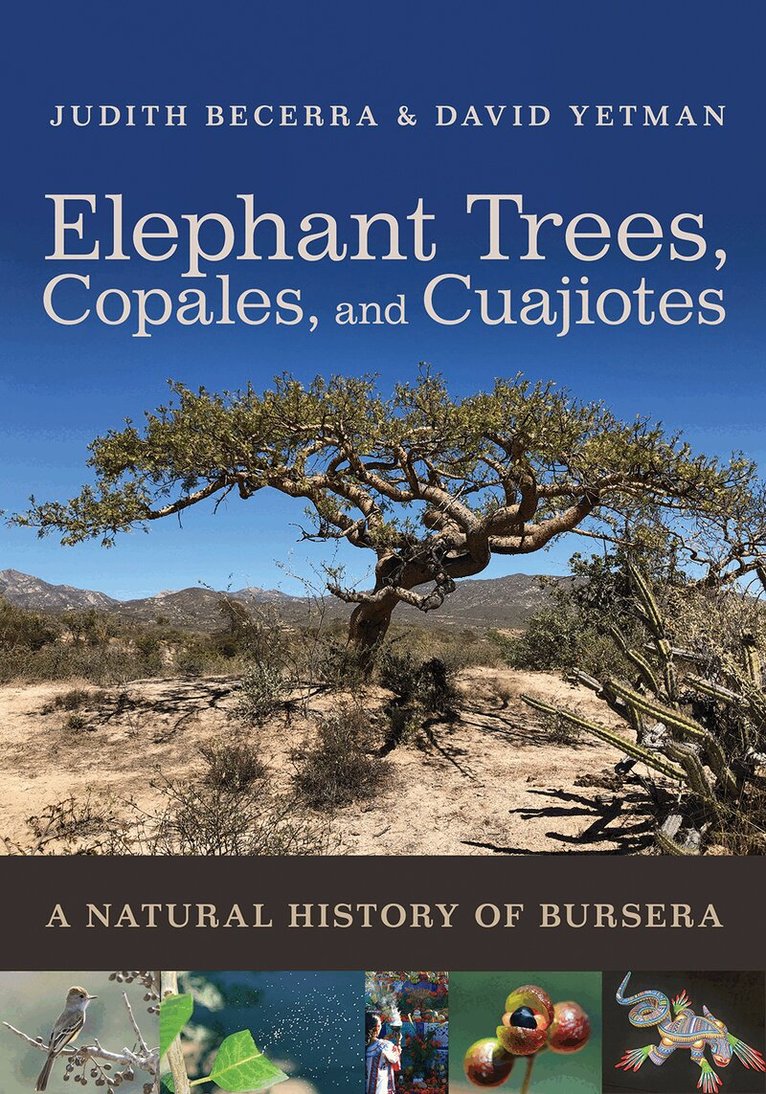
    Elephant Trees, Copales, and Cuajiotes

    A Natural History of Bursera

    AvJudith X. Becerra,David Yetman

    Häftad, Engelska, 2024

    322 kr

    Beställningsvara. Skickas inom 5-8 vardagar. Fri frakt över 249 kr.

    Beskrivning

    Predominantly native to the U.S. Southwest, Mexico, and the Caribbean, the various species of Bursera have been prized throughout history for their distinctive aromas, medicinal properties, workable wood, and attractive appearance. Despite its extensive past and current use as incense in religious ceremonies, and its resourceful antiseptic ability to treat a range of maladies, no comprehensive book exists on this vital yet overlooked plant. Highlighting bursera’s importance and impact within the desert Southwest and Mexico, this volume will be the first book to describe the ecology, evolution, ethnobotany, and peculiar chemistry of the many species of Bursera.In the United States, Bursera is represented by the short, contorted, and aromatic elephant tree of the hot Sonoran Desert and the stately and colorful gumbo limbo of southern Florida, while in the torrid lowlands of southern Mexico, the engines of evolution have produced forests dominated by dozens of species of Bursera, each with a peculiar ecological slot. This evolutionary tableau presents a complicated sex life that puzzles scientists. Recent research also reveals a gripping narrative of an epic struggle between trees and the insects that would subsist on their leaves: the insects seeking to exploit a food resource, the trees reacting with ever-changing, dramatic counter strategies. In addition to the fascinating and intricate workings of the genus’s ecological adaptations, burseras play a formative role in the lives of indigenous populations. Native peoples relish the plants’ aromatic resin, workable wood, and often colorful bark as a source for endless human applications.Written in an engaging style, enhanced with two hundred color photographs, and complete with a compendium of species descriptions, this book will be an essential reference on a significant North American plant.

    Produktinformation

    • Utgivningsdatum:2024-02-06
    • Mått:178 x 254 x 15 mm
    • Vikt:272 g
    • Format:Häftad
    • Språk:Engelska
    • Antal sidor:272
    • Förlag:University of Arizona Press
    • Medarbetare:Exequiel Ezcurra
    • ISBN:9780816551941

    Utforska kategorier

    • Växtböcker inom Djur och Natur
    • Naturhistoriska böcker inom Djur och Natur
    • Reseböcker inom Reseguider

    Mer om författaren

    Judith Becerra is an associate professor at Biosphere 2, University of Arizona. A Fulbright, Beckman, and National Geographic award winner, Becerra’s research interests include the evolution and ecology of the genus Bursera and interaction with herbivores and the chemical and genomic links between stinkbugs and Alzheimer’s disease.David Yetman is a researcher at the Southwest Center of the University of Arizona whose specialties include the peoples and ecology of northwest Mexico and the southwestern United States. He is the author of numerous books, including Sonora: An Intimate Geography and The Saguaro Cactus: A Natural History. He has traveled extensively in the Bursera-rich regions of southern and western Mexico.

    Recensioner i media

    If you’re curious why a tree might spit at you, if you're interested in cultivating the most fantastically shaped bonsai trees of the Americas, if you're wondering which plants produce a fragrant sap that ends up in the incense burners of Mexican churches—you need to read this book. It’s not just the definitive treatment of over a hundred species of Bursera. It's about the dizzying diversity of life that is Mexico." - Jim Malusa, author of Into Thick Air: Biking to the Bellybutton of Six Continents"This fascinating book summarizes the natural history of the genus Bursera, a group of trees of immense ethnobotanical importance in the drylands of Mesoamerica and Aridoamerica but surprisingly overlooked in the published literature. Together with its sister species in Africa and the Old World—frankincense and myrrh—there is no major religion in the world that does not use resins from plants in this family to enhance spiritual contemplation, prayer, and healing. And yet very few people seem to know much about these fascinating plants that have been so critically important in the evolution of traditional lores in the deserts and drylands of North America." - Exequiel Ezcurra, co-author of The Basin of Mexico: Critical Environmental Issues and Sustainability

    Innehållsförteckning

    • ForewordAcknowledgmentsIntroduction1. The Physical Setting: Mexico’s Mountain Ranges and Climate2. American Tropical Deciduous Forests3. Bursera Through Time: The Advantages of Being at the Right Place at the Right Time4. Bursera’s Anatomical and Physiological Adaptations to the LandTo Exfoliate or Not to Exfoliate, That Is the QuestionSucculenceLeaves, the Most Variable Trait of Bursera5. Bursera Leaves and Their Interactions with Leaf Devourers6. Bursera Reproductive Traits, or a Genus with Confused SexualityReproductive SystemsFlowersFruits7. Bursera and PeopleResinsEssential OilBursera Wooden Artifacts8. Where Burseras Grow9. How to Grow Burseras10. Systematics and TaxonomyBursera Belongs to the BurseraceaeEvolutionary Relationships Within the Genus11. Bursera: Genus and Species Descriptions12. Index of Plants by Major Leaf Traits and LocationGlossaryReferencesIndex