• Fri frakt över 249 kr
  • •
  • Snabba leveranser
  • •
  • Billiga böcker
Kundservice

Du är på sajten för privatpersoner.

Företag, bibliotek eller offentlig verksamhet?

Du handlar på classic.bokus.com, där alla dina funktioner finns intakta.
Till classic.bokus.com
Bokus logotyp. Gå till startsidan.
  • Erbjudanden
  • Nyheter
  • Student
  • Topplistor
  • Barn & ungdom
  • Bokus Play
  • E-böcker
  • Pocketböcker
  • Spel & pussel

10% rabatt på allt med kod: NYSTART10 →

Sidfot

Mina sidor

    Hjälp

    • Kundservice
    • Vanliga frågor och svar
    • Frakt och leverans
    • Retur vid ångerrätt
    • Reklamera vara
    • Betalning
    • Köpvillkor
    • Allmänna villkor
    • Information om webbplatsens tillgänglighet

    Om Bokus

    • Om oss
    • Pressrum
    • För studenter
    • För företag
    • För bibliotek och offentlig verksamhet
    • För leverantörer
    • Hållbarhet

    Populärt

    • Aktuella erbjudanden
    • Presentkort
    • Studentlitteratur
    • Nya böcker
    • Topplistor
    • Signerade böcker
    • Engelska böcker

    Inspiration

    • Boktips
    • BookTok
    • Populära bokserier
    • Barnbokskaraktärer
    • Populära författare
    Logotyp för Bokus
    Följ oss på Facebook (extern länk)Följ oss på Instagram (extern länk)Följ oss på YouTube (extern länk)Följ oss på TikTok (extern länk)
    bokus @ CookiesAnpassa cookiesIntegritetspolicyKöpvillkor
    Till Citymail hemsida (extern länk)Till Budbee hemsida (extern länk)Till Postnord hemsida (extern länk)Till Schenker hemsida (extern länk)Till Early Bird hemsida (extern länk)Till Walleys hemsida (extern länk)
    1. Naturvetenskap och teknik
    2. Geovetenskap
    3. Miljövetenskap och miljöpolitik

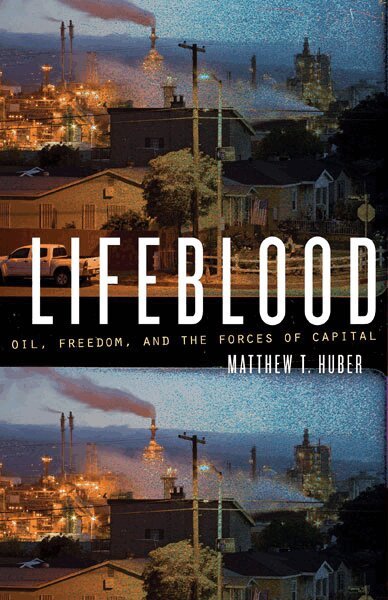
    Lifeblood

    Oil, Freedom, and the Forces of Capital

    AvMatthew T. Huber

    Häftad, Engelska, 2013

    Del i serien Quadrant Book

    303 kr

    Beställningsvara. Skickas inom 5-8 vardagar. Fri frakt över 249 kr.

    Beskrivning

    If our oil addiction is so bad for us, why don’t we kick the habit? Looking beyond the usual culprits-Big Oil, petro-states, and the strategists of empire-Lifeblood finds a deeper and more complex explanation in everyday practices of oil consumption in American culture. Those practices, Matthew T. Huber suggests, have in fact been instrumental in shaping the broader cultural politics of American capitalism.How did gasoline and countless other petroleum products become so central to our notions of the American way of life? Huber traces the answer from the 1930s through the oil shocks of the 1970s to our present predicament, revealing that oil’s role in defining popular culture extends far beyond material connections between oil, suburbia, and automobility. He shows how oil powered a cultural politics of entrepreneurial life-the very American idea that life itself is a product of individual entrepreneurial capacities. In so doing he uses oil to retell American political history from the triumph of New Deal liberalism to the rise of the New Right, from oil’s celebration as the lifeblood of postwar capitalism to increasing anxieties over oil addiction.Lifeblood rethinks debates surrounding energy and capitalism, neoliberalism and nature, and the importance of suburbanization in the rightward shift in American politics. Today, Huber tells us, as crises attributable to oil intensify, a populist clamoring for cheap energy has less to do with American excess than with the eroding conditions of life under neoliberalism.

    Produktinformation

    • Utgivningsdatum:2013-08-09
    • Mått:140 x 216 x 38 mm
    • Vikt:348 g
    • Format:Häftad
    • Språk:Engelska
    • Serie:Quadrant Book
    • Antal sidor:288
    • Förlag:University of Minnesota Press
    • ISBN:9780816677856
    • Utmärkelser:Winner of Lifeblood 2014

    Utforska kategorier

    • Miljövetenskap och miljöpolitik inom Naturvetenskap och teknik
    • Amerikas historia inom Historia och arkeologi

    Mer om författaren

    Matthew T. Huber is assistant professor of geography at the Maxwell School of Syracuse University.

    Recensioner i media

    "Lifeblood offers a radically alternative way of thinking about ‘cheap oil’ and ‘oil addiction’ and in so doing peers beneath the liquid surfaces of petroleum to see how the long century of American oil consumption has been central to the rise of American neoliberalism itself. An original and masterful account of oil in contemporary American capitalism."-Michael Watts, University of California, Berkeley"Compellingly presented and enlivened by fascinating archival research, Huber’s arguments about the ‘ecology of politics’ and the centrality of oil to the making of ‘entrepreneurial life’ are important and intriguing."-Gavin Bridge, Durham University"Huber offers a poignant analysis of how oil shapes “the American way of life” and neoliberal hegemony in the US."-CHOICE"Huber makes it abundantly clear that the problems with patterns of oil consumption are not fundamentally technical and economic but cultural, social, and political."-Economic Geography"An incisive look into how oil permeates our lives and helped shape American politics during the twentieth century."-New Books in Geography"The most succinct, theoretically grounded critique of the culture of oil yet in print."-Humanities and Social Sciences Review Online"[Lifeblood Oil] is a compelling account, and is highly recommended."-Urban Studies"Huber takes us. . . into Americans’ own subconscious minds, to their un-thought-out daily patterns, and their emotional attachments to a sense of entrepreneurial success--and shows how these are linked materially to oil."-Environmental History"An elegantly written and empirically rich account which joins economic history, cultural analysis, and Marxist political economy."-Human Geography

    Innehållsförteckning

    • ContentsIntroduction: Oil, Life, Politics1. The Power of Oil? Energy, Machines, and the Forces of Capital2. Refueling Capitalism: Depression, Oil, and the Making of “the American Way of Life”3. Fractionated Lives: Refineries and the Ecology of Entrepreneurial Life4. Shocked! “Energy Crisis,” Neoliberalism, and the Construction of an Apolitical Economy5. Pain at the Pump: Gas Prices, Life, and Death under NeoliberalismConclusion: Energizing FreedomAcknowledgmentsNotesBibliographyIndex