• Fri frakt över 249 kr
  • •
  • Snabba leveranser
  • •
  • Billiga böcker
Kundservice

Du är på sajten för privatpersoner.

Företag, bibliotek eller offentlig verksamhet?

Du handlar på classic.bokus.com, där alla dina funktioner finns intakta.
Till classic.bokus.com
Bokus logotyp. Gå till startsidan.
  • Erbjudanden
  • Nyheter
  • Student
  • Topplistor
  • Barn & ungdom
  • Bokus Play
  • E-böcker
  • Pocketböcker
  • Spel & pussel

Må bättre, för mindre! Upp till 50% rabatt på hälsoböcker

Sidfot

Mina sidor

    Hjälp

    • Kundservice
    • Vanliga frågor och svar
    • Frakt och leverans
    • Retur vid ångerrätt
    • Reklamera vara
    • Betalning
    • Köpvillkor
    • Allmänna villkor
    • Information om webbplatsens tillgänglighet

    Om Bokus

    • Om oss
    • Pressrum
    • För studenter
    • För företag
    • För bibliotek och offentlig verksamhet
    • För leverantörer
    • Hållbarhet

    Populärt

    • Aktuella erbjudanden
    • Presentkort
    • Studentlitteratur
    • Nya böcker
    • Topplistor
    • Signerade böcker
    • Engelska böcker

    Inspiration

    • Boktips
    • BookTok
    • Populära bokserier
    • Barnbokskaraktärer
    • Populära författare
    Logotyp för Bokus
    Följ oss på Facebook (extern länk)Följ oss på Instagram (extern länk)Följ oss på YouTube (extern länk)Följ oss på TikTok (extern länk)
    bokus @ CookiesAnpassa cookiesIntegritetspolicyKöpvillkor
    Till Citymail hemsida (extern länk)Till Budbee hemsida (extern länk)Till Postnord hemsida (extern länk)Till Schenker hemsida (extern länk)Till Early Bird hemsida (extern länk)Till Walleys hemsida (extern länk)
    1. Kultur
    2. Arkitektur
    3. Arkitekturhistoria

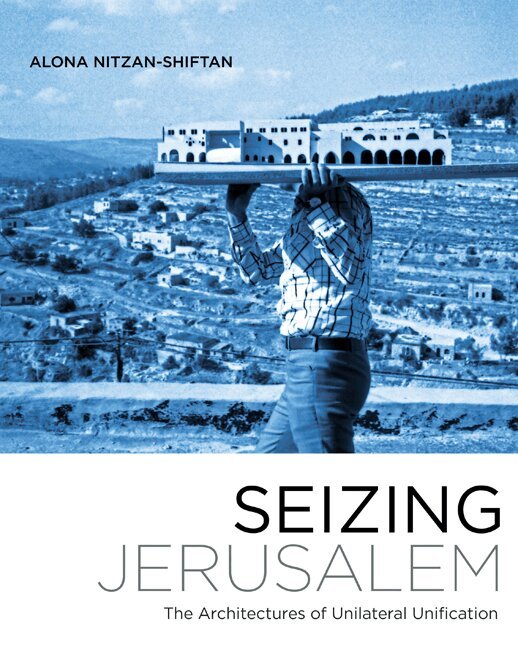
    Seizing Jerusalem

    The Architectures of Unilateral Unification

    AvAlona Nitzan-Shiftan

    Häftad, Engelska, 2017

    Del i serien Quadrant Book

    444 kr

    Beställningsvara. Skickas inom 5-8 vardagar. Fri frakt över 249 kr.

    Beskrivning

    After seizing Jerusalems eastern precincts from Jordan at the conclusion of the Six-Day War in 1967, Israel unilaterally unified the city and plunged into an ambitious building program, eager to transform the very meaning of one of the worlds most emotionally charged urban spaces. The goal was as simple as it was controversial: to both Judaize and modernize Jerusalem. Seizing Jerusalem chronicles how numerous disciplines, including architecture, landscape design, and urban planning, as well as everyone from municipal politicians to state bureaucrats, from Israeli-born architects to international luminaries such as Louis Kahn, Buckminster Fuller, and Bruno Zevi, competed to create Jerusalems new image. This decade-long competition happened with the Palestinian residents still living in the city, even as the new image was inspired by the citys Arab legacy. The politics of space in the Holy City, still contested today, were shaped in this post-1967 decade not only by the legacy of the war and the politics of dispossession, but curiously also by emerging trends in postwar architectural culture. Drawing on previously unexamined archival documents and in-depth interviews with architects, planners, and politicians, Alona Nitzan-Shiftan analyzes the cultural politics of the Israeli state and, in particular, of Jerusalems influential mayor, Teddy Kollek, whose efforts to legitimate Israeli rule over Jerusalem provided architects a unique, real-world laboratory to explore the possibilities and limits of modernist design-as built form as well as political and social action. Seizing Jerusalem reveals architecture as an active agent in the formation of urban and national identity, and demonstrates how contemporary debates about Zionism, and the crisis within the discipline of architecture over postwar modernism, affected Jerusalems built environment in ways that continue to resonate today.

    Produktinformation

    • Utgivningsdatum:2017-05-30
    • Mått:203 x 254 x 51 mm
    • Vikt:906 g
    • Format:Häftad
    • Språk:Engelska
    • Serie:Quadrant Book
    • Antal sidor:376
    • Förlag:University of Minnesota Press
    • ISBN:9780816694280
    • Utmärkelser:Winner of FLS Brinckerhoff 2018

    Utforska kategorier

    • Arkitekturhistoria inom Kultur
    • Konsthistoria inom Kultur

    Mer om författaren

    Alona Nitzan-Shiftan is associate professor and chair of the architecture program in the Faculty of Architecture and Town Planning at the Technion – Israel Institute of Technology.

    Recensioner i media

    "A rigorous and insightful analysis of the historical, intellectual, and aesthetic encounters and intersections between the two modernisms-in-transition: architectural modernism and national modernism."-Uri Ram, Ben Gurion University of the Negev"With Seizing Jerusalem, Alona Nitzan-Shiftan has succeeded in establishing a breathtaking chronicle of the use made by plans, designs, and buildings to implement an agenda of hegemony. This book contributes masterfully to the renewed discussion about the political uses of architecture in the contemporary period."-Jean-Louis Cohen, New York University"Among the best of the many books released to mark the 50th anniversary of Jerusalem’s unification."-Moment Magazine"Alona Nitzan-Shiftan’s Seizing Jerusalem: The Architectures of Unilateral Unification is without a doubt a masterpiece. This brilliantly written book is among the most interesting, insightful, beautifully written, and important books about Jerusalem. Taking readers on a detailed voyage across the urban landscape, the book offers substantial new insights, intelligent analysis, and original interpretations on the making of modern Jerusalem during its most transformative period-the first years following the Six Day War, also known as the 1967 war." -Journal of Planning Education and Research

    Innehållsförteckning

    • ContentsIntroduction1. Encounters: Modern Architecture and Israeli Nationalism2. Profession: East Jerusalem and the Emergence of the Sabra Architects3. State: Facts on the Ground4. City: Urban Beautification5. Frontier: A Holy Testing Ground for a Discipline in Crisis 6. Project: The Western Wall PlazaConclusionNotesIndex