• Fri frakt över 249 kr
  • •
  • Snabba leveranser
  • •
  • Billiga böcker
Kundservice

Du är på sajten för privatpersoner.

Företag, bibliotek eller offentlig verksamhet?

Du handlar på classic.bokus.com, där alla dina funktioner finns intakta.
Till classic.bokus.com
Bokus logotyp. Gå till startsidan.
  • Erbjudanden
  • Nyheter
  • Student
  • Topplistor
  • Barn & ungdom
  • Bokus Play
  • E-böcker
  • Pocketböcker
  • Spel & pussel

Må bättre, för mindre! Upp till 50% rabatt på hälsoböcker

Sidfot

Mina sidor

    Hjälp

    • Kundservice
    • Vanliga frågor och svar
    • Frakt och leverans
    • Retur vid ångerrätt
    • Reklamera vara
    • Betalning
    • Köpvillkor
    • Allmänna villkor
    • Information om webbplatsens tillgänglighet

    Om Bokus

    • Om oss
    • Pressrum
    • För studenter
    • För företag
    • För bibliotek och offentlig verksamhet
    • För leverantörer
    • Hållbarhet

    Populärt

    • Aktuella erbjudanden
    • Presentkort
    • Studentlitteratur
    • Nya böcker
    • Topplistor
    • Signerade böcker
    • Engelska böcker

    Inspiration

    • Boktips
    • BookTok
    • Populära bokserier
    • Barnbokskaraktärer
    • Populära författare
    Logotyp för Bokus
    Följ oss på Facebook (extern länk)Följ oss på Instagram (extern länk)Följ oss på YouTube (extern länk)Följ oss på TikTok (extern länk)
    bokus @ CookiesAnpassa cookiesIntegritetspolicyKöpvillkor
    Till Citymail hemsida (extern länk)Till Budbee hemsida (extern länk)Till Postnord hemsida (extern länk)Till Schenker hemsida (extern länk)Till Early Bird hemsida (extern länk)Till Walleys hemsida (extern länk)
    1. Data och IT
    2. Systemvetenskap och AI

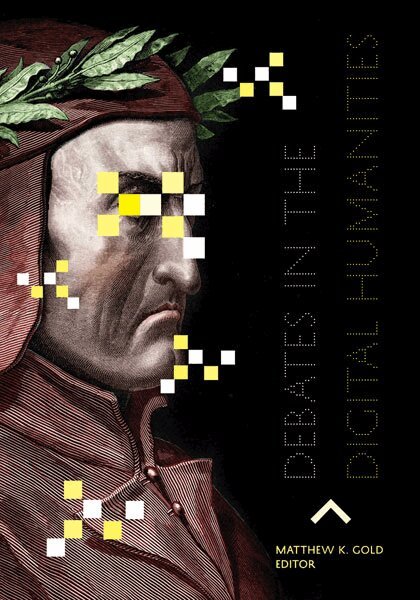
    Debates in the Digital Humanities

    AvMatthew K. Gold

    Häftad, Engelska, 2012

    Del i serien Debates in the Digital Humanities

    366 kr

    Beställningsvara. Skickas inom 5-8 vardagar. Fri frakt över 249 kr.

    Beskrivning

    Encompassing new technologies, research methods, and opportunities for collaborative scholarship and open-source peer review, as well as innovative ways of sharing knowledge and teaching, the digital humanities promises to transform the liberal arts—and perhaps the university itself. Indeed, at a time when many academic institutions are facing austerity budgets, digital humanities programs have been able to hire new faculty, establish new centers and initiatives, and attract multimillion-dollar grants. Clearly the digital humanities has reached a significant moment in its brief history. But what sort of moment is it? Debates in the Digital Humanities brings together leading figures in the field to explore its theories, methods, and practices and to clarify its multiple possibilities and tensions. From defining what a digital humanist is and determining whether the field has (or needs) theoretical grounding, to discussions of coding as scholarship and trends in data-driven research, this cutting-edge volume delineates the current state of the digital humanities and envisions potential futures and challenges. At the same time, several essays aim pointed critiques at the field for its lack of attention to race, gender, class, and sexuality; the inadequate level of diversity among its practitioners; its absence of political commitment; and its preference for research over teaching.Together, the essays in Debates in the Digital Humanities—which will be published both as a printed book and later as an ongoing, open-access website—suggest that the digital humanities is uniquely positioned to contribute to the revival of the humanities and academic life.Contributors: Bryan Alexander, National Institute for Technology in Liberal Education; Rafael Alvarado, U of Virginia; Jamie "Skye" Bianco, U of Pittsburgh; Ian Bogost, Georgia Institute of Technology; Stephen Brier, CUNY Graduate Center; Daniel J. Cohen, George Mason U; Cathy N. Davidson, Duke U; Rebecca Frost Davis, National Institute for Technology in Liberal Education; Johanna Drucker, U of California, Los Angeles; Amy E. Earhart, Texas A&M U; Charlie Edwards; Kathleen Fitzpatrick, Pomona College; Julia Flanders, Brown U; Neil Fraistat, U of Maryland; Paul Fyfe, Florida State U; Michael Gavin, Rice U; David Greetham, CUNY Graduate Center; Jim Groom, U of Mary Washington; Gary Hall, Coventry U, UK; Mills Kelly, George Mason U; Matthew Kirschenbaum, U of Maryland; Alan Liu, U of California, Santa Barbara; Elizabeth Losh, U of California, San Diego; Lev Manovich, U of California, San Diego; Willard McCarty, King's College London; Tara McPherson, U of Southern California; Bethany Nowviskie, U of Virginia; Trevor Owens, Library of Congress; William Pannapacker, Hope College; Dave Parry, U of Texas at Dallas; Stephen Ramsay, U of Nebraska, Lincoln; Alexander Reid, SUNY at Buffalo; Geoffrey Rockwell, Canadian Institute for Research Computing in the Arts; Mark L. Sample, George Mason U; Tom Scheinfeldt, George Mason U; Kathleen Marie Smith; Lisa Spiro, National Institute for Technology in Liberal Education; Patrik Svensson, Umeå U; Luke Waltzer, Baruch College; Matthew Wilkens, U of Notre Dame; George H. Williams, U of South Carolina Upstate; Michael Witmore, Folger Shakespeare Library.

    Produktinformation

    • Utgivningsdatum:2012-01-09
    • Mått:178 x 254 x 46 mm
    • Vikt:922 g
    • Format:Häftad
    • Språk:Engelska
    • Serie:Debates in the Digital Humanities
    • Antal sidor:504
    • Förlag:University of Minnesota Press
    • ISBN:9780816677955

    Utforska kategorier

    • Systemvetenskap och AI inom Data och IT
    • Högskola och universitet inom Psykologi och pedagogik
    • Utbildningsstrategier och utbildningspolitik inom Psykologi och pedagogik

    Mer om författaren

    Matthew K. Gold is associate professor of English and digital humanities at the Graduate Center of the City University of New York, where he is advisor to the Provost for digital initiatives and director of the GC Digital Scholarship Lab.

    Recensioner i media

    "Is there such a thing as ‘digital’ humanities? From statistical crunches of texts to new forms of online collaboration and peer review, it’s clear something is happening. This book is an excellent primer on the arguments over just how much is changing-and how much more ought to-in the way scholars study the humanities." -Clive Thompson, columnist for Wired and contributing writer for the New York Times Magazine"I look forward to the day when anxieties about the disruptive nature of ‘digital humanities’ fade into memory and the innovative methods, theories, and approaches championed by those who have contributed to this valuable volume are respected across academia for their rigor and utility. This book will go a long way toward clarifying the debates within and about digital humanities." -Siva Vaidhyanathan, author of The Googlization of Everything-and Why We Should Worry"Though Debates in the Digital Humanities is well over 500 pages in length, there is no fat in it; all essays contain important information and concepts relating to DH.  Taken together, the book as a whole and every essay in it is a must-read for anyone who claims to be a digital humanist whether she or he works in theory, pedagogy, and/or practice." -Leonardo Reviews

    Innehållsförteckning

    • ContentsIntroduction: The Digital Humanities MomentMatthew K. GoldPart I. Defining the Digital Humanities1. What Is Digital Humanities and What’s It Doing in English Departments?Matthew Kirschenbaum2. The Humanities, Done DigitallyKathleen Fitzpatrick3. This Is Why We Fight: Defining the Values of the Digital HumanitiesLisa Spiro4. Beyond the Big TentPatrik SvenssonBlog PostsThe Digital Humanities SituationRafael AlvaradoWhere’s the Beef? Does Digital Humanities Have to Answer Questions?Tom ScheinfeldtWhy Digital Humanities Is “Nice”Tom ScheinfeldtAn Interview with Brett BobleyMichael Gavin and Kathleen Marie SmithDay of DH: Defining the Digital HumanitiesPart II. Theorizing the Digital Humanities5. Developing Things: Notes toward an Epistemology of Building in the Digital HumanitiesStephen Ramsay and Geoffrey Rockwell6. Humanistic Theory and Digital ScholarshipJohanna Drucker7. This Digital Humanities which Is Not OneJamie “Skye” Bianco8. A Telescope for the Mind?Willard McCartyBlog PostsSunset for Ideology, Sunrise for Methodology?Tom ScheinfeldtHas Critical Theory Run Out of Time for Data-Driven Scholarship?Gary HallThere Are No Digital HumanitiesGary HallPart III. Critiquing the Digital Humanities9. Why Are the Digital Humanities So White?, or, Thinking the Histories of Race and ComputationTara McPherson10. Hacktivism and the Humanities: Programming Protest in the Era of the Digital UniversityElizabeth Losh11. Unseen and Unremarked On: Don DeLillo and the Failure of the Digital HumanitiesMark L. Sample12. Disability, Universal Design, and the Digital HumanitiesGeorge H. Williams13. The Digital Humanities and Its UsersCharlie EdwardsBlog PostsDigital Humanities Triumphant?William PannapackerWhat Do Girls Dig?Bethany NowviskieThe Turtlenecked HairshirtIan BogostEternal September of the Digital HumanitiesBethany NowviskiePart IV. Practicing the Digital Humanities14. Canons, Close Reading, and the Evolution of MethodMatthew Wilkens15. Electronic Errata: Digital Publishing, Open Review, and the Futures of CorrectionPaul Fyfe16. The Function of Digital Humanities Centers at the Present TimeNeil Fraistat17. Time, Labor, and “Alternate Careers” in Digital Humanities Knowledge WorkJulia Flanders18. Can Information Be Unfettered?: Race and the New Digital Humanities CanonAmy E. EarhartBlog PostsThe Social Contract of Scholarly PublishingDaniel J. CohenIntroducing Digital Humanities NowDaniel J. CohenText: A Massively Addressable ObjectMichael WitmoreThe Ancestral TextMichael WitmorePart V. Teaching the Digital Humanities19. Digital Humanities and the “Ugly-Stepchildren” of American Higher EducationLuke Waltzer20. Graduate Education and the Ethics of the Digital HumanitiesAlexander Reid21. Should Liberal Arts Campuses Do Digital Humanities?: Process and Products in the Small College WorldBryan Alexander and Rebecca Frost Davis22. Where’s the Pedagogy?: The Role of Teaching and Learning in the Digital HumanitiesStephen BrierBlog PostsVisualizing Millions of WordsMills KellyWhat’s Wrong with Writing EssaysMark L. SampleLooking for Whitman: A Grand, Aggregated ExperimentMatthew K. Gold and Jim