• Fri frakt över 249 kr
  • •
  • Snabba leveranser
  • •
  • Billiga böcker
Kundservice

Du är på sajten för privatpersoner.

Företag, bibliotek eller offentlig verksamhet?

Du handlar på classic.bokus.com, där alla dina funktioner finns intakta.
Till classic.bokus.com
Bokus logotyp. Gå till startsidan.
  • Erbjudanden
  • Nyheter
  • Student
  • Topplistor
  • Barn & ungdom
  • Bokus Play
  • E-böcker
  • Pocketböcker
  • Spel & pussel

10% rabatt på allt med kod: NYSTART10 →

Sidfot

Mina sidor

    Hjälp

    • Kundservice
    • Vanliga frågor och svar
    • Frakt och leverans
    • Retur vid ångerrätt
    • Reklamera vara
    • Betalning
    • Köpvillkor
    • Allmänna villkor
    • Information om webbplatsens tillgänglighet

    Om Bokus

    • Om oss
    • Pressrum
    • För studenter
    • För företag
    • För bibliotek och offentlig verksamhet
    • För leverantörer
    • Hållbarhet

    Populärt

    • Aktuella erbjudanden
    • Presentkort
    • Studentlitteratur
    • Nya böcker
    • Topplistor
    • Signerade böcker
    • Engelska böcker

    Inspiration

    • Boktips
    • BookTok
    • Populära bokserier
    • Barnbokskaraktärer
    • Populära författare
    Logotyp för Bokus
    Följ oss på Facebook (extern länk)Följ oss på Instagram (extern länk)Följ oss på YouTube (extern länk)Följ oss på TikTok (extern länk)
    bokus @ CookiesAnpassa cookiesIntegritetspolicyKöpvillkor
    Till Citymail hemsida (extern länk)Till Budbee hemsida (extern länk)Till Postnord hemsida (extern länk)Till Schenker hemsida (extern länk)Till Early Bird hemsida (extern länk)Till Walleys hemsida (extern länk)
    1. Samhälle och politik
    2. Samhälle och kultur
    3. Kultur och medier
    4. Referensverk och tvärvetenskap

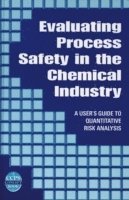
    Evaluating Process Safety in the Chemical Industry

    A User's Guide to Quantitative Risk Analysis

    AvJ. S. Arendt,D K. Lorenzo

    Inbunden, Engelska, 2000

    Del i serien CCPS Concept Book

    1 211 kr

    Beställningsvara. Skickas inom 5-8 vardagar. Fri frakt över 249 kr.

    Beskrivning

    Quantitative Risk Analysis is a powerful tool used to help manage risk and improve safety. When used appropriately, it provides a rational basis for evaluating process safety and comparing alternative safety improvements. This guide, an update of an earlier American Chemistry Council (ACC) publication utilizing the "hands-on" experience of CPI risk assessment practitioners and safety professionals involved with the CCPS and ACC, explains how managers and users can make better-informed decisions about QRA, and how plant engineers and process designers can better understand, interpret and use the results of a QRA in their plant.

    Produktinformation

    • Utgivningsdatum:2000-06-01
    • Mått:160 x 234 x 14 mm
    • Vikt:318 g
    • Format:Inbunden
    • Språk:Engelska
    • Serie:CCPS Concept Book
    • Antal sidor:104
    • Förlag:John Wiley & Sons Inc
    • ISBN:9780816907465

    Utforska kategorier

    • Referensverk och tvärvetenskap inom Samhälle och politik
    • Tillverkningsteknik inom Naturvetenskap och teknik

    Mer om författaren

    J. S. Arendt is the author of Evaluating Process Safety in the Chemical Industry: A User's Guide to Quantitative Risk Analysis, published by Wiley. D K. Lorenzo is the author of Evaluating Process Safety in the Chemical Industry: A User's Guide to Quantitative Risk Analysis, published by Wiley.

    Innehållsförteckning

    • List of Figures. List of Tables.Preface.Acknowledgments.Executive Summary.Advice for the Reader.Acronyms.Glossary.Chapter 1. Introduction.1.1. Background.1.2. The Process of Risk Analysis.1.3. Definition of QRA.1.4. Misconceptions About QRA.Chapter 2. Deciding  Whether to Use QRA.2.1. Some Reasons for Considering QRA.2.2. Types of Information Available From Risk Studies.2.3. Criteria for Electing to Use QRA.Chapter 3. Management Use of QRA.3.1. Chartering the Analysis.3.1.1. Study Objective.3.1.2. Scope.3.1.3. Technical Approach.3.1.4. Resources.3.2. Selecting QRA Techniques.3.2.1. Hazard Identification.3.2.2. Consequence Analysis.3.2.3. Frequency Analysis.3.2.4. Risk Evaluation and Presentation.3.3. Understanding the Assumptions and Limitations.3.3.1. Completeness.3.3.2. Model Validity.3.3.3. Accuracy/Uncertainty.3.3.4. Reproducibility.3.3.5. Inscrutability.Chapter 4. Using QRA Results.4.1. Comparative Methods for Establishing Perspective.4.2. Factors Influencing Risk Perception.4.2.1. Type of Hazard.4.2.2. Voluntary versus Involuntary.4.2.3. Societal versus Individual.4.2.4. Public versus Employee.4.2.5. High Consequence/Low Frequency versus Low Consequence/High Frequency4.2.6. Acute versus Latent Effects.4.2.7. Familiarity.4.2.8. Controllability.4.2.9. Age of Exposed Population.4.2.10. Distribution of Risk and Benefit.4.3. Communicating Risk.4.3.1. Accept and Involve the Public as a Legitimate Partner.4.3.2. Plan Carefully and Evaluate Your Efforts.4.3.3. Listen to People's Specific Concerns.4.3.4. Be Honest, Frank, and Open.4.3.5. Coordinate and Collaborate with Other Credible Sources.4.3.6. Meet the Needs of the Media.4.3.7. Speak Clearly and with Compassion.4.4. Pitfalls in Using QRA Results.Chapter 5. Conclusions.References.Suggested Additional Reading.