• Fri frakt över 249 kr
  • •
  • Snabba leveranser
  • •
  • Billiga böcker
Kundservice

Du är på sajten för privatpersoner.

Företag, bibliotek eller offentlig verksamhet?

Du handlar på classic.bokus.com, där alla dina funktioner finns intakta.
Till classic.bokus.com
Bokus logotyp. Gå till startsidan.
  • Erbjudanden
  • Nyheter
  • Student
  • Topplistor
  • Barn & ungdom
  • Bokus Play
  • E-böcker
  • Pocketböcker
  • Spel & pussel

10% rabatt på allt med kod NYSTART10 →

Sidfot

Mina sidor

    Hjälp

    • Kundservice
    • Vanliga frågor och svar
    • Frakt och leverans
    • Retur vid ångerrätt
    • Reklamera vara
    • Betalning
    • Köpvillkor
    • Allmänna villkor
    • Information om webbplatsens tillgänglighet

    Om Bokus

    • Om oss
    • Pressrum
    • För studenter
    • För företag
    • För bibliotek och offentlig verksamhet
    • För leverantörer
    • Hållbarhet

    Populärt

    • Aktuella erbjudanden
    • Presentkort
    • Studentlitteratur
    • Nya böcker
    • Topplistor
    • Signerade böcker
    • Engelska böcker

    Inspiration

    • Boktips
    • BookTok
    • Populära bokserier
    • Barnbokskaraktärer
    • Populära författare
    Logotyp för Bokus
    Följ oss på Facebook (extern länk)Följ oss på Instagram (extern länk)Följ oss på YouTube (extern länk)Följ oss på TikTok (extern länk)
    bokus @ CookiesAnpassa cookiesIntegritetspolicyKöpvillkor
    Till Citymail hemsida (extern länk)Till Budbee hemsida (extern länk)Till Postnord hemsida (extern länk)Till Schenker hemsida (extern länk)Till Early Bird hemsida (extern länk)Till Walleys hemsida (extern länk)
    1. Ekonomi och Ledarskap
    2. Industrier och branscher
    3. Arbetsmarknaden

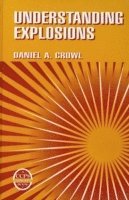
    Understanding Explosions

    AvDaniel A. Crowl

    Inbunden, Engelska, 2003

    Del i serien CCPS Concept Book

    1 811 kr

    Beställningsvara. Skickas inom 5-8 vardagar. Fri frakt över 249 kr.

    Fler format och utgåvor

    E-bok

    2 098 kr

    Beskrivning

    There are many different types of explosions, each with its own complex mechanism. Understanding explosions is important in preventing them. This reference provides valuable information on explosions for everyone involved in the operation, design, maintenance, and management of chemical processes, helping enhance understanding of the nature of explosions and the practical methods required to prevent them from occurring. The text includes: Fundamental basis for explosionsExplosive and flammable behavior and characteristics of materialsDifferent types of explosionsFire and explosion hazard recognitionPractical methods for preventing explosions or minimizing the potential consequencesAdditional referencesUnderstanding Explosions provides a practical understanding of explosion fundamentals, including the different types of explosions, the explosive and flammable behavior of materials, and the hazards related to fires and explosions. It also discusses practical methods to prevent and minimize the probability and consequence of an explosion during routine use of flammable, combustible and/or reactive materials.

    Produktinformation

    • Utgivningsdatum:2003-07-01
    • Mått:158 x 236 x 18 mm
    • Vikt:474 g
    • Format:Inbunden
    • Språk:Engelska
    • Serie:CCPS Concept Book
    • Antal sidor:228
    • Förlag:John Wiley & Sons Inc
    • ISBN:9780816907793

    Utforska kategorier

    • Arbetsmarknaden inom Ekonomi och Ledarskap
    • Fysikalisk kemi inom Naturvetenskap och teknik
    • Tillverkningsindustri inom Ekonomi och Ledarskap

    Mer om författaren

    Daniel A. Crowl is the author of Understanding Explosions, published by Wiley.

    Innehållsförteckning

    • PREFACE ixACKNOWLEDGMENTS xi1 INTRODUCTION 11.1. Accident Loss History 31.2. The Accident Process (AIChE, 2000) 41.3. A Case History—Flixborough, England 41.4. Hazard Identification and Evaluation 61.5. Inherently Safer Design 72 FUNDAMENTALS OF FIRES AND EXPLOSIONS 92.1. Gases and Vapors 132.1.1. Flammability Diagram 182.1.2. Estimating Flammability Limits 282.1.3. Temperature Effect on Flammability 302.1.4. Pressure Effect on Flammability 312.1.5. Flammability of Gaseous Mixtures 312.1.6. Minimum Ignition Energies 322.1.7. Autoignition Temperature 342.1.8. Example Applications 342.2. Liquids 372.2.1. Flashpoints of Mixtures of Liquids 402.2.2. Example Applications 422.3. Aerosols and Mists 432.4. Dusts 432.5. Hybrid Mixtures 482.6. Kinetics and Thermochemistry 482.6.1. Calculated Adiabatic Flame Temperatures (CAFT) 502.6.2. Example Application 522.7. Gas Dynamics 542.7.1. Detonations and Deflagrations 582.7.2. Estimating Peak Side-on Overpressures 612.7.3. Example Applications 622.7.4. Pressure Piling and Deflagration to Detonation Transition 632.8. Physical Explosions 642.8.1. BLEVEs 652.8.2. Rapid Phase Transition Explosions 672.9. Vapor Cloud Explosions 682.9.1. TNT Equivalency 702.9.2. TNO Multi-Energy Method 712.9.3. Baker-Strehlow-TangMethod(AIChE, 1999a) 772.9.4. Computational Fluid Mechanics (CFD) Method 822.9.5. Example Applications 832.10. Runaway Reactions 852.10.1. Steady-State and Dynamic Reactor Behavior 882.10.2. Experimental Characterization 922.11. Condensed Phase Explosions 942.12. Fireballs, Pool, Flash, and Jet Fires 962.13. Explosion Effects 982.13.1. Thermal Exposure 982.13.2. Overpressure Exposure 992.14. Ignition Sources 1032.14.1. Static Electricity 1053 PREVENTION AND MITIGATION OF EXPLOSIONS 1133.1. Additional References 1133.2. Inherently Safer Design 1133.3. Using the Flammability Diagram to Avoid Flammable Atmospheres 1173.4. Inerting and Purging 1203.4.1. Vacuum Purging 1213.4.2. Pressure Purging 1233.4.3. Combined Pressure-Vacuum Purging 1243.4.4. Sweep Purging 1263.4.5. Siphon Purging 1273.4.6. Advantages and Disadvantages of the Various Inerting Procedures 1273.4.7. Inert Gas Blanketing of Storage Vessels 1283.4.8. Inert Purging and Blanketing during Drumming Operations 1283.5. Example Application 1303.6. Explosion Venting 1323.7. Grounding and Bonding 1323.8. Ventilation 1383.9. Sprinkler and Deluge Systems 1393.10. Charging and Drumming Flammable Liquids 1423.11. Example Application 1423.12. Charging Powders 1453.13. Electrical Equipment in Hazardous (Classified) Areas 1483.13.1. Protection Techniques 156Appendix A DETAILED EQUATIONS FOR FLAMMABILITY DIAGRAMS 161Part A: Equations Useful for Gas Mixtures 161Part B: Equations Useful for Placing Vessels Into and Out of Service 165Appendix B EQUATIONS FOR DETERMINING THE ENERGY OF EXPLOSION 169B.l. Example Application 171Appendix C FLAMMABILITY DATA FOR SELECTED MATERIALS 173Appendix D PROCEDURE FOR EXAMPLE 3.2 177Appendix E COMBUSTION DATA FOR DUST CLOUDS 191REFERENCES 193GLOSSARY 203INDEX 209