• Fri frakt över 249 kr
  • •
  • Snabba leveranser
  • •
  • Billiga böcker
Kundservice

Du är på sajten för privatpersoner.

Företag, bibliotek eller offentlig verksamhet?

Du handlar på classic.bokus.com, där alla dina funktioner finns intakta.
Till classic.bokus.com
Bokus logotyp. Gå till startsidan.
  • Erbjudanden
  • Nyheter
  • Student
  • Topplistor
  • Barn & ungdom
  • Bokus Play
  • E-böcker
  • Pocketböcker
  • Spel & pussel

10% rabatt på allt med kod NYSTART10 →

Sidfot

Mina sidor

    Hjälp

    • Kundservice
    • Vanliga frågor och svar
    • Frakt och leverans
    • Retur vid ångerrätt
    • Reklamera vara
    • Betalning
    • Köpvillkor
    • Allmänna villkor
    • Information om webbplatsens tillgänglighet

    Om Bokus

    • Om oss
    • Pressrum
    • För studenter
    • För företag
    • För bibliotek och offentlig verksamhet
    • För leverantörer
    • Hållbarhet

    Populärt

    • Aktuella erbjudanden
    • Presentkort
    • Studentlitteratur
    • Nya böcker
    • Topplistor
    • Signerade böcker
    • Engelska böcker

    Inspiration

    • Boktips
    • BookTok
    • Populära bokserier
    • Barnbokskaraktärer
    • Populära författare
    Logotyp för Bokus
    Följ oss på Facebook (extern länk)Följ oss på Instagram (extern länk)Följ oss på YouTube (extern länk)Följ oss på TikTok (extern länk)
    bokus @ CookiesAnpassa cookiesIntegritetspolicyKöpvillkor
    Till Citymail hemsida (extern länk)Till Budbee hemsida (extern länk)Till Postnord hemsida (extern länk)Till Schenker hemsida (extern länk)Till Early Bird hemsida (extern länk)Till Walleys hemsida (extern länk)
    1. Samhälle och politik
    2. Samhälle och kultur
    3. Sociala och etiska frågor
    4. Migration

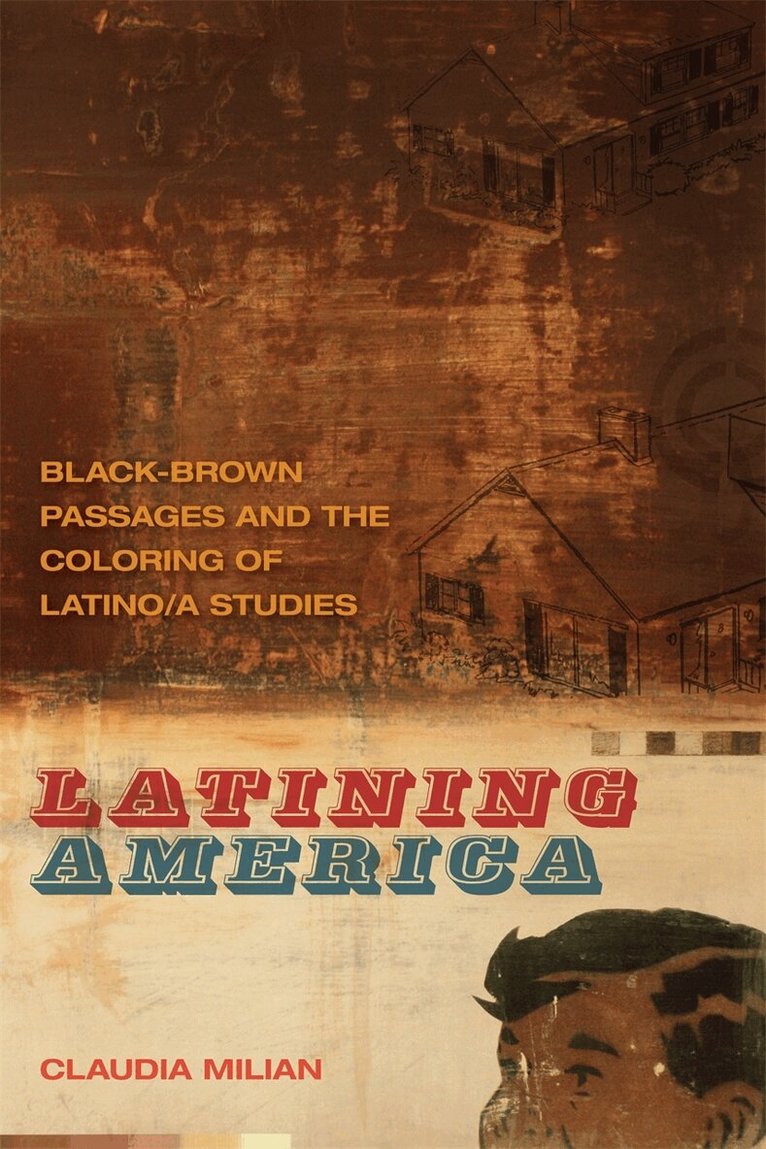
    Latining America

    Black-Brown Passages and the Coloring of Latino/a Studies

    AvClaudia Milian

    Inbunden, Engelska, 2013

    Del i serien New Southern Studies

    1 222 kr

    Beställningsvara. Skickas inom 5-8 vardagar. Fri frakt över 249 kr.

    Fler format och utgåvor

    Häftad

    496 kr

    Beskrivning

    With Latining America, Claudia Milian proposes that the economies of blackness, brownness, and dark brownness summon a new grammar for Latino/a studies that she names “Latinities.” Milian’s innovative study argues that this ensnared economy of meaning startles the typical reading practices deployed for brown Latino/a embodiment.Latining America keeps company with and challenges existent models of Latinidad, demanding a distinct paradigm that puts into question what is understood as Latino and Latina today. Milian conceptually considers how underexplored “Latin” participants—the southern, the black, the dark brown, the Central American—have ushered in a new world of “Latined” signification from the 1920s to the present.Examining not who but what constitutes the Latino and Latina, Milian’s new critical Latinities disentangle the brown logic that marks “Latino/a” subjects. She expands on and deepens insights in transamerican discourses, narratives of passing, popular culture, and contemporary art. This daring and original project uncovers previously ignored and unremarked upon cultural connections and global crossings whereby African Americans and Latinos traverse and reconfigure their racialized classifications.

    Produktinformation

    • Utgivningsdatum:2013-02-01
    • Mått:152 x 229 x 22 mm
    • Vikt:635 g
    • Format:Inbunden
    • Språk:Engelska
    • Serie:New Southern Studies
    • Antal sidor:288
    • Förlag:University of Georgia Press
    • ISBN:9780820344355

    Utforska kategorier

    • Migration inom Samhälle och politik
    • Etnicitet inom Samhälle och politik

    Mer om författaren

    CLAUDIA MILIAN is an assistant professor of romance studies at Duke University.

    Recensioner i media

    Latining America is a pathbreaking intervention into the field of U.S. Latino/a studies. Claudia Milian dislodges the mainline North-South axis of analysis of U.S. southern and American studies in order to build a new analysis of African American and Latino/a positionalities in what she terms the ‘Global Nuevo South.’ Milian thus establishes a breathtaking commonality of Latinidades based upon the ways Central American Americans, Dominican Americans, and Chicanos and Chicanas have historically traveled through the raciological color lines of the United States. By bringing some of the rich, ethnoracial heterogeneity of U.S. Latinos and Latinas from the diasporas and borderlands of the Americas into her analysis of the U.S. South and the Global South, Milian raises important questions relating to the geospatial inequalities that determine so many of the visions of U.S. Latino and Latina writers and intellectuals.