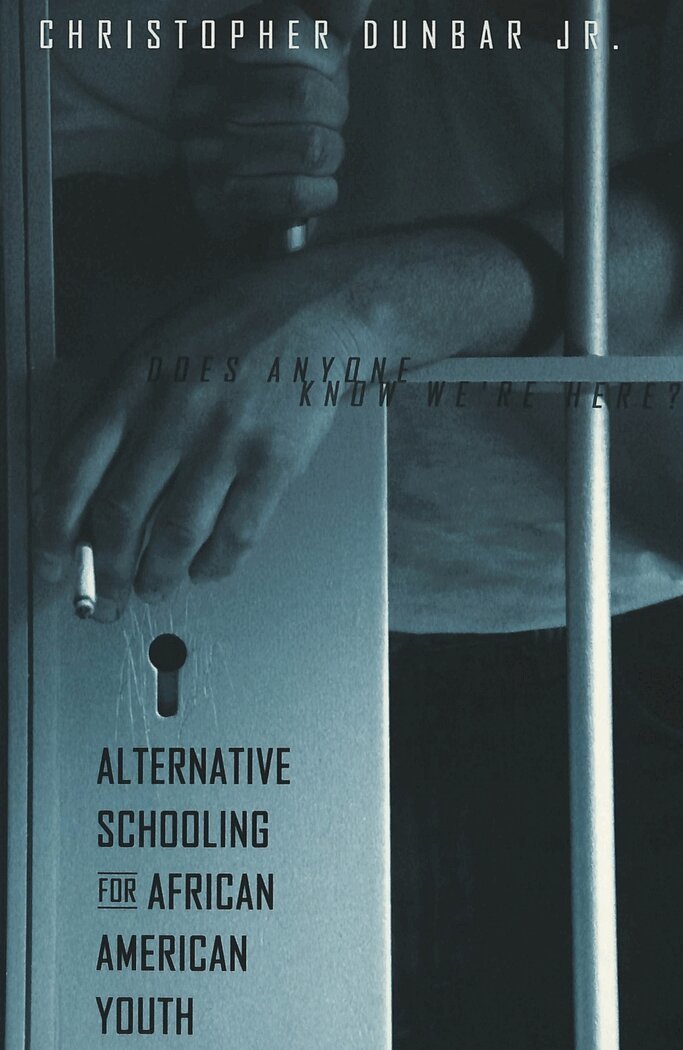
Alternative Schooling for African American Youth
Does Anyone Know We're Here?
559 kr
Beställningsvara. Skickas inom 3-6 vardagar. Fri frakt över 249 kr.
Du är på sajten för privatpersoner.
559 kr
Beställningsvara. Skickas inom 3-6 vardagar. Fri frakt över 249 kr.
The Author: A former alternative education teacher, Christopher Dunbar Jr. is Assistant Professor in the Department of Educational Administration at Michigan State University. Dr. Dunbar earned his Ph.D. in educational policy studies at the University of Illinois, Urbana-Champaign. He has published articles in Theory into Practice, Qualitative Inquiry, and Cultural Studies.
«While a number of education scholars have attended to the problems of teaching at-risk students, there is a paucity of literature about how to address the needs of students placed in an alternative school environment. Professor Dunbar brings this important issue to our attention with style and insights that make for provocative and illuminating reading. He brings together the real life stories of both the youths placed in alternative school and their teachers, and masterfully weaves educational theory appropriate to the subject throughout the text. Professor Dunbar makes positive and practical suggestions for improving the education of students placed in alternative schools. This rich and provocative work is an important contribution to the educational literature on alternative schools and African American children.» (Dr. Bill E. Lawson, Department of Philosophy, Michigan State University)«At a time when most of the general public, policy makers, and researchers portray African American youth as predators destined for no return through the criminal justice system, Dunbar's excellent book offers a different critical perspective on the roles that race and class play in shaping the life chances of these youth. Dunbar's work not only gives voice to these young males, he offers readers a view of their lives from their perspectives which is sorely needed in the policy debates about African American youth. Dunbar's research makes an equally important contribution to qualitative research methodology regarding how one engages in the interview process with African American males and its implications for critical ethnography. A must read!» (Laurence Parker, Professor, University of Illinois)
Du är på sajten för privatpersoner.
559 kr
Beställningsvara. Skickas inom 3-6 vardagar. Fri frakt över 249 kr.
The Author: A former alternative education teacher, Christopher Dunbar Jr. is Assistant Professor in the Department of Educational Administration at Michigan State University. Dr. Dunbar earned his Ph.D. in educational policy studies at the University of Illinois, Urbana-Champaign. He has published articles in Theory into Practice, Qualitative Inquiry, and Cultural Studies.
«While a number of education scholars have attended to the problems of teaching at-risk students, there is a paucity of literature about how to address the needs of students placed in an alternative school environment. Professor Dunbar brings this important issue to our attention with style and insights that make for provocative and illuminating reading. He brings together the real life stories of both the youths placed in alternative school and their teachers, and masterfully weaves educational theory appropriate to the subject throughout the text. Professor Dunbar makes positive and practical suggestions for improving the education of students placed in alternative schools. This rich and provocative work is an important contribution to the educational literature on alternative schools and African American children.» (Dr. Bill E. Lawson, Department of Philosophy, Michigan State University)«At a time when most of the general public, policy makers, and researchers portray African American youth as predators destined for no return through the criminal justice system, Dunbar's excellent book offers a different critical perspective on the roles that race and class play in shaping the life chances of these youth. Dunbar's work not only gives voice to these young males, he offers readers a view of their lives from their perspectives which is sorely needed in the policy debates about African American youth. Dunbar's research makes an equally important contribution to qualitative research methodology regarding how one engages in the interview process with African American males and its implications for critical ethnography. A must read!» (Laurence Parker, Professor, University of Illinois)