
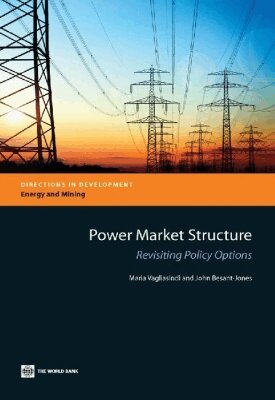
Revisiting Public-Private Partnerships in the Power Sector
307 kr
Beställningsvara. Skickas inom 10-15 vardagar. Fri frakt över 249 kr.
Beskrivning
Given the chronic power shortages faced by numerous developing countries, and the need everywhere to keep pace with demand, understanding the drivers of public private partnerships (PPPs) in energy is critical. While many private electricity projects have been delayed and financing costs have increased, the impact of the global financial crisis was less severe than that of previous crises that originated in developing countries. This resilience stems from developing countries - need to expand generation capacity, electricity sector reforms and better regulatory frameworks, and short-term solutions (such as rental power plants). The study reports the evidence from statistical analysis and a sample of case studies selected based. It proposes a novel analytical approach to model PPPs, using a two-stage procedure based on Heckman’s sample selection distinguishing between those factors that determine whether private investment in energy takes place, and those that influence the volume of investment. The results of the analysis provide the following conclusions: Both general governance and regulatory instrument primarily affect investors’ decisions to enter the various power sector markets, not the subsequent level of investment - indicating that investors seem to be adequately protected against risks. Support mechanisms, like feed-in tariffs, are crucial for attracting investors in renewable generation, but they do not succeed in displacing fossil fuel investment and they could play a bigger role in affecting the level of investment in renewables. There is a significant trade-off between effectiveness and efficiency of alternative instruments for deploying renewables. Feed-in tariffs tended to be quite effective but to be set on the high side, reducing incentives to cut costs and posing significant strains on already stripped national budgets. Competitive auctions, on the other hand have tended to be efficient but initially low and not always the most effective instrument.Countries can scale up renewables following different paths. For Brazil, the move from feed-in tariffs to auctions enabled it to both reduce costs and deploy additional capacity. Peru followed in Brazil’s path, opting for auctions instead of introducing feed-in tariffs. On the other hand, China’s move from competitive tenders to feed-in tariffs allowed for discovery effects to determine the right level of prices to attract private investment in renewables.
Produktinformation
Utforska kategorier
Hoppa över listan
Mer från samma författare
Design and Sustainability of Renewable Energy Incentives
Peter Meier, Maria Vagliasindi, Mudassar Imran
Häftad, 2014
465 kr
Hoppa över listan




Mer från samma serie
Science, Technology and Innovation in Uganda
Sukhdeep Brar, Sara E. Farley, Robert Hawkins, Caroline S. Wagner
Häftad, 2010
229 kr
Financial Management Information Systems
Cem Dener, Joanna Watkins, William Leslie Dorotinsky
Häftad, 2011
236 kr
Biochar Systems for Smallholders in Developing Countries
Sebastian Scholz, Thomas Sembres, Kelli Roberts, Thea Whitman, Kelpie Wilson, Johannes Lehmann
Häftad, 2014
298 kr
Operating and Planning Electricity Grids with Variable Renewable Generation
Marcelino Madrigal, Kevin Porter
Häftad, 2013
307 kr
Improving Learning in Uganda
Innocent Najjumba, Charles Bunjo, David Kyaddondo, Cyprian Misinde
Häftad, 2013
250 kr
Hoppa över listan





Du kanske också är intresserad av

Design and Sustainability of Renewable Energy Incentives
Peter Meier, Maria Vagliasindi, Mudassar Imran
Häftad, 2014
465 kr
- 10% rabatt på allt
- Signerad!
Del 3
- 10% rabatt på allt
Del 7
- 10% rabatt på allt
Del 6
- 10% rabatt på allt
Del 11
- 10% rabatt på allt
Del 3