Häftad, Engelska, 2013
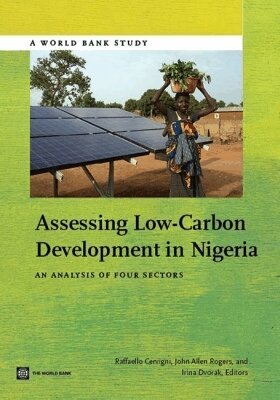
Assessing Low-Carbon Development in Nigeria
Av Raffaello Cervigni, Irina Dvorak
415 kr
Skickas inom 10-15 vardagar
Beskrivning
The Federal Government of Nigeria has adopted an ambitious strategy to make Nigeria the world’s 20th largest economy by 2020. Sustaining such a pace of growth will entail rapid expansion of activity in key carbon-emitting sectors of the economy. In the absence of policies to accompany economic growth with a reduced carbon footprint, emission of greenhouse gases would more than double in the next two decades. By consolidating and synthesising the results of the sector-specific, in-depth analyses, volume 1 of this effort (Low-Carbon Development: Opportunities for Nigeria, 9780821399255) found options for Nigeria to achieve the development objectives of Vision 20:2020 and beyond, but stabilising emissions at 2010 levels, and with domestic benefits in the order of 2 percent of GDP. The present study, volume 2, is a collection of the technical reports on the four sectors of inquiry—agriculture and land use, oil and gas, power, and transport—that informed the preparation of the first volume. For agriculture and land use, the Government has set ambitious targets for increasing the domestic agricultural production six-fold by 2020. The study analyses the mitigation potential of the agricultural sector within the constraint of meeting these growth targets. Benefits include more productive and climate-resilient agriculture. For the oil and gas sector, the analysis evaluates how the country can continue to grow the oil and gas industry, making better use of Nigeria's gas resources, at the same time reducing the sector's carbon footprint. The analysis of the power sector shows how the country can expand power generation and broaden access to electricity while reducing the associated emissions. This low-carbon scenario would enable Nigeria to achieve the same long-term development objectives, at lower overall cost through a more diversified mix of generation sources with a more balanced supply across regions. Finally, this analysis assesses the expected growth in CO2 emissions from on-road transport under a normal business development scenario up to the year 2035 and identifies policy and other mitigation actions at national and local levels that would reduce this growth, resulting in fuel economies, better air quality, and reduced congestion. Each sectoral analysis outlines several actions that the Nigerian Government could undertake to facilitate the transition to a low-carbon economy.
Produktinformation
- Utgivningsdatum: 2013-08-30
- Mått: 178 x 254 x 21 mm
- Vikt: 333 g
- Format: Häftad
- Språk: Engelska
- Antal sidor: 394
- Förlag: World Bank Publications
- Serie: World Bank Studies
- ISBN: 9780821399736
Utforska kategorier
Betyg & recensioner
0 recensioner
Inga recensioner tillgängliga.