• Fri frakt över 249 kr
  • •
  • Snabba leveranser
  • •
  • Billiga böcker
Kundservice

Du är på sajten för privatpersoner.

Företag, bibliotek eller offentlig verksamhet?

Du handlar på classic.bokus.com, där alla dina funktioner finns intakta.
Till classic.bokus.com
Bokus logotyp. Gå till startsidan.
  • Erbjudanden
  • Nyheter
  • Student
  • Topplistor
  • Barn & ungdom
  • Bokus Play
  • E-böcker
  • Pocketböcker
  • Spel & pussel

10% rabatt på allt med kod: NYSTART10 →

Sidfot

Mina sidor

    Hjälp

    • Kundservice
    • Vanliga frågor och svar
    • Frakt och leverans
    • Retur vid ångerrätt
    • Reklamera vara
    • Betalning
    • Köpvillkor
    • Allmänna villkor
    • Information om webbplatsens tillgänglighet

    Om Bokus

    • Om oss
    • Pressrum
    • För studenter
    • För företag
    • För bibliotek och offentlig verksamhet
    • För leverantörer
    • Hållbarhet

    Populärt

    • Aktuella erbjudanden
    • Presentkort
    • Studentlitteratur
    • Nya böcker
    • Topplistor
    • Signerade böcker
    • Engelska böcker

    Inspiration

    • Boktips
    • BookTok
    • Populära bokserier
    • Barnbokskaraktärer
    • Populära författare
    Logotyp för Bokus
    Följ oss på Facebook (extern länk)Följ oss på Instagram (extern länk)Följ oss på YouTube (extern länk)Följ oss på TikTok (extern länk)
    bokus @ CookiesAnpassa cookiesIntegritetspolicyKöpvillkor
    Till Citymail hemsida (extern länk)Till Budbee hemsida (extern länk)Till Postnord hemsida (extern länk)Till Schenker hemsida (extern länk)Till Early Bird hemsida (extern länk)Till Walleys hemsida (extern länk)
    1. Samhälle och politik
    2. Samhälle och kultur
    3. Sociala grupper och identitet
    4. HBTQ+

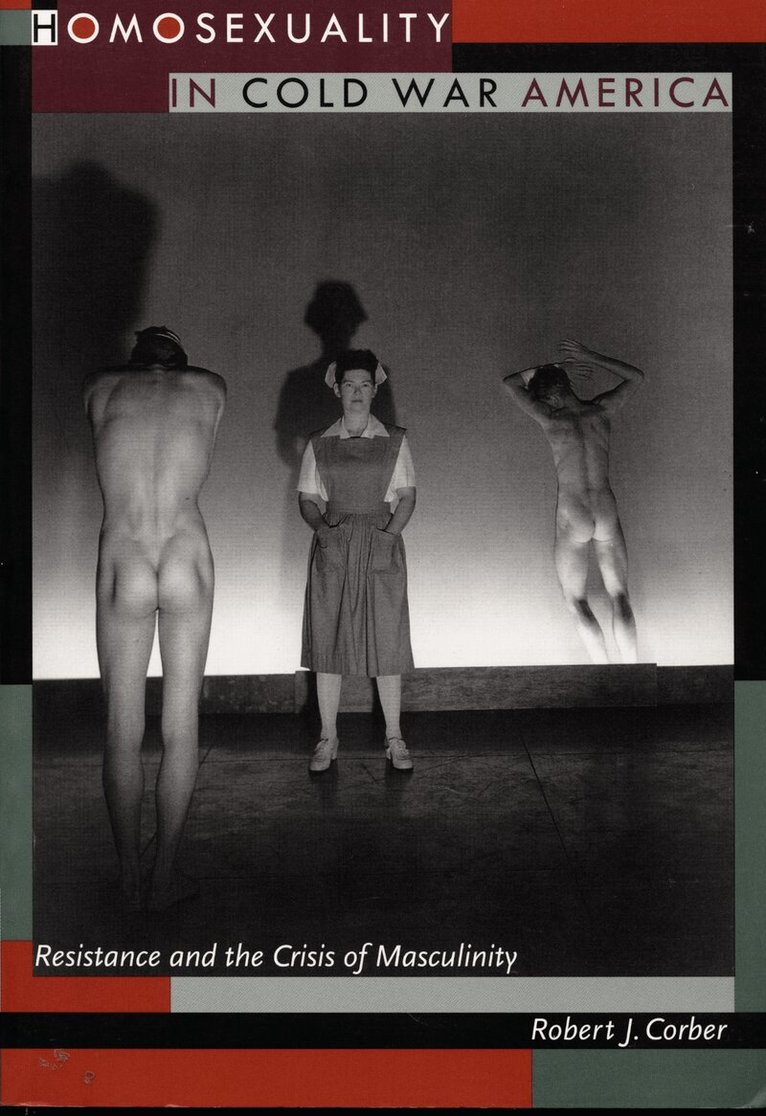
    Homosexuality in Cold War America

    Resistance and the Crisis of Masculinity

    AvRobert J. Corber

    Häftad, Engelska, 1997

    Del i serien New Americanists

    376 kr

    Beställningsvara. Skickas inom 5-8 vardagar. Fri frakt över 249 kr.

    Fler format och utgåvor

    E-bok

    552 kr

    Beskrivning

    Challenging widely held assumptions about postwar gay male culture and politics, Homosexuality in Cold War America examines how gay men in the 1950s resisted pressures to remain in the closet. Robert J. Corber argues that a form of gay male identity emerged in the 1950s that simultaneously drew on and transcended left-wing opposition to the Cold War cultural and political consensus. Combining readings of novels, plays, and films of the period with historical research into the national security state, the growth of the suburbs, and postwar consumer culture, Corber examines how gay men resisted the "organization man" model of masculinity that rose to dominance in the wake of World War II. By exploring the representation of gay men in film noir, Corber suggests that even as this Hollywood genre reinforced homophobic stereotypes, it legitimized the gay male "gaze." He emphasizes how film noir’s introduction of homosexual characters countered the national "project" to render gay men invisible, and marked a deep subversion of the Cold War mentality. Corber then considers the work of gay male writers Tennessee Williams, Gore Vidal, and James Baldwin, demonstrating how these authors declined to represent homosexuality as a discrete subculture and instead promoted a model of political solidarity rooted in the shared experience of oppression. Homosexuality in Cold War America reveals that the ideological critique of the dominant culture made by gay male authors of the 1950s laid the foundation for the gay liberation movement of the following decade.

    Produktinformation

    • Utgivningsdatum:1997-05-22
    • Mått:159 x 235 x 20 mm
    • Vikt:445 g
    • Format:Häftad
    • Språk:Engelska
    • Serie:New Americanists
    • Antal sidor:256
    • Förlag:Duke University Press
    • ISBN:9780822319641

    Utforska kategorier

    • HBTQ+ inom Samhälle och politik
    • Film inom Kultur

    Mer om författaren

    Robert Corber is an associate professor of Women, Gender and Sexuality Studies at Trinity College. He is the author of Homosexuality in Cold War America: Resistance and the Crisis of Masculinity (1997), In the Name of National Security: Hitchcock, Homophobia, and the Political Construction of Gender in Postwar America (1993), and co-editor of Queer Studies: An Interdisciplinary Reader (2003).

    Recensioner i media

    “Corber substantially rethinks the work of these 1950s writers and links them to recent poststructuralist interventions. Wonderfully nuanced, this marks an important contribution to the field of U. S. cultural studies.”-David Savran, Brown University “Homosexuality in Cold War America is an important contribution to our understanding of postwar U. S. culture and a welcome step toward historicizing questions of male subjectivity.”-Jay Clayton, Vanderbilt University “Homosexuality in Cold War America is a book of much richness. In addition to an extended consideration of gay manhood in Vidal’s The City and the Pillar, there are two chapters on film noir. . . . There is also an excellent political-sociological reading of Willie Loman’s troubles in ‘Death of a Salesman.’”(Lambda Book Report) “Corber’s book allows for a more nuanced and historically rigorous critique of some of the popular literary texts of the period. . . . It is in his treatments of Tennessee Williams, Gore Vidal, and James Baldwin that the book is most provocative and delightful. . . . [This] vitally important book . . . helps us to think about our own moment in the context of the past which gave rise to us and to our words.” (American Literature) "Homosexuality in Cold War America investigates the cultural construction of gay male subjectivity in the midst of the postwar crisis in masculinity precipitated by the ascendance of a post-Fordist economy of consumption. . . . Recognizing gay men as subjects in history without acceding to an essentialist, minoritarian model of identity, Corber seeks to recenter the dynamic contradictions and instabilities within gay cultural politics and ‘to address the political needs and aspirations underlying identity politics. . . . [I]mportant analysis." (American Studies)