• Fri frakt över 249 kr
  • •
  • Snabba leveranser
  • •
  • Billiga böcker
Kundservice

Du är på sajten för privatpersoner.

Företag, bibliotek eller offentlig verksamhet?

Du handlar på classic.bokus.com, där alla dina funktioner finns intakta.
Till classic.bokus.com
Bokus logotyp. Gå till startsidan.
  • Erbjudanden
  • Nyheter
  • Student
  • Topplistor
  • Barn & ungdom
  • Bokus Play
  • E-böcker
  • Pocketböcker
  • Spel & pussel

10% rabatt på allt med kod: NYSTART10 →

Sidfot

Mina sidor

    Hjälp

    • Kundservice
    • Vanliga frågor och svar
    • Frakt och leverans
    • Retur vid ångerrätt
    • Reklamera vara
    • Betalning
    • Köpvillkor
    • Allmänna villkor
    • Information om webbplatsens tillgänglighet

    Om Bokus

    • Om oss
    • Pressrum
    • För studenter
    • För företag
    • För bibliotek och offentlig verksamhet
    • För leverantörer
    • Hållbarhet

    Populärt

    • Aktuella erbjudanden
    • Presentkort
    • Studentlitteratur
    • Nya böcker
    • Topplistor
    • Signerade böcker
    • Engelska böcker

    Inspiration

    • Boktips
    • BookTok
    • Populära bokserier
    • Barnbokskaraktärer
    • Populära författare
    Logotyp för Bokus
    Följ oss på Facebook (extern länk)Följ oss på Instagram (extern länk)Följ oss på YouTube (extern länk)Följ oss på TikTok (extern länk)
    bokus @ CookiesAnpassa cookiesIntegritetspolicyKöpvillkor
    Till Citymail hemsida (extern länk)Till Budbee hemsida (extern länk)Till Postnord hemsida (extern länk)Till Schenker hemsida (extern länk)Till Early Bird hemsida (extern länk)Till Walleys hemsida (extern länk)
    1. Samhälle och politik
    2. Samhälle och kultur
    3. Kultur och medier
    4. Kulturvetenskap

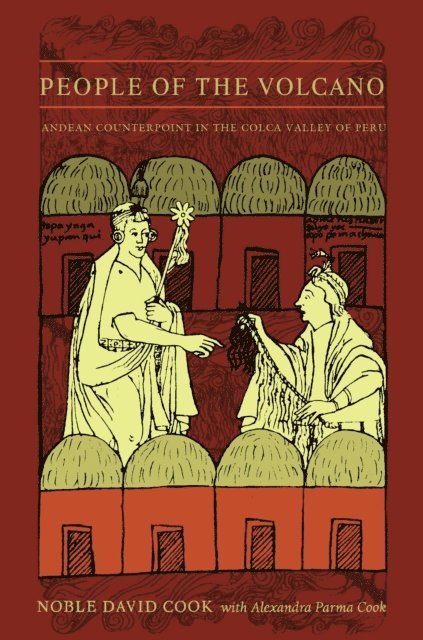
    People of the Volcano

    Andean Counterpoint in the Colca Valley of Peru

    AvNoble David Cook,Alexandra Parma Cook

    Häftad, Engelska, 2007

    388 kr

    Beställningsvara. Skickas inom 5-8 vardagar. Fri frakt över 249 kr.

    Beskrivning

    While it now attracts many tourists, the Colca Valley of Peru’s southern Andes was largely isolated from the outside world until the 1970s, when a passable road was built linking the valley-and its colonial churches, terraced hillsides, and deep canyon-to the city of Arequipa and its airport, eight hours away. Noble David Cook and his co-researcher Alexandra Parma Cook have been studying the Colca Valley since 1974, and this detailed ethnohistory reflects their decades-long engagement with the valley, its history, and its people. Drawing on unusually rich surviving documentary evidence, they explore the cultural transformations experienced by the first three generations of Indians and Europeans in the region following the Spanish conquest of the Incas.Social structures, the domestic export and economies, and spiritual spheres within native Andean communities are key elements of analysis. Also highlighted is the persistence of duality in the Andean world: perceived dichotomies such as those between the coast and the highlands, Europeans and Indo-Peruvians. Even before the conquest, the Cabana and Collagua communities sharing the Colca Valley were divided according to kinship and location. The Incas, and then the Spanish, capitalized on these divisions, incorporating them into their state structure in order to administer the area more effectively, but Colca Valley peoples resisted total assimilation into either. Colca Valley communities have shown a remarkable tenacity in retaining their social, economic, and cultural practices while accommodating various assimilationist efforts over the centuries. Today’s population maintains similarities with their ancestors of more than five hundred years ago-in language, agricultural practices, daily rituals, familial relationships, and practices of reciprocity. They also retain links to ecological phenomena, including the volcanoes from which they believe they emerged and continue to venerate.

    Produktinformation

    • Utgivningsdatum:2007-06-27
    • Mått:156 x 235 x 19 mm
    • Vikt:481 g
    • Format:Häftad
    • Språk:Engelska
    • Antal sidor:336
    • Förlag:Duke University Press
    • ISBN:9780822339717

    Utforska kategorier

    • Kulturvetenskap inom Samhälle och politik
    • Amerikas historia inom Historia och arkeologi

    Mer om författaren

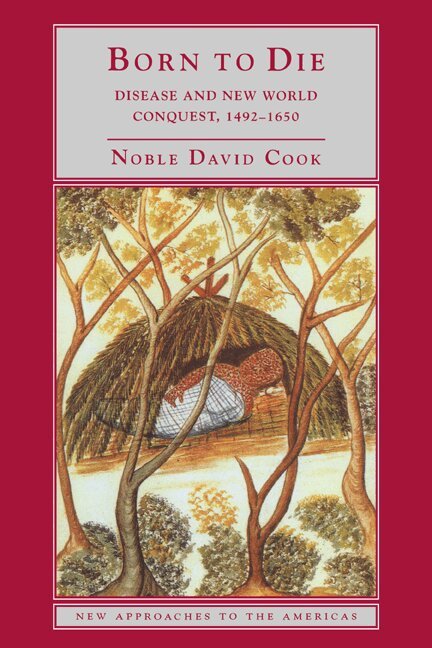
    Noble David Cook is Professor of History at Florida International University. He is the author of Born to Die: Disease and New World Conquest, 1492–1650; The People of the Colca Valley: A Population Study; and Demographic Collapse: Indian Peru, 1520–1620.Alexandra Parma Cook is an independent scholar. They are the coauthors of Good Faith and Truthful Ignorance: A Case of Transatlantic Bigamy and the coeditors and translators of The Discovery and Conquest of Peru, by Pedro de Cieza de LeÓn, both also published by Duke University Press.

    Recensioner i media

    “People of the Volcano is simply the best micro-regional account of colonial Peru available in English. It sets a new standard for ethnohistorical research in Spanish America.”-David J. Robinson, Dellplain Professor of Latin American Geography, Syracuse University “Noble David Cook’s People of the Volcano is a masterpiece of history writing. The story is set in one of the most rugged and dramatic landscapes in the Andes-the Colca Valley, in the southern highlands of Peru, near the city of Arequipa. From his close reading of the Spanish chronicles and administrative documents, Cook fashions a virtual ethnography-the closest approximation we are likely ever to have of a “thick description”-of everyday life in the Colca Valley during the sixteenth and seventeenth centuries. This was the period when the inhabitants of this remote valley were incorporated into the Inca empire, the last great state of the pre-Columbian Andean world, and then, following the Spanish conquest, when they became the unwilling and troublesome provincial subjects of the first global empire of the modern world, that of the Hapsburg kings of Spain. Cook’s account of the imposition of the sixteenth-century Toledan reforms in the Colca Valley will stand for many years to come as the most informative and readable account of this critical, transformative process in colonial Andean history.”-Gary Urton, Dumbarton Oaks Professor of Pre-Columbian Studies, Harvard University “The first chronological history, in English, of Peru’s Colca Valley, People of the Volcano displays Noble David Cook’s intimate knowledge of the valley’s geography, people, and past.”-Susan Elizabeth Ramirez, author of To Feed and Be Fed: The Cosmological Bases of Authority and Identity in the Andes “People of the Volcano provides rich and specific information on the sixteenth- and seventeenth-century Colca Valley that will be enormously useful to specialists in Andean studies. It also provides a fine-grained description of colonial institutions and the Spanish debates over control of indigenous peoples and how to manage extraction of resources from conquered communities. Its usefulness thus extends well beyond Andean studies.” - John Monaghan (Journal of the Royal Anthropological Institute) “People of the Volcano’s most compelling characteristic is the almost seamless way in which environmental, social, cultural, economic, epidemiological and ecclesiastical historiographical approaches. . . . People of the Volcano condenses effortlessly some three decades of research on the Colca Valley and its people. . . . The authors’ mastery of the sources allows them to bring to life the experience of both the indigenous and the Spanish colonizers. . . .[T]here is no doubt that this is a major piece of historical scholarship. . . .” - Paulo Drinot (EIAL) “The definitive work on the Colca Valley under Spanish colonial rule and . . . one of the best in . . . regional ethnohistories of native Andean societies.” (Hispanic American Historical Review) “Cook’s book is a masterful synthesis of methodologies from geography, demography, and anthropology. . . . Cook’s analysis of changes in the landscape evinces a familiarity with the geography of the region that, together with his extensive archival research, provides a fruitful approach for a regional study.” - Miguel Leon (Journal of Interdisciplinary History) “The research adventure of many years, following many twists and turns, has led to a fine book. . . .[It] is one of the best and most richly documented regional studies of indigenous peoples and Spaniards in the early colonial Andes to appear in some time. We ought keenly to await volume three in this trilogy.” - Kenneth Mills (American Historical Review) “This is an excellent book, which is very well researched and written. It gives anyone studying the Incas or pre-Columbian history a deep insight into their customs, history and administration. It does concentrate on the Colca valley, but through it the authors present an outstanding version of life during the Empire and the colonial period. I would recommend this book not only to historians, but to anthropologists and archaeologists who are studying the Incas as a culture.” - Robert Barker (Bulletin of Latin American Research)

    Innehållsförteckning

    • Illustrations and Tables ixPreface xiPart I: Foundations 1. Beneath the Soaring Condor 32. Return of the Viracocha 293. Crisis of the New Order 51Part II: The Republica de los Indios 4. Constructing an “Andean Utopia” 795. “Republica de los Indios”: Social and Political Structure 1056. Tribute and the Domestic economy 1317. Extractive Economy 1558. Indoctrination and Resistance 181Part III: The “Republica de los Espanoles” 9. Crisis in the “Republica de los Espanoles” 215Epilogue: Andean Counterpoint 243Notes 261Bibliography 285Index 311