• Fri frakt över 249 kr
  • •
  • Snabba leveranser
  • •
  • Billiga böcker
Kundservice

Du är på sajten för privatpersoner.

Företag, bibliotek eller offentlig verksamhet?

Du handlar på classic.bokus.com, där alla dina funktioner finns intakta.
Till classic.bokus.com
Bokus logotyp. Gå till startsidan.
  • Erbjudanden
  • Nyheter
  • Student
  • Topplistor
  • Barn & ungdom
  • Bokus Play
  • E-böcker
  • Pocketböcker
  • Spel & pussel

10% rabatt på allt med kod: NYSTART10 →

Sidfot

Mina sidor

    Hjälp

    • Kundservice
    • Vanliga frågor och svar
    • Frakt och leverans
    • Retur vid ångerrätt
    • Reklamera vara
    • Betalning
    • Köpvillkor
    • Allmänna villkor
    • Information om webbplatsens tillgänglighet

    Om Bokus

    • Om oss
    • Pressrum
    • För studenter
    • För företag
    • För bibliotek och offentlig verksamhet
    • För leverantörer
    • Hållbarhet

    Populärt

    • Aktuella erbjudanden
    • Presentkort
    • Studentlitteratur
    • Nya böcker
    • Topplistor
    • Signerade böcker
    • Engelska böcker

    Inspiration

    • Boktips
    • BookTok
    • Populära bokserier
    • Barnbokskaraktärer
    • Populära författare
    Logotyp för Bokus
    Följ oss på Facebook (extern länk)Följ oss på Instagram (extern länk)Följ oss på YouTube (extern länk)Följ oss på TikTok (extern länk)
    bokus @ CookiesAnpassa cookiesIntegritetspolicyKöpvillkor
    Till Citymail hemsida (extern länk)Till Budbee hemsida (extern länk)Till Postnord hemsida (extern länk)Till Schenker hemsida (extern länk)Till Early Bird hemsida (extern länk)Till Walleys hemsida (extern länk)
    1. Kultur
    2. Konstböcker
    3. Konsthistoria

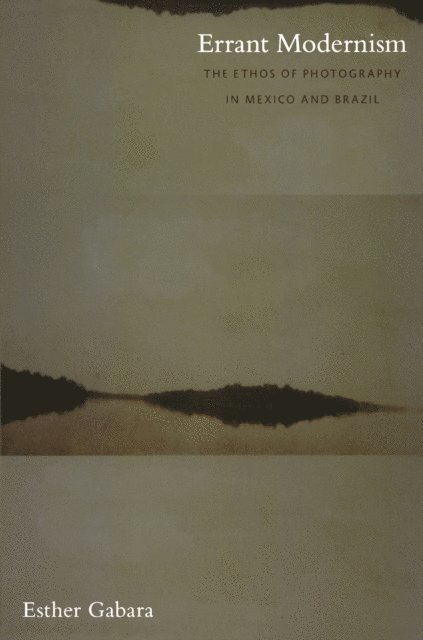
    Errant Modernism

    The Ethos of Photography in Mexico and Brazil

    AvEsther Gabara

    Häftad, Engelska, 2008

    Del i serien John Hope Franklin Center Book

    696 kr

    Beställningsvara. Skickas inom 3-6 vardagar. Fri frakt över 249 kr.

    Fler format och utgåvor

    E-bok

    487 kr

    Beskrivning

    Making a vital contribution to the understanding of Latin American modernism, Esther Gabara rethinks the role of photography in the Brazilian and Mexican avant-garde movements of the 1920s and 1930s. During these decades, intellectuals in Mexico and Brazil were deeply engaged with photography. Authors who are now canonical figures in the two countries’ literary traditions looked at modern life through the camera in a variety of ways. MÁrio de Andrade, known as the “pope” of Brazilian modernism, took and collected hundreds of photographs. Salvador Novo, a major Mexican writer, meditated on the medium’s aesthetic potential as “the prodigal daughter of the fine arts.” Intellectuals acted as tourists and ethnographers, and their images and texts circulated in popular mass media, sharing the page with photographs of the New Woman. In this richly illustrated study, Gabara introduces the concept of a modernist “ethos” to illuminate the intertwining of aesthetic innovation and ethical concerns in the work of leading Brazilian and Mexican literary figures, who were also photographers, art critics, and contributors to illustrated magazines during the 1920s and 1930s.Gabara argues that Brazilian and Mexican modernists deliberately made photography err: they made this privileged medium of modern representation simultaneously wander and work against its apparent perfection. They flouted the conventions of mainstream modernism so that their aesthetics registered an ethical dimension. Their photographic modernism strayed, dragging along the baggage of modernity lived in a postcolonial site. Through their “errant modernism,” avant-garde writers and photographers critiqued the colonial history of Latin America and its twentieth-century formations.
    Produktinformation

    • Utgivningsdatum:2008-12-15
    • Mått:156 x 235 x 23 mm
    • Vikt:680 g
    • Format:Häftad
    • Språk:Engelska
    • Serie:John Hope Franklin Center Book
    • Antal sidor:376
    • Förlag:Duke University Press
    • ISBN:9780822343233

    Utforska kategorier

    • Konsthistoria inom Kultur
    • Fotoböcker inom Kultur

    Mer om författaren

    Esther Gabara is Assistant Professor of Romance Studies, and Art, Art History & Visual Studies at Duke University.

    Recensioner i media

    “Errant Modernism is outstanding. Esther Gabara effortlessly navigates between avant-garde literary texts and modern print culture to reveal an ethic of ‘that which errs.’ In the process, photography becomes both the fact and metaphor enabling her theory of Latin American modernist cultural production.”-Roberto Tejada, author of National Camera: Photography and Mexico’s Image Environment “With subtlety and rigor, Esther Gabara deftly expands the horizon of photographic history and redefines the contours of twentieth-century modernism in the Americas. Focusing on the social and cultural ‘ethos’ of aesthetic practice in both Mexico and Brazil, she provides a provocative corrective to formalist definitions that dominate the field and demonstrates that the full story of photographic modernism has yet to be told.”-Jennifer A. GonzÁlez, author of Subject to Display: Reframing Race in Contemporary Installation Art “Errant Modernism attends to a broad set of enthusiasms with a sustained attention that is both rigorous and creative. It is an interdisciplinary monograph that will indelibly mark the field of visual culture studies while proving equally useful to art historians; it speaks to communications studies as much as to comparative literary histories. Gabara’s work has significance that reaches beyond the Latin American context to arrive in conversation with the growing body of international scholarship addressing transnational and ‘peripheral’ modernities the world over. Finally, Gabara’s is not a nostalgic memorial to modernism but a cross-temporal examination that will continue to inform visual discourses of our own times.” - Kristy A. Rawson (Aztlán) “Errant Modernism is an impressive feat of archival research, and it brings to light much photographic material that will alter our vision of twentieth-century Mexican cultural history. . . . This is an exciting new contribution to the field of Mexican photography. Gabara strikes the perfect balance between theoretical sophistication and a keen sensibility for the material at hand.” - Rubén Gallo (Modernism/Modernity) “Errant Modernism’s strength is its comparative frame. . . . [Gabara’s] introduction does a nice job of outlining key figures and critical issues germane to the study of modernist photography across Latin America, while the epilogue considers some of her arguments in relation to contemporary art photography. Trained in comparative literature, Gabara fluently places literary and visual representation in dialogue, appreciating that most vanguardists did not work within a single media, toting journals along with cameras on their travels.” - George Flaherty (CAA Reviews) “[Errant Modernism] offers a rich, highly nuanced and stimulating rereading of modernism and Latin America. . . . Overall this is a fascinating and deeply satisfying excavation which will do much to enhance our understanding of the dynamics and discourses of specific modernisms and of the fluid ways in which photography was simultaneously a cipher, metaphor and realization of those ideas. But above all Gabara gives us a strong sense of the possibility of another, differently nuanced account of photography . . . and one whose trajectory had profound and intellectual and aesthetic legacies.” - Elizabeth Edwards (Art History) “In this work, Esther Gabara provides an innovative interpretation of modernist literary and artistic movements of the 1920s and 1930s in Brazil and Mexico, successfully arguing that their radical aesthetic experimentation and ethical commitment retain their relevance in the vastly changed circumstances of today. The work establishes an elaborate interdisciplinary dialogue between word, image, and context that will be of interest to those working in literary studies, art history, and visual culture for many years to come.” - James Krippner (The Americas) “Through more than 70 plates and figures, Errant Modernism offers rich insights into the modernist ethos by which aesthetic innovation and ethical concerns intertwined that emerged from the overlap of literary texts and modern print culture.” - Gavin O'Toole (Latin American Review of Books)

    Innehållsförteckning

    • List of Illustrations viiAcknowledgments xiIntroduction 11. Landscape: Errant Modernist Aesthetics in Brazil 362. Portraiture: Facing Brazilian Primitivism 753. Mediation: Mass Culture, Popular Culture, Modernism 1204. Essay: Las Bellas Artes PÚblicas, Photography, and Gender in Mexico 1435. Fiction: Photographic Fictions, Fictional Photographs 196Epilogue 240Notes 261Bibliography 319Index 345