403 kr
John Hope Franklin Center Book – serie
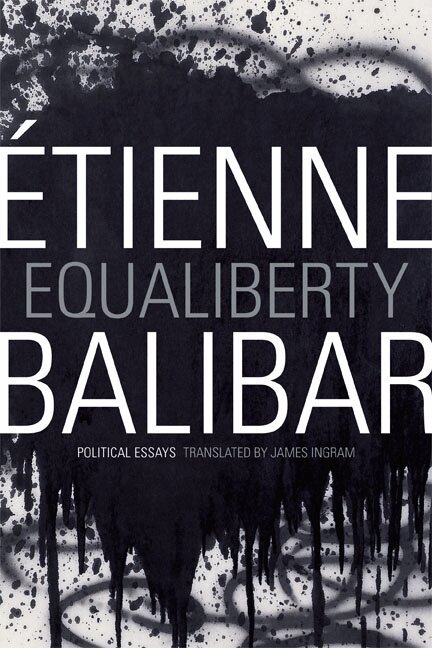
- Häftad, Engelska, 2014First published in French in 2010, Equaliberty brings together essays by Étienne Balibar, one of the preeminent political theorists of our time. The book is organized around equaliberty, a term coined by Balibar to connote the tension between the two ideals of modern democracy: equality (social rights and political representation) and liberty (the freedom citizens have to contest the social contract). He finds the tension between these different kinds of rights to be ingrained in the constitution of the modern nation-state and the contemporary welfare state. At the same time, he seeks to keep rights discourse open, eschewing natural entitlements in favor of a deterritorialized citizenship that could be expanded and invented anew in the age of globalization. Deeply engaged with other thinkers, including Arendt, RanciÈre, and Laclau, he posits a theory of the polity based on social relations. In Equaliberty Balibar brings both the continental and analytic philosophical traditions to bear on the conflicted relations between humanity and citizenship.
- Häftad, Engelska, 2010
263 kr
Skickas
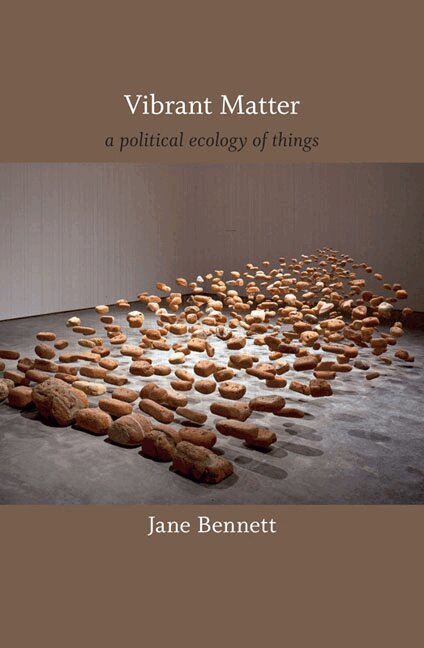
In Vibrant Matter the political theorist Jane Bennett, renowned for her work on nature, ethics, and affect, shifts her focus from the human experience of things to things themselves. Bennett argues that political theory needs to do a better job of recognizing the active participation of nonhuman forces in events. Toward that end, she theorizes a “vital materiality” that runs through and across bodies, both human and nonhuman. Bennett explores how political analyses of public events might change were we to acknowledge that agency always emerges as the effect of ad hoc configurations of human and nonhuman forces. She suggests that recognizing that agency is distributed this way, and is not solely the province of humans, might spur the cultivation of a more responsible, ecologically sound politics: a politics less devoted to blaming and condemning individuals than to discerning the web of forces affecting situations and events.Bennett examines the political and theoretical implications of vital materialism through extended discussions of commonplace things and physical phenomena including stem cells, fish oils, electricity, metal, and trash. She reflects on the vital power of material formations such as landfills, which generate lively streams of chemicals, and omega-3 fatty acids, which can transform brain chemistry and mood. Along the way, she engages with the concepts and claims of Spinoza, Nietzsche, Thoreau, Darwin, Adorno, and Deleuze, disclosing a long history of thinking about vibrant matter in Western philosophy, including attempts by Kant, Bergson, and the embryologist Hans Driesch to name the “vital force” inherent in material forms. Bennett concludes by sketching the contours of a “green materialist” ecophilosophy. - Häftad, Engelska, 2011
285 kr
Skickas inom 5-8 vardagar
The Queer Art of Failure is about finding alternatives-to conventional understandings of success in a heteronormative, capitalist society; to academic disciplines that confirm what is already known according to approved methods of knowing; and to cultural criticism that claims to break new ground but cleaves to conventional archives. Jack Halberstam proposes “low theory” as a mode of thinking and writing that operates at many different levels at once. Low theory is derived from eccentric archives. It runs the risk of not being taken seriously. It entails a willingness to fail and to lose one’s way, to pursue difficult questions about complicity, and to find counterintuitive forms of resistance. Tacking back and forth between high theory and low theory, high culture and low culture, Halberstam looks for the unexpected and subversive in popular culture, avant-garde performance, and queer art. Halberstam pays particular attention to animated children’s films, revealing narratives filled with unexpected encounters between the childish, the transformative, and the queer. Failure sometimes offers more creative, cooperative, and surprising ways of being in the world, even as it forces us to face the dark side of life, love, and libido. - Häftad, Engelska, 2004
260 kr
Skickas inom 5-8 vardagar
In World-Systems Analysis, Immanuel Wallerstein provides a concise and accessible introduction to the comprehensive approach that he pioneered thirty years ago to understanding the history and development of the modern world. Since Wallerstein first developed world-systems analysis, it has become a widely utilized methodology within the historical social sciences and a common point of reference in discussions of globalization. Now, for the first time in one volume, Wallerstein offers a succinct summary of world-systems analysis and a clear outline of the modern world-system, describing the structures of knowledge upon which it is based, its mechanisms, and its future.Wallerstein explains the defining characteristics of world-systems analysis: its emphasis on world-systems rather than nation-states, on the need to consider historical processes as they unfold over long periods of time, and on combining within a single analytical framework bodies of knowledge usually viewed as distinct from one another-such as history, political science, economics, and sociology. He describes the world-system as a social reality comprised of interconnected nations, firms, households, classes, and identity groups of all kinds. He identifies and highlights the significance of the key moments in the evolution of the modern world-system: the development of a capitalist world-economy in the sixteenth-century, the beginning of two centuries of liberal centrism in the French Revolution of 1789, and the undermining of that centrism in the global revolts of 1968. Intended for general readers, students, and experienced practitioners alike, this book presents a complete overview of world-systems analysis by its original architect. - Häftad, Engelska, 2007
559 kr
Skickas inom 3-6 vardagar
While the creation of Dolly the sheep, the world's most famous clone, triggered an enormous amount of discussion about human cloning, in Dolly Mixtures the anthropologist Sarah Franklin looks beyond that much-rehearsed controversy to some of the other reasons why the iconic animal's birth and death were significant. Building on the work of historians and anthropologists, Franklin reveals Dolly as the embodiment of agricultural, scientific, social, and commercial histories which are, in turn, bound up with national and imperial aspirations. Dolly was the offspring of a long tradition of animal domestication, as well as the more recent histories of capital accumulation through selective breeding, and enhanced national competitiveness through the control of biocapital. Franklin traces Dolly's connections to Britain's centuries-old sheep and wool markets (which were vital to the nation's industrial revolution) and to Britain's export of animals to its colonies-particularly Australia-to expand markets and produce wealth. Moving forward in time, she explains the celebrity sheep's links to the embryonic cell lines and global bioscientific innovation of the late twentieth century and early twenty-first. Franklin combines wide-ranging sources-from historical accounts of sheep-breeding, to scientific representations of cloning by nuclear transfer, to popular media reports of Dolly's creation and birth-as she draws on gender and kinship theory as well as postcolonial and science studies. She argues that there is an urgent need for more nuanced responses to the complex intersections between the social and the biological, intersections which are literally reshaping reproduction and genealogy. In Dolly Mixtures, Franklin uses the renowned sheep as an opportunity to begin developing a critical language to identify and evaluate the reproductive possibilities that post-Dolly biology now faces, and to look back at some of the important historical formations that enabled and prefigured Dollys creation. - Häftad, Engelska, 2009
333 kr
Skickas inom 3-6 vardagar
Financial collapses-whether of the junk bond market, the Internet bubble, or the highly leveraged housing market-are often explained as the inevitable result of market cycles: What goes up must come down. In Liquidated, Karen Ho punctures the aura of the abstract, all-powerful market to show how financial markets, and particularly booms and busts, are constructed. Through an in-depth investigation into the everyday experiences and ideologies of Wall Street investment bankers, Ho describes how a financially dominant but highly unstable market system is understood, justified, and produced through the restructuring of corporations and the larger economy. Ho, who worked at an investment bank herself, argues that bankers’ approaches to financial markets and corporate America are inseparable from the structures and strategies of their workplaces. Her ethnographic analysis of those workplaces is filled with the voices of stressed first-year associates, overworked and alienated analysts, undergraduates eager to be hired, and seasoned managing directors. Recruited from elite universities as “the best and the brightest,” investment bankers are socialized into a world of high risk and high reward. They are paid handsomely, with the understanding that they may be let go at any time. Their workplace culture and networks of privilege create the perception that job insecurity builds character, and employee liquidity results in smart, efficient business. Based on this culture of liquidity and compensation practices tied to profligate deal-making, Wall Street investment bankers reshape corporate America in their own image. Their mission is the creation of shareholder value, but Ho demonstrates that their practices and assumptions often produce crises instead. By connecting the values and actions of investment bankers to the construction of markets and the restructuring of U.S. corporations, Liquidated reveals the particular culture of Wall Street often obscured by triumphalist readings of capitalist globalization. - Häftad, Engelska, 2001
444 kr
Skickas inom 5-8 vardagar
In this creative, ethnographic, and historical critique of labor practices on an Indian plantation, Piya Chatterjee provides a sophisticated examination of the production, consumption, and circulation of tea. A Time for Tea reveals how the female tea-pluckers seen in advertisements-picturesque women in mist-shrouded fields-came to symbolize the heart of colonialism in India. Chatterjee exposes how this image has distracted from terrible working conditions, low wages, and coercive labor practices enforced by the patronage system. Allowing personal, scholarly, and artistic voices to speak in turn and in tandem, Chatterjee discusses the fetishization of women who labor under colonial, postcolonial, and now neofeudal conditions. In telling the overarching story of commodity and empire, A Time for Tea demonstrates that at the heart of these narratives of travel, conquest, and settlement are compelling stories of women workers. While exploring the global and political dimensions of local practices of gendered labor, Chatterjee also reflects on the privileges and paradoxes of her own “decolonization” as a Third World feminist anthropologist. The book concludes with an extended reflection on the cultures of hierarchy, power, and difference in the plantation’s villages. It explores the overlapping processes by which gender, caste, and ethnicity constitute the interlocked patronage system of villages and their fields of labor. The tropes of coercion, consent, and resistance are threaded through the discussion.A Time for Tea will appeal to anthropologists and historians, South Asianists, and those interested in colonialism, postcolonialism, labor studies, and comparative or international feminism.Designated a John Hope Franklin Center book by the John Hope Franklin Seminar Group on Race, Religion, and Globalization. - Häftad, Engelska, 2002
377 kr
Skickas inom 5-8 vardagar
In seven representative episodes of black masculine literary and cultural history-from the founding of the first African American Masonic lodge in 1775 to the 1990s choreographies of modern dance genius Bill T. Jones-Constructing the Black Masculine maps black men’s historical efforts to negotiate the frequently discordant relationship between blackness and maleness in the cultural logic of American identity. Maurice O. Wallace draws on an impressive variety of material to investigate the survivalist strategies employed by black men who have had to endure the disjunction between race and masculinity in American culture. Highlighting their chronic objectification under the gaze of white eyes, Wallace argues that black men suffer a social and representational crisis in being at once seen and unseen, fetish and phantasm, spectacle and shadow in the American racial imagination. Invisible and disregarded on one hand, black men, perceived as potential threats to society, simultaneously face the reality of hypervisibility and perpetual surveillance. Paying significant attention to the sociotechnologies of vision and image production over two centuries, Wallace shows how African American men-as soldiers, Freemasons, and romantic heroes-have sought both to realize the ideal image of the American masculine subject and to deconstruct it in expressive mediums like modern dance, photography, and theatre. Throughout, he draws on the experiences and theories of such notable figures as Frederick Douglass, W. E. B. Du Bois, Booker T. Washington, and James Baldwin. - Häftad, Engelska, 2003
311 kr
Skickas
In The Archive and the Repertoire preeminent performance studies scholar Diana Taylor provides a new understanding of the vital role of performance in the Americas. From plays to official events to grassroots protests, performance, she argues, must be taken seriously as a means of storing and transmitting knowledge. Taylor reveals how the repertoire of embodied memory-conveyed in gestures, the spoken word, movement, dance, song, and other performances-offers alternative perspectives to those derived from the written archive and is particularly useful to a reconsideration of historical processes of transnational contact. The Archive and the Repertoire invites a remapping of the Americas based on traditions of embodied practice. Examining various genres of performance including demonstrations by the children of the disappeared in Argentina, the Peruvian theatre group Yuyachkani, and televised astrological readings by Univision personality Walter Mercado, Taylor explores how the archive and the repertoire work together to make political claims, transmit traumatic memory, and forge a new sense of cultural identity. Through her consideration of performances such as Coco Fusco and Guillermo GÓmez-PeÑa’s show Two Undiscovered Amerindians Visit . . . , Taylor illuminates how scenarios of discovery and conquest haunt the Americas, trapping even those who attempt to dismantle them. Meditating on events like those of September 11, 2001 and media representations of them, she examines both the crucial role of performance in contemporary culture and her own role as witness to and participant in hemispheric dramas. The Archive and the Repertoire is a compelling demonstration of the many ways that the study of performance enables a deeper understanding of the past and present, of ourselves and others. - Inbunden, Engelska, 2004
1 812 kr
Skickas inom 5-8 vardagar
Through a rich interpretation of the remarkable photographs W. E. B. Du Bois compiled for the American Negro Exhibit at the 1900 Paris Exposition, Shawn Michelle Smith reveals the visual dimension of the color line that Du Bois famously called “the problem of the twentieth century.” Du Bois’s prize-winning exhibit consisted of three albums together containing 363 black-and-white photographs, mostly of middle-class African Americans from Atlanta and other parts of Georgia. Smith provides an extensive analysis of the images, the antiracist message Du Bois conveyed by collecting and displaying them, and their connection to his critical thought. She contends that Du Bois was an early visual theorist of race and racism and demonstrates how such an understanding makes the important concepts he developed-including double consciousness, the color line, the Veil, and second sight-available to visual culture and African American studies scholars in powerful new ways. Smith reads Du Bois’s photographs in relation to other turn-of-the-century images such as scientific typologies, criminal mugshots, racist caricatures, and lynching photographs. By juxtaposing these images with reproductions from Du Bois’s exhibition archive, Smith shows how Du Bois deliberately challenged racist representations of African Americans. Emphasizing the importance of comparing multiple visual archives, Photography on the Color Line reinvigorates understandings of the stakes of representation and the fundamental connections between race and visual culture in the United States. - Häftad, Engelska, 2004
444 kr
Skickas inom 5-8 vardagar
Through a rich interpretation of the remarkable photographs W. E. B. Du Bois compiled for the American Negro Exhibit at the 1900 Paris Exposition, Shawn Michelle Smith reveals the visual dimension of the color line that Du Bois famously called “the problem of the twentieth century.” Du Bois’s prize-winning exhibit consisted of three albums together containing 363 black-and-white photographs, mostly of middle-class African Americans from Atlanta and other parts of Georgia. Smith provides an extensive analysis of the images, the antiracist message Du Bois conveyed by collecting and displaying them, and their connection to his critical thought. She contends that Du Bois was an early visual theorist of race and racism and demonstrates how such an understanding makes the important concepts he developed-including double consciousness, the color line, the Veil, and second sight-available to visual culture and African American studies scholars in powerful new ways. Smith reads Du Bois’s photographs in relation to other turn-of-the-century images such as scientific typologies, criminal mugshots, racist caricatures, and lynching photographs. By juxtaposing these images with reproductions from Du Bois’s exhibition archive, Smith shows how Du Bois deliberately challenged racist representations of African Americans. Emphasizing the importance of comparing multiple visual archives, Photography on the Color Line reinvigorates understandings of the stakes of representation and the fundamental connections between race and visual culture in the United States. - Häftad, Engelska, 2005
444 kr
Skickas inom 5-8 vardagar
Presenting incisive original readings of French writing about the Caribbean from the inception of colonization in the 1640s until the onset of the Haitian Revolution in the 1790s, Doris Garraway sheds new light on a significant chapter in French colonial history. At the same time, she makes a pathbreaking contribution to the study of the cultural contact, creolization, and social transformation that resulted in one of the most profitable yet brutal slave societies in history. Garraway’s readings highlight how French colonial writers characterized the Caribbean as a space of spiritual, social, and moral depravity. While tracing this critique in colonial accounts of Island Carib cultures, piracy, spirit beliefs, slavery, miscegenation, and incest, Garraway develops a theory of “the libertine colony.” She argues that desire and sexuality were fundamental to practices of domination, laws of exclusion, and constructions of race in the slave societies of the colonial French Caribbean.Among the texts Garraway analyzes are missionary histories by Jean-Baptiste Du Tertre, Raymond Breton, and Jean-Baptiste Labat; narratives of adventure and transgression written by pirates and others outside the official civil and religious power structures; travel accounts; treatises on slavery and colonial administration in Saint-Domingue; the first colonial novel written in French; and the earliest linguistic description of the native Carib language. Garraway also analyzes legislation-including the Code noir-that codified slavery and other racialized power relations. The Libertine Colony is both a rich cultural history of creolization as revealed in Francophone colonial literature and an important contribution to theoretical arguments about how literary critics and historians should approach colonial discourse and cultural representations of slave societies. - Häftad, Engelska, 2005
377 kr
Skickas inom 5-8 vardagar
In this innovative history, Paige Raibmon examines the political ramifications of ideas about “real Indians.” Focusing on the Northwest Coast in the late nineteenth century and early twentieth, she describes how government officials, missionaries, anthropologists, reformers, settlers, and tourists developed definitions of Indian authenticity based on such binaries as Indian versus White, traditional versus modern, and uncivilized versus civilized. They recognized as authentic only those expressions of “Indianness” that conformed to their limited definitions and reflected their sense of colonial legitimacy and racial superiority. Raibmon shows that Whites and Aboriginals were collaborators-albeit unequal ones-in the politics of authenticity. Non-Aboriginal people employed definitions of Indian culture that limited Aboriginal claims to resources, land, and sovereignty, while Aboriginals utilized those same definitions to access the social, political, and economic means necessary for their survival under colonialism.Drawing on research in newspapers, magazines, agency and missionary records, memoirs, and diaries, Raibmon combines cultural and labor history. She looks at three historical episodes: the participation of a group of Kwakwaka’wakw from Vancouver in the 1893 World’s Columbian Exposition in Chicago; the work of migrant Aboriginal laborers in the hop fields of Puget Sound; and the legal efforts of Tlingit artist Rudolph Walton to have his mixed-race step-children admitted to the white public school in Sitka, Alaska. Together these episodes reveal the consequences of outsiders’ attempts to define authentic Aboriginal culture. Raibmon argues that Aboriginal culture is much more than the reproduction of rituals; it also lies in the means by which Aboriginal people generate new and meaningful ways of identifying their place in a changing modern environment. - Inbunden, Engelska, 2005
1 294 kr
Skickas inom 5-8 vardagar
In The Ellis Island Snow Globe, Erica Rand, author of the smart and entertaining book Barbie’s Queer Accessories, takes readers on an unconventional tour of Ellis Island, the migration station turned heritage museum, and its neighbor, the Statue of Liberty. By pausing to reflect on what is and is not on display at these two iconic national monuments, Rand focuses attention on whose heritage is honored and whose obscured. She also reveals the shifting connections between sex, money, material products, and ideas of the nation in everything from the ostensible father-mother-child configuration on an Ellis Island golf ball purchased at the gift shop to the multi-million dollar July 4, 1986 Liberty Weekend extravaganza celebrating the Statue’s centennial just days after the Supreme Court’s un-Libertylike decision upholding the antisodomy laws challenged in Bowers v. Hardwick.Rand notes that portrayals of the Statue of Liberty as a beacon for immigrants tend to suppress the Statue’s connections to people brought to this country by force. She examines what happened to migrants at Ellis Island whose bodies did not match the gender suggested by the clothing they wore. In light of contemporary ideas about safety and security, she examines the “Decide an Immigrant’s Fate” program, which has visitors to Ellis Island act as a 1910 board of inspectors hearing the appeal of an immigrant about to be excluded from the country. Rand is a witty, insightful, and open-minded tour guide, able to synthesize numerous diverse ideas-about tourism, immigration history, sexuality, race, ethnicity, commodity culture, and global capitalism-and to candidly convey her delight in her Ellis Island snow globe. And pen. And lighter. And back scratcher. And golf ball. And glittery pink key chain. - Häftad, Engelska, 2005
432 kr
Skickas inom 5-8 vardagar
In The Ellis Island Snow Globe, Erica Rand, author of the smart and entertaining book Barbie’s Queer Accessories, takes readers on an unconventional tour of Ellis Island, the migration station turned heritage museum, and its neighbor, the Statue of Liberty. By pausing to reflect on what is and is not on display at these two iconic national monuments, Rand focuses attention on whose heritage is honored and whose obscured. She also reveals the shifting connections between sex, money, material products, and ideas of the nation in everything from the ostensible father-mother-child configuration on an Ellis Island golf ball purchased at the gift shop to the multi-million dollar July 4, 1986 Liberty Weekend extravaganza celebrating the Statue’s centennial just days after the Supreme Court’s un-Libertylike decision upholding the antisodomy laws challenged in Bowers v. Hardwick.Rand notes that portrayals of the Statue of Liberty as a beacon for immigrants tend to suppress the Statue’s connections to people brought to this country by force. She examines what happened to migrants at Ellis Island whose bodies did not match the gender suggested by the clothing they wore. In light of contemporary ideas about safety and security, she examines the “Decide an Immigrant’s Fate” program, which has visitors to Ellis Island act as a 1910 board of inspectors hearing the appeal of an immigrant about to be excluded from the country. Rand is a witty, insightful, and open-minded tour guide, able to synthesize numerous diverse ideas-about tourism, immigration history, sexuality, race, ethnicity, commodity culture, and global capitalism-and to candidly convey her delight in her Ellis Island snow globe. And pen. And lighter. And back scratcher. And golf ball. And glittery pink key chain. - Inbunden, Engelska, 2006
1 316 kr
Skickas inom 5-8 vardagar
The Last “Darky” establishes Bert Williams, the comedian of the late nineteenth century and early twentieth, as central to the development of a global black modernism centered in Harlem’s Renaissance. Before integrating Broadway in 1910 via a controversial stint with the Ziegfeld Follies, Williams was already an international icon. Yet his name has faded into near obscurity, his extraordinary accomplishments forgotten largely because he performed in blackface. Louis Chude-Sokei contends that Williams’s blackface was not a display of internalized racism nor a submission to the expectations of the moment. It was an appropriation and exploration of the contradictory and potentially liberating power of racial stereotypes.Chude-Sokei makes the crucial argument that Williams’s minstrelsy negotiated the place of black immigrants in the cultural hotbed of New York City and was replicated throughout the African diaspora, from the Caribbean to Africa itself. Williams was born in the Bahamas. When performing the “darky,” he was actually masquerading as an African American. This black-on-black minstrelsy thus challenged emergent racial constructions equating “black” with African American and marginalizing the many diasporic blacks in New York. It also dramatized the practice of passing for African American common among non-American blacks in an African American–dominated Harlem. Exploring the thought of figures such as Booker T. Washington, W. E. B. Du Bois, Marcus Garvey, and Claude McKay, Chude-Sokei situates black-on-black minstrelsy at the center of burgeoning modernist discourses of assimilation, separatism, race militancy, carnival, and internationalism. While these discourses were engaged with the question of representing the “Negro” in the context of white racism, through black-on-black minstrelsy they were also deployed against the growing international influence of African American culture and politics in the twentieth century. - Häftad, Engelska, 2006
400 kr
Skickas inom 5-8 vardagar
The Last “Darky” establishes Bert Williams, the comedian of the late nineteenth century and early twentieth, as central to the development of a global black modernism centered in Harlem’s Renaissance. Before integrating Broadway in 1910 via a controversial stint with the Ziegfeld Follies, Williams was already an international icon. Yet his name has faded into near obscurity, his extraordinary accomplishments forgotten largely because he performed in blackface. Louis Chude-Sokei contends that Williams’s blackface was not a display of internalized racism nor a submission to the expectations of the moment. It was an appropriation and exploration of the contradictory and potentially liberating power of racial stereotypes.Chude-Sokei makes the crucial argument that Williams’s minstrelsy negotiated the place of black immigrants in the cultural hotbed of New York City and was replicated throughout the African diaspora, from the Caribbean to Africa itself. Williams was born in the Bahamas. When performing the “darky,” he was actually masquerading as an African American. This black-on-black minstrelsy thus challenged emergent racial constructions equating “black” with African American and marginalizing the many diasporic blacks in New York. It also dramatized the practice of passing for African American common among non-American blacks in an African American–dominated Harlem. Exploring the thought of figures such as Booker T. Washington, W. E. B. Du Bois, Marcus Garvey, and Claude McKay, Chude-Sokei situates black-on-black minstrelsy at the center of burgeoning modernist discourses of assimilation, separatism, race militancy, carnival, and internationalism. While these discourses were engaged with the question of representing the “Negro” in the context of white racism, through black-on-black minstrelsy they were also deployed against the growing international influence of African American culture and politics in the twentieth century. - Inbunden, Engelska, 2006
1 220 kr
Skickas inom 5-8 vardagar
Accounts of lynching in the United States have primarily focused on violence against African Americans in the South. Ken Gonzales-Day reveals racially motivated lynching as a more widespread practice. His research uncovered 350 instances of lynching that occurred in the state of California between 1850 and 1935. The majority were perpetrated against Latinos, Native Americans, and Asian Americans; more Latinos were lynched in California than were persons of any other race or ethnicity.An artist and writer, Gonzales-Day began this study by photographing lynching sites in order to document the absences and empty spaces that are emblematic of the forgotten history of lynching in the West. Drawing on newspaper articles, periodicals, court records, historical photographs, and souvenir postcards, he attempted to reconstruct the circumstances surrounding the lynchings that had occurred in the spaces he was photographing. The result is an unprecedented textual and visual record of a largely unacknowledged manifestation of racial violence in the United States. Including sixteen color illustrations, Lynching in the West juxtaposes Gonzales-Day’s evocative contemporary photographs of lynching sites with dozens of historical images.Gonzales-Day examines California’s history of lynching in relation to the spectrum of extra-legal vigilantism common during the nineteenth century-from vigilante committees to lynch mobs-and in relation to race-based theories of criminality. He explores the role of visual culture as well, reflecting on lynching as spectacle and the development of lynching photography. Seeking to explain why the history of lynching in the West has been obscured until now, Gonzales-Day points to popular misconceptions of frontier justice as race-neutral and to the role of the anti-lynching movement in shaping the historical record of lynching in the United States. - Inbunden, Engelska, 2006
1 267 kr
Skickas inom 5-8 vardagar
Through lively, engaging narrative, Understories demonstrates how volatile politics of race, class, and nation animate the notoriously violent struggles over forests in the southwestern United States. Rather than reproduce traditional understandings of nature and environment, Jake Kosek shifts the focus toward material and symbolic “natures,” seemingly unchangeable essences central to formations of race, class, and nation that are being remade not just through conflicts over resources but also through everyday practices by Chicano activists, white environmentalists, and state officials as well as nuclear scientists, heroin addicts, and health workers. Drawing on two years of ethnographic fieldwork and extensive archival research, he shows how these contentious natures are integral both to environmental politics and the formation of racialized citizens, politicized landscapes, and modern regimes of rule.Kosek traces the histories of forest extraction and labor exploitation in northern New Mexico, where Hispano residents have forged passionate attachments to place. He describes how their sentiments of dispossession emerged through land tenure systems and federal management programs that remade forest landscapes as exclusionary sites of national and racial purity. Fusing fine-grained ethnography with insights gleaned from cultural studies and science studies, Kosek shows how the nationally beloved Smokey the Bear became a symbol of white racist colonialism for many Hispanos in the region, while Los Alamos National Laboratory, at once revered and reviled, remade regional ecologies and economies. Understories offers an innovative vision of environmental politics, one that challenges scholars as well as activists to radically rework their understandings of relations between nature, justice, and identity. - Häftad, Engelska, 2006
336 kr
Skickas inom 5-8 vardagar
Through lively, engaging narrative, Understories demonstrates how volatile politics of race, class, and nation animate the notoriously violent struggles over forests in the southwestern United States. Rather than reproduce traditional understandings of nature and environment, Jake Kosek shifts the focus toward material and symbolic “natures,” seemingly unchangeable essences central to formations of race, class, and nation that are being remade not just through conflicts over resources but also through everyday practices by Chicano activists, white environmentalists, and state officials as well as nuclear scientists, heroin addicts, and health workers. Drawing on two years of ethnographic fieldwork and extensive archival research, he shows how these contentious natures are integral both to environmental politics and the formation of racialized citizens, politicized landscapes, and modern regimes of rule.Kosek traces the histories of forest extraction and labor exploitation in northern New Mexico, where Hispano residents have forged passionate attachments to place. He describes how their sentiments of dispossession emerged through land tenure systems and federal management programs that remade forest landscapes as exclusionary sites of national and racial purity. Fusing fine-grained ethnography with insights gleaned from cultural studies and science studies, Kosek shows how the nationally beloved Smokey the Bear became a symbol of white racist colonialism for many Hispanos in the region, while Los Alamos National Laboratory, at once revered and reviled, remade regional ecologies and economies. Understories offers an innovative vision of environmental politics, one that challenges scholars as well as activists to radically rework their understandings of relations between nature, justice, and identity. - Häftad, Engelska, 2006
315 kr
Skickas
In Anthropology and Social Theory the award-winning anthropologist Sherry B. Ortner draws on her longstanding interest in theories of cultural practice to rethink key concepts of culture, agency, and subjectivity for the social sciences of the twenty-first century. The seven theoretical and interpretive essays in this volume each advocate reconfiguring, rather than abandoning, the concept of culture. Similarly, they all suggest that a theory which depends on the interested action of social beings-specifically practice theory, associated especially with the work of Pierre Bourdieu-requires a more developed notion of human agency and a richer conception of human subjectivity. Ortner shows how social theory must both build upon and move beyond classic practice theory in order to understand the contemporary world.Some of the essays reflect explicitly on theoretical concerns: the relationship between agency and power, the problematic quality of ethnographic studies of resistance, and the possibility of producing an anthropology of subjectivity. Others are ethnographic studies that apply Ortner’s theoretical framework. In these, she investigates aspects of social class, looking at the relationship between race and middle-class identity in the United States, the often invisible nature of class as a cultural identity and as an analytical category in social inquiry, and the role that public culture and media play in the creation of the class anxieties of Generation X. Written with Ortner’s characteristic lucidity, these essays constitute a major statement about the future of social theory from one of the leading anthropologists of our time. - Inbunden, Engelska, 2007
1 461 kr
Skickas inom 5-8 vardagar
While the actor Sessue Hayakawa (1886–1973) is perhaps best known today for his Oscar-nominated turn as a Japanese military officer in The Bridge on the River Kwai (1957), in the early twentieth century he was an internationally renowned silent film star, as recognizable as Charlie Chaplin or Douglas Fairbanks. In this critical study of Hayakawa’s stardom, Daisuke Miyao reconstructs the Japanese actor’s remarkable career, from the films that preceded his meteoric rise to fame as the star of Cecil B. DeMille’s The Cheat (1915) through his reign as a matinee idol and the subsequent decline and resurrection of his Hollywood fortunes.Drawing on early-twentieth-century sources in both English and Japanese, including Japanese-language newspapers in the United States, Miyao illuminates the construction and reception of Hayakawa’s stardom as an ongoing process of cross-cultural negotiation. Hayakawa’s early work included short films about Japan that were popular with American audiences as well as spy films that played upon anxieties about Japanese nationalism. The Jesse L. Lasky production company sought to shape Hayakawa’s image by emphasizing the actor’s Japanese traits while portraying him as safely assimilated into U.S. culture. Hayakawa himself struggled to maintain his sympathetic persona while creating more complex Japanese characters that would appeal to both American and Japanese audiences. The star’s initial success with U.S. audiences created ambivalence in Japan, where some described him as traitorously Americanized and others as a positive icon of modernized Japan. This unique history of transnational silent-film stardom focuses attention on the ways that race, ethnicity, and nationality influenced the early development of the global film industry. - Häftad, Engelska, 2007
458 kr
Skickas inom 5-8 vardagar
While the actor Sessue Hayakawa (1886–1973) is perhaps best known today for his Oscar-nominated turn as a Japanese military officer in The Bridge on the River Kwai (1957), in the early twentieth century he was an internationally renowned silent film star, as recognizable as Charlie Chaplin or Douglas Fairbanks. In this critical study of Hayakawa’s stardom, Daisuke Miyao reconstructs the Japanese actor’s remarkable career, from the films that preceded his meteoric rise to fame as the star of Cecil B. DeMille’s The Cheat (1915) through his reign as a matinee idol and the subsequent decline and resurrection of his Hollywood fortunes.Drawing on early-twentieth-century sources in both English and Japanese, including Japanese-language newspapers in the United States, Miyao illuminates the construction and reception of Hayakawa’s stardom as an ongoing process of cross-cultural negotiation. Hayakawa’s early work included short films about Japan that were popular with American audiences as well as spy films that played upon anxieties about Japanese nationalism. The Jesse L. Lasky production company sought to shape Hayakawa’s image by emphasizing the actor’s Japanese traits while portraying him as safely assimilated into U.S. culture. Hayakawa himself struggled to maintain his sympathetic persona while creating more complex Japanese characters that would appeal to both American and Japanese audiences. The star’s initial success with U.S. audiences created ambivalence in Japan, where some described him as traitorously Americanized and others as a positive icon of modernized Japan. This unique history of transnational silent-film stardom focuses attention on the ways that race, ethnicity, and nationality influenced the early development of the global film industry. - Häftad, Engelska, 2008
377 kr
Skickas inom 5-8 vardagar
Mainstream media and film theory are based on the ways that media technologies operate in Europe and the United States. In this groundbreaking work, Brian Larkin provides a history and ethnography of media in Nigeria, asking what media theory looks like when Nigeria rather than a European nation or the United States is taken as the starting point. Concentrating on the Muslim city of Kano in the north of Nigeria, Larkin charts how the material qualities of technologies and the cultural ambitions they represent feed into the everyday experiences of urban Nigeria. Media technologies were introduced to Nigeria by colonial regimes as part of an attempt to shape political subjects and create modern, urban Africans. Larkin considers the introduction of media along with electric plants and railroads as part of the wider infrastructural project of colonial and postcolonial urbanism. Focusing on radio networks, mobile cinema units, and the building of cinema theaters, he argues that what media come to be in Kano is the outcome of technology’s encounter with the social formations of northern Nigeria and with norms shaped by colonialism, postcolonial nationalism, and Islam. Larkin examines how media technologies produce the modes of leisure and cultural forms of urban Africa by analyzing the circulation of Hindi films to Muslim Nigeria, the leisure practices of Hausa cinemagoers in Kano, and the dynamic emergence of Nigerian video films. His analysis highlights the diverse, unexpected media forms and practices that thrive in urban Africa. Signal and Noise brings anthropology and media together in an original analysis of media’s place in urban life. - Inbunden, Engelska, 2008
1 376 kr
Skickas inom 5-8 vardagar
How should we understand the fear and fascination elicited by the accounts of communicable disease outbreaks that proliferated, following the emergence of HIV, in scientific publications and the mainstream media? The repetition of particular characters, images, and story lines-of Patients Zero and superspreaders, hot zones and tenacious microbes-produced a formulaic narrative as they circulated through the media and were amplified in popular fiction and film. The “outbreak narrative” begins with the identification of an emerging infection, follows it through the global networks of contact and contagion, and ends with the epidemiological work that contains it. Priscilla Wald argues that we need to understand the appeal and persistence of the outbreak narrative because the stories we tell about disease emergence have consequences. As they disseminate information, they affect survival rates and contagion routes. They upset economies. They promote or mitigate the stigmatizing of individuals, groups, locales, behaviors, and lifestyles. Wald traces how changing ideas about disease emergence and social interaction coalesced in the outbreak narrative. She returns to the early years of microbiology-to the identification of microbes and “Typhoid Mary,” the first known healthy human carrier of typhoid in the United States-to highlight the intertwined production of sociological theories of group formation (“social contagion”) and medical theories of bacteriological infection at the turn of the twentieth century. Following the evolution of these ideas, Wald shows how they were affected by-or reflected in-the advent of virology, Cold War ideas about “alien” infiltration, science-fiction stories of brainwashing and body snatchers, and the HIV/AIDS pandemic. Contagious is a cautionary tale about how the stories we tell circumscribe our thinking about global health and human interactions as the world imagines-or refuses to imagine-the next Great Plague. - Häftad, Engelska, 2008
432 kr
Skickas inom 5-8 vardagar
How should we understand the fear and fascination elicited by the accounts of communicable disease outbreaks that proliferated, following the emergence of HIV, in scientific publications and the mainstream media? The repetition of particular characters, images, and story lines-of Patients Zero and superspreaders, hot zones and tenacious microbes-produced a formulaic narrative as they circulated through the media and were amplified in popular fiction and film. The “outbreak narrative” begins with the identification of an emerging infection, follows it through the global networks of contact and contagion, and ends with the epidemiological work that contains it. Priscilla Wald argues that we need to understand the appeal and persistence of the outbreak narrative because the stories we tell about disease emergence have consequences. As they disseminate information, they affect survival rates and contagion routes. They upset economies. They promote or mitigate the stigmatizing of individuals, groups, locales, behaviors, and lifestyles. Wald traces how changing ideas about disease emergence and social interaction coalesced in the outbreak narrative. She returns to the early years of microbiology-to the identification of microbes and “Typhoid Mary,” the first known healthy human carrier of typhoid in the United States-to highlight the intertwined production of sociological theories of group formation (“social contagion”) and medical theories of bacteriological infection at the turn of the twentieth century. Following the evolution of these ideas, Wald shows how they were affected by-or reflected in-the advent of virology, Cold War ideas about “alien” infiltration, science-fiction stories of brainwashing and body snatchers, and the HIV/AIDS pandemic. Contagious is a cautionary tale about how the stories we tell circumscribe our thinking about global health and human interactions as the world imagines-or refuses to imagine-the next Great Plague. - Häftad, Engelska, 2008
388 kr
Skickas inom 5-8 vardagar
Contemporary natural disasters such as Hurricane Katrina are quickly followed by disagreements about whether and how communities should be rebuilt, whether political leaders represent the community’s best interests, and whether the devastation could have been prevented. Shaky Colonialism demonstrates that many of the same issues animated the aftermath of disasters more than 250 years ago. On October 28, 1746, a massive earthquake ravaged Lima, a bustling city of 50,000, capital of the Peruvian Viceroyalty, and the heart of Spain’s territories in South America. Half an hour later, a tsunami destroyed the nearby port of Callao. The earthquake-tsunami demolished churches and major buildings, damaged food and water supplies, and suspended normal social codes, throwing people of different social classes together and prompting widespread chaos. In Shaky Colonialism, Charles F. Walker examines reactions to the catastrophe, the Viceroy’s plans to rebuild the city, and the opposition he encountered from the Church, the Spanish Crown, and Lima’s multiracial population.Through his ambitious rebuilding plan, the Viceroy sought to assert the power of the colonial state over the Church, the upper classes, and other groups. Agreeing with most inhabitants of the fervently Catholic city that the earthquake-tsunami was a manifestation of God’s wrath for Lima’s decadent ways, he hoped to reign in the city’s baroque excesses and to tame the city’s notoriously independent women. To his great surprise, almost everyone objected to his plan, sparking widespread debate about political power and urbanism. Illuminating the shaky foundations of Spanish control in Lima, Walker describes the latent conflicts-about class, race, gender, religion, and the very definition of an ordered society-brought to the fore by the earthquake-tsunami of 1746. - Inbunden, Engelska, 2008
1 431 kr
Skickas inom 5-8 vardagar
For many years, kisses were the only sexual acts to be seen in mainstream American movies. Then, in the 1960s and 1970s, American cinema “grew up” in response to the sexual revolution, and movie audiences came to expect more knowledge about what happened between the sheets. In Screening Sex, the renowned film scholar Linda Williams investigates how sex acts have been represented on screen for more than a century and, just as important, how we have watched and experienced those representations. Whether examining the arch artistry of Last Tango in Paris, the on-screen orgasms of Jane Fonda, or the anal sex of two cowboys in Brokeback Mountain, Williams illuminates the forms of pleasure and vicarious knowledge derived from screening sex.Combining stories of her own coming of age as a moviegoer with film history, cultural history, and readings of significant films, Williams presents a fascinating history of the on-screen kiss, a look at the shift from adolescent kisses to more grown-up displays of sex, and a comparison of the “tasteful” Hollywood sexual interlude with sexuality as represented in sexploitation, Blaxploitation, and avant-garde films. She considers Last Tango in Paris and Deep Throat, two 1972 films unapologetically all about sex; In the Realm of the Senses, the only work of 1970s international cinema that combined hard-core sex with erotic art; and the sexual provocations of the mainstream movies Blue Velvet and Brokeback Mountain. She describes art films since the 1990s, in which the sex is aggressive, loveless, or alienated. Finally, Williams reflects on the experience of screening sex on small screens at home rather than on large screens in public. By understanding screening sex as both revelation and concealment, Williams has written the definitive study of sex at the movies.Linda Williams is Professor of Film Studies and Rhetoric at the University of California, Berkeley. Her books include Porn Studies, also published by Duke University Press; Playing the Race Card: Melodramas of Black and White from Uncle Tom to O. J. Simpson; Viewing Positions: Ways of Seeing Film; and Hard Core: Power, Pleasure, and the “Frenzy of the Visible.”A John Hope Franklin Center BookNovember424 pages129 illustrations6x9 trim sizeISBN 0-8223-0-8223-4285-5paper, $24.95ISBN 0-8223-0-8223-4263-4library cloth edition, $89.95ISBN 978-0-8223-4285-4paper, $24.95ISBN 978-0-8223-4263-2library cloth edition, $89.95 - Häftad, Engelska, 2008
336 kr
Skickas inom 5-8 vardagar
For many years, kisses were the only sexual acts to be seen in mainstream American movies. Then, in the 1960s and 1970s, American cinema “grew up” in response to the sexual revolution, and movie audiences came to expect more knowledge about what happened between the sheets. In Screening Sex, the renowned film scholar Linda Williams investigates how sex acts have been represented on screen for more than a century and, just as important, how we have watched and experienced those representations. Whether examining the arch artistry of Last Tango in Paris, the on-screen orgasms of Jane Fonda, or the anal sex of two cowboys in Brokeback Mountain, Williams illuminates the forms of pleasure and vicarious knowledge derived from screening sex.Combining stories of her own coming of age as a moviegoer with film history, cultural history, and readings of significant films, Williams presents a fascinating history of the on-screen kiss, a look at the shift from adolescent kisses to more grown-up displays of sex, and a comparison of the “tasteful” Hollywood sexual interlude with sexuality as represented in sexploitation, Blaxploitation, and avant-garde films. She considers Last Tango in Paris and Deep Throat, two 1972 films unapologetically all about sex; In the Realm of the Senses, the only work of 1970s international cinema that combined hard-core sex with erotic art; and the sexual provocations of the mainstream movies Blue Velvet and Brokeback Mountain. She describes art films since the 1990s, in which the sex is aggressive, loveless, or alienated. Finally, Williams reflects on the experience of screening sex on small screens at home rather than on large screens in public. By understanding screening sex as both revelation and concealment, Williams has written the definitive study of sex at the movies.Linda Williams is Professor of Film Studies and Rhetoric at the University of California, Berkeley. Her books include Porn Studies, also published by Duke University Press; Playing the Race Card: Melodramas of Black and White from Uncle Tom to O. J. Simpson; Viewing Positions: Ways of Seeing Film; and Hard Core: Power, Pleasure, and the “Frenzy of the Visible.”A John Hope Franklin Center BookNovember424 pages129 illustrations6x9 trim sizeISBN 0-8223-0-8223-4285-5paper, $24.95ISBN 0-8223-0-8223-4263-4library cloth edition, $89.95ISBN 978-0-8223-4285-4paper, $24.95ISBN 978-0-8223-4263-2library cloth edition, $89.95 - Häftad, Engelska, 2008
696 kr
Skickas inom 3-6 vardagar
Making a vital contribution to the understanding of Latin American modernism, Esther Gabara rethinks the role of photography in the Brazilian and Mexican avant-garde movements of the 1920s and 1930s. During these decades, intellectuals in Mexico and Brazil were deeply engaged with photography. Authors who are now canonical figures in the two countries’ literary traditions looked at modern life through the camera in a variety of ways. MÁrio de Andrade, known as the “pope” of Brazilian modernism, took and collected hundreds of photographs. Salvador Novo, a major Mexican writer, meditated on the medium’s aesthetic potential as “the prodigal daughter of the fine arts.” Intellectuals acted as tourists and ethnographers, and their images and texts circulated in popular mass media, sharing the page with photographs of the New Woman. In this richly illustrated study, Gabara introduces the concept of a modernist “ethos” to illuminate the intertwining of aesthetic innovation and ethical concerns in the work of leading Brazilian and Mexican literary figures, who were also photographers, art critics, and contributors to illustrated magazines during the 1920s and 1930s.Gabara argues that Brazilian and Mexican modernists deliberately made photography err: they made this privileged medium of modern representation simultaneously wander and work against its apparent perfection. They flouted the conventions of mainstream modernism so that their aesthetics registered an ethical dimension. Their photographic modernism strayed, dragging along the baggage of modernity lived in a postcolonial site. Through their “errant modernism,” avant-garde writers and photographers critiqued the colonial history of Latin America and its twentieth-century formations.