• Fri frakt över 249 kr
  • •
  • Snabba leveranser
  • •
  • Billiga böcker
Kundservice

Du är på sajten för privatpersoner.

Företag, bibliotek eller offentlig verksamhet?

Du handlar på classic.bokus.com, där alla dina funktioner finns intakta.
Till classic.bokus.com
Bokus logotyp. Gå till startsidan.
  • Erbjudanden
  • Student
  • Topplistor
  • Barn & ungdom
  • Bokus Play
  • E-böcker
  • Ljudböcker
  • Pocketböcker
  • Spel och pussel

5% studentrabatt – använd koden KURSBOK27 →

Sidfot

Mina sidor

    Hjälp

    • Kundservice
    • Vanliga frågor och svar
    • Frakt och leverans
    • Retur vid ångerrätt
    • Reklamera vara
    • Betalning
    • Köpvillkor
    • Allmänna villkor
    • Information om webbplatsens tillgänglighet

    Om Bokus

    • Om oss
    • Pressrum
    • För studenter
    • För företag
    • För bibliotek och offentlig verksamhet
    • För leverantörer
    • Hållbarhet

    Populärt

    • Aktuella erbjudanden
    • Presentkort
    • Studentlitteratur
    • Nya böcker
    • Topplistor
    • Signerade böcker
    • Engelska böcker

    Inspiration

    • Boktips
    • BookTok
    • Barnbokskaraktärer
    • Populära författare
    Logotyp för Bokus
    Följ oss på Facebook (extern länk)Följ oss på Instagram (extern länk)Följ oss på YouTube (extern länk)Följ oss på TikTok (extern länk)
    bokus @ CookiesAnpassa cookiesIntegritetspolicyKöpvillkor
    Till Citymail hemsida (extern länk)Till Budbee hemsida (extern länk)Till Postnord hemsida (extern länk)Till Schenker hemsida (extern länk)Till Early Bird hemsida (extern länk)Till Walleys hemsida (extern länk)
    1. Kultur
    2. Scenkonst och film
    3. Film

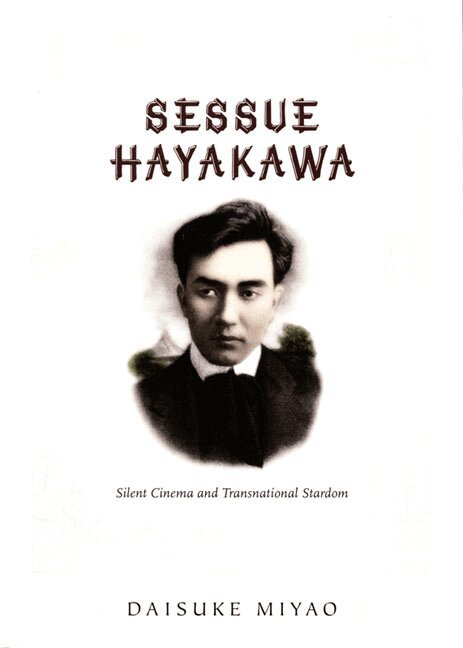
    Sessue Hayakawa

    Silent Cinema and Transnational Stardom

    AvDaisuke Miyao

    Häftad, Engelska, 2007

    Del i serien John Hope Franklin Center Book

    646 kr

    Beställningsvara. Skickas inom 3-6 vardagar. Fri frakt över 249 kr.

    Fler format och utgåvor

    Inbunden

    1 453 kr

    E-bok

    670 kr

    Beskrivning

    While the actor Sessue Hayakawa (1886–1973) is perhaps best known today for his Oscar-nominated turn as a Japanese military officer in The Bridge on the River Kwai (1957), in the early twentieth century he was an internationally renowned silent film star, as recognizable as Charlie Chaplin or Douglas Fairbanks. In this critical study of Hayakawa’s stardom, Daisuke Miyao reconstructs the Japanese actor’s remarkable career, from the films that preceded his meteoric rise to fame as the star of Cecil B. DeMille’s The Cheat (1915) through his reign as a matinee idol and the subsequent decline and resurrection of his Hollywood fortunes.Drawing on early-twentieth-century sources in both English and Japanese, including Japanese-language newspapers in the United States, Miyao illuminates the construction and reception of Hayakawa’s stardom as an ongoing process of cross-cultural negotiation. Hayakawa’s early work included short films about Japan that were popular with American audiences as well as spy films that played upon anxieties about Japanese nationalism. The Jesse L. Lasky production company sought to shape Hayakawa’s image by emphasizing the actor’s Japanese traits while portraying him as safely assimilated into U.S. culture. Hayakawa himself struggled to maintain his sympathetic persona while creating more complex Japanese characters that would appeal to both American and Japanese audiences. The star’s initial success with U.S. audiences created ambivalence in Japan, where some described him as traitorously Americanized and others as a positive icon of modernized Japan. This unique history of transnational silent-film stardom focuses attention on the ways that race, ethnicity, and nationality influenced the early development of the global film industry.

    Produktinformation

    • Utgivningsdatum:2007-03-28
    • Mått:156 x 226 x 26 mm
    • Vikt:603 g
    • Format:Häftad
    • Språk:Engelska
    • Serie:John Hope Franklin Center Book
    • Antal sidor:400
    • Förlag:Duke University Press
    • ISBN:9780822339694

    Utforska kategorier

    • Film inom Kultur

    Mer om författaren

    Daisuke Miyao is Assistant Professor of Japanese Literature and Film at the University of Oregon. He is a coeditor of Casio Abe’s Beat Takeshi vs. Takeshi Kitano and a co-translator of Kiju Yoshida’s Ozu’s Anti-Cinema.

    Recensioner i media

    “Fascinating . . . an exceptionally rich and provocative study of race and national imagery at the beginnings of the Hollywood film industry.”-Richard PeÑa, Program Director, Film Society of Lincoln Center, and Professor of Film Studies, Columbia University “Sessue Hayakawa has not received the attention he deserves as one of the most popular and prolific stars of the American silent screen, and this book brings a wealth of material to light. Without replicating existing research, Daisuke Miyao makes an important contribution to three developing areas within film studies: new approaches to the history of early silent film, studies of the impact of Asian Americans on Hollywood, and studies of transnational links among various film industries around the world.”-Gina Marchetti, author of From Tian’anmen to Times Square: Transnational China and the Chinese Diaspora on Global Screens, 1989–1997 “This is the definitive work on Sessue Hayakawa. It is a work of great originality, a truly unique attempt not only to give a thorough account of the career of one of the first and most unusual stars of silent cinema but also to approach Hayakawa from the perspective of his identity as an ethnic Japanese gaining worldwide stardom. That Daisuke Miyao is able to interrogate not only Japanese sources but the Japanese-language newspapers in the United States makes this perhaps the most thorough-and complex-treatment of the ethnicity of a movie star ever offered by a film historian. And Miyao’s placing of Hayakawa’s stardom within the context of the political and cultural relations between the United States and Japan is nothing less than masterful.”-Tom Gunning, author of The Films of Fritz Lang: Allegories of Vision and Modernity “Sessue Hayakawa: Silent Cinema and Transnational Stardom brings superb research and historical rigor to Hayakawa, an underrated Japanese silent film star, and to transnational film spectatorship during the early years of Hollywood. The book and its bibliography and inspirational for furthering the critical studies on other lesser-known Japanese cosmopolitan figures in early Hollywood. . . .Miyao’s book makes an unparalleled contribution and is an exemplary model for bridging the fields of cinema studies, Asian American studies, and Japanese studies.” - Sachiko Mizuno (Journal of Asian Studies) “This book is a welcome addition to the literature on Orientalism, romance and the ‘Yellow Peril’ in Hollywood cinema, which has hitherto given scant attention to Hayakawa and his significant role in the silent cinema. The author’s bilingualism, assiduous research and wide-ranging scholarship have enabled a refreshingly comprehensive account and informed analysis of the reception of the star and his films in both Japan and America.” - Freda Freiberg (Asian Studies Review)

    Innehållsförteckning

    • List of Illustration ixList of Abbreviations xiAcknowledgments xiiiIntroduction 1PART ONE: Emperor, Buddhist, Spy, or Indian: The Pre-Star Period of Sessue Hayakawa (1914-15) 1. A Star Is Born: The Transnational Success of The Cheat and Its Race and Gender Politics 212. Screen Debut: O Mimi San, or The Mikado in Picturesque Japan 503. Christianity versus Buddhism: The Melodramatic Imagination in The Wrath of the Gods 574. Doubleness: American Images of Japanese Spies in The Typhoon 665. The Noble Savage and the Vanishing Race: Japanese Actors in “Indian Films” 76PART TWO: Villain, Friend, or Lover: Sessue Hayakawa’s Stardom at Lasky-Paramount (1916-18) 6. The Making of an Americanized Japanese Gentleman: The Honorable Friend and Hashimura Togo 877. More Americanized than the Mexican: The Melodrama of Self-Sacrifice and the Genteel Tradition in Forbidden Paths 1068. Sympathetic Villains and Victim-Heroes: The Soul of Kura San and The Call of the East 1179. Self-Sacrifice in the First World War: The Secret Game 12710. The Cosmopolitan Way of Life: The Americanization of the Sessue Hayakawa in Magazines 136PART THREE: “Triple Consciousness”: Sessue Hayakawa’s Stardom at Haworth Pictures Corporation (1918-22) 11. Balancing Japaneseness and Americanization: Authenticity and Patriotism in His Birthright and Banzai 15312. Return of the Americanized Orientals: Robertson-Cole’s Expansion and Standardization of Sessue Hayakaway’s Star Vehicles 16813. The Mask: Sessue Hayakawa’s Redefinition of Silent Film Acting 19514. The Star Falls: Postwar Nativism and the Decline of Sessue Hayakawa’s Stardom 214PART FOUR: Stardom and Japanese Modernity: Sessue Hayakawa in Japan 15. Americanization and Nationalism: The Japanese Reception of Sessue Hayakawa 235Epilogue 261Notes 283Filmography 333Bibliography 337Index 365