Erica Rand - Böcker
Visar alla böcker från författaren Erica Rand. Handla med fri frakt och snabb leverans.
9 produkter
9 produkter
323 kr
Skickas inom 7-10 vardagar
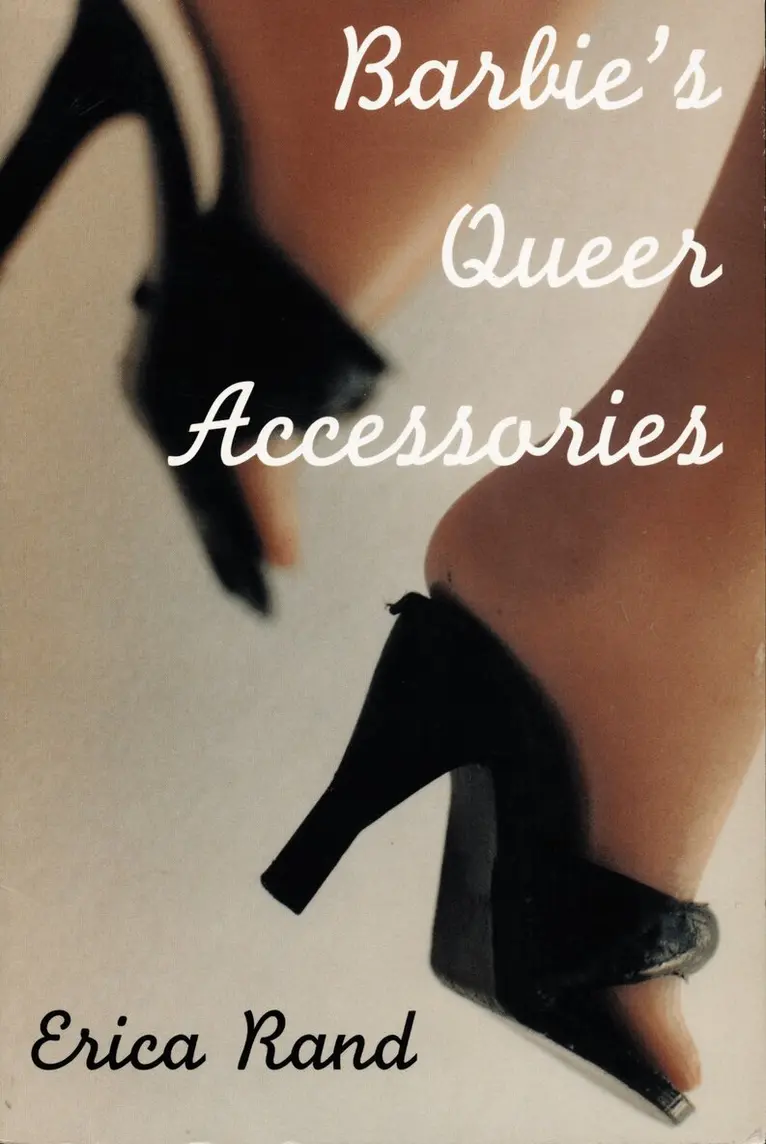
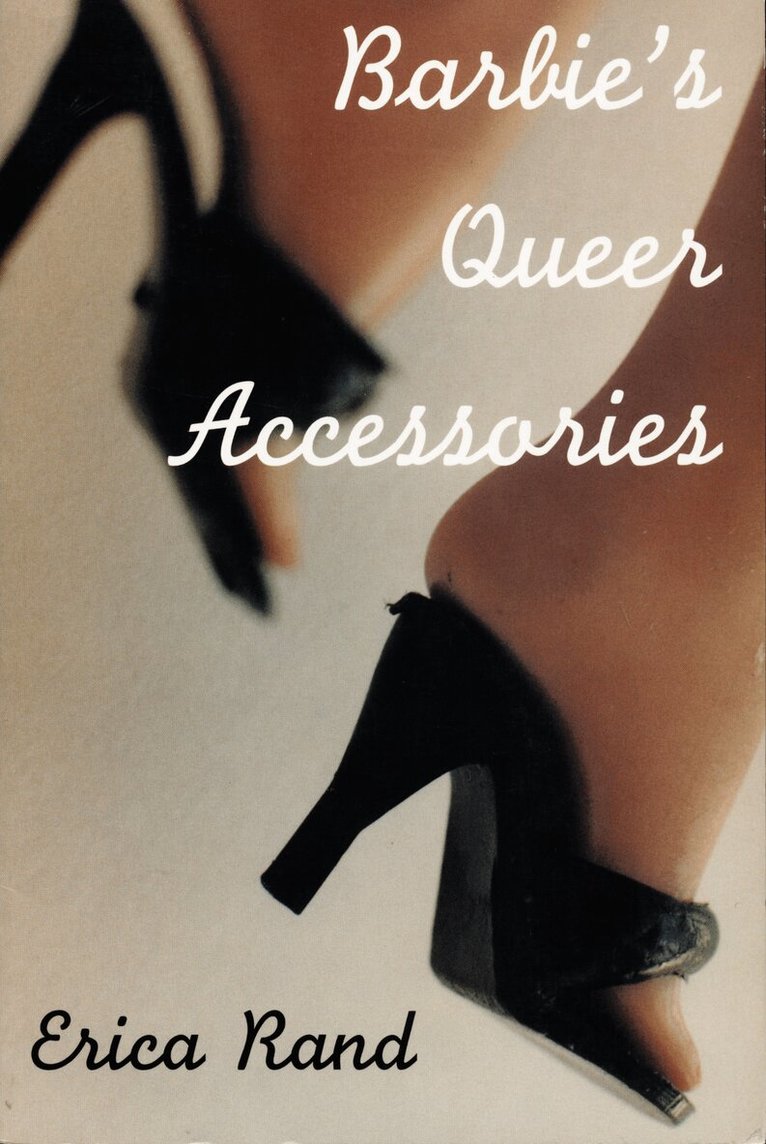
She’s skinny, white, and blond. She’s Barbie-an icon of femininity to generations of American girls. She’s also multiethnic and straight-or so says Mattel, Barbie’s manufacturer. But, as Barbie’s Queer Accessories demonstrates, many girls do things with Barbie never seen in any commercial. Erica Rand looks at the corporate marketing strategies used to create Barbie’s versatile (She’s a rapper! She’s an astronaut! She’s a bride!) but nonetheless premolded and still predominantly white image. Rand weighs the values Mattel seeks to embody in Barbie-evident, for example, in her improbably thin waist and her heterosexual partner-against the naked, dyked out, transgendered, and trashed versions favored by many juvenile owners and adult collectors of the doll.Rand begins by focusing on the production and marketing of Barbie, starting in 1959, including Mattel’s numerous tie-ins and spin-offs. These variations, which include the much-promoted multiethnic Barbies and the controversial Earring Magic Ken, helped make the doll one of the most profitable toys on the market. In lively chapters based on extensive interviews, the author discusses adult testimony from both Barbie "survivors" and enthusiasts and explores how memories of the doll fit into women’s lives. Finally, Rand looks at cultural reappropriations of Barbie by artists, collectors, and especially lesbians and gay men, and considers resistance to Barbie as a form of social and political activism.Illustrated with photographs of various interpretations and alterations of Barbie, this book encompasses both Barbie glorification and abjection as it testifies to the irrefutably compelling qualities of this bestselling toy. Anyone who has played with Barbie-or, more importantly, thought or worried about playing with Barbie-will find this book fascinating.
1 245 kr
Skickas inom 7-10 vardagar
In The Ellis Island Snow Globe, Erica Rand, author of the smart and entertaining book Barbie’s Queer Accessories, takes readers on an unconventional tour of Ellis Island, the migration station turned heritage museum, and its neighbor, the Statue of Liberty. By pausing to reflect on what is and is not on display at these two iconic national monuments, Rand focuses attention on whose heritage is honored and whose obscured. She also reveals the shifting connections between sex, money, material products, and ideas of the nation in everything from the ostensible father-mother-child configuration on an Ellis Island golf ball purchased at the gift shop to the multi-million dollar July 4, 1986 Liberty Weekend extravaganza celebrating the Statue’s centennial just days after the Supreme Court’s un-Libertylike decision upholding the antisodomy laws challenged in Bowers v. Hardwick.Rand notes that portrayals of the Statue of Liberty as a beacon for immigrants tend to suppress the Statue’s connections to people brought to this country by force. She examines what happened to migrants at Ellis Island whose bodies did not match the gender suggested by the clothing they wore. In light of contemporary ideas about safety and security, she examines the “Decide an Immigrant’s Fate” program, which has visitors to Ellis Island act as a 1910 board of inspectors hearing the appeal of an immigrant about to be excluded from the country. Rand is a witty, insightful, and open-minded tour guide, able to synthesize numerous diverse ideas-about tourism, immigration history, sexuality, race, ethnicity, commodity culture, and global capitalism-and to candidly convey her delight in her Ellis Island snow globe. And pen. And lighter. And back scratcher. And golf ball. And glittery pink key chain.
415 kr
Skickas inom 7-10 vardagar
In The Ellis Island Snow Globe, Erica Rand, author of the smart and entertaining book Barbie’s Queer Accessories, takes readers on an unconventional tour of Ellis Island, the migration station turned heritage museum, and its neighbor, the Statue of Liberty. By pausing to reflect on what is and is not on display at these two iconic national monuments, Rand focuses attention on whose heritage is honored and whose obscured. She also reveals the shifting connections between sex, money, material products, and ideas of the nation in everything from the ostensible father-mother-child configuration on an Ellis Island golf ball purchased at the gift shop to the multi-million dollar July 4, 1986 Liberty Weekend extravaganza celebrating the Statue’s centennial just days after the Supreme Court’s un-Libertylike decision upholding the antisodomy laws challenged in Bowers v. Hardwick.Rand notes that portrayals of the Statue of Liberty as a beacon for immigrants tend to suppress the Statue’s connections to people brought to this country by force. She examines what happened to migrants at Ellis Island whose bodies did not match the gender suggested by the clothing they wore. In light of contemporary ideas about safety and security, she examines the “Decide an Immigrant’s Fate” program, which has visitors to Ellis Island act as a 1910 board of inspectors hearing the appeal of an immigrant about to be excluded from the country. Rand is a witty, insightful, and open-minded tour guide, able to synthesize numerous diverse ideas-about tourism, immigration history, sexuality, race, ethnicity, commodity culture, and global capitalism-and to candidly convey her delight in her Ellis Island snow globe. And pen. And lighter. And back scratcher. And golf ball. And glittery pink key chain.
363 kr
Skickas inom 7-10 vardagar
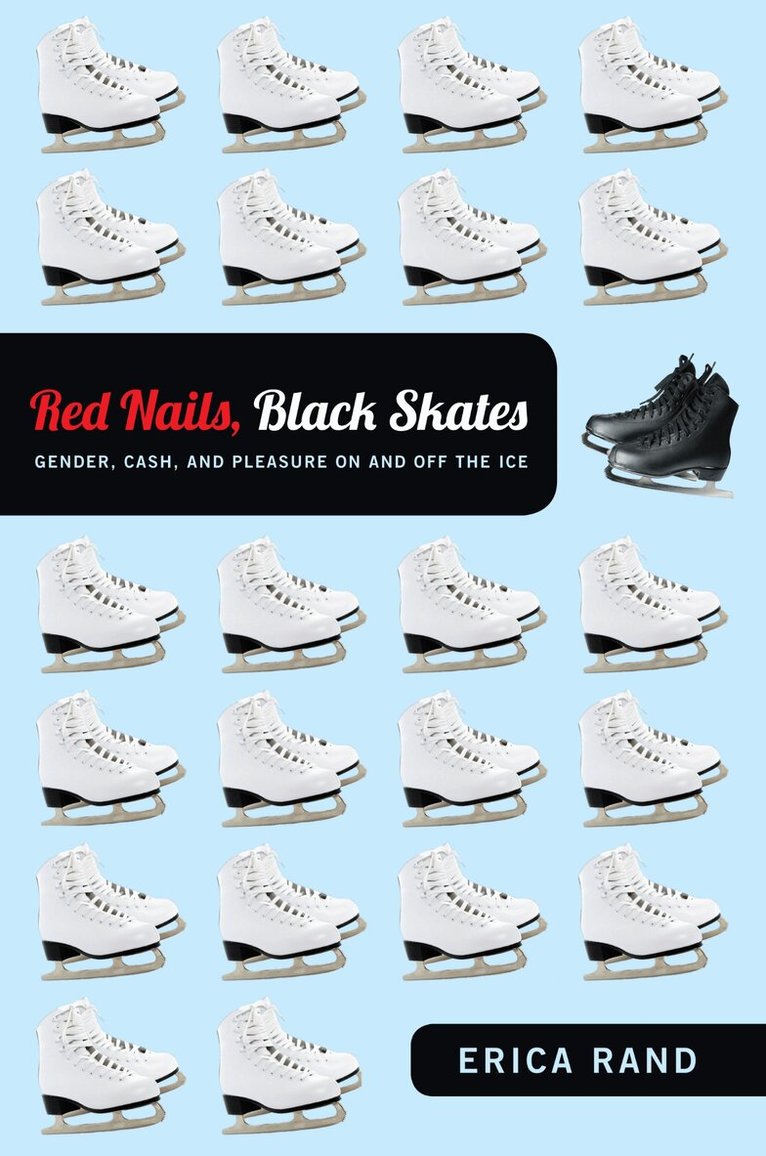
In her forties, Erica Rand bought a pair of figure skates to vary her workout routine. Within a few years, the college professor was immersed in adult figure skating. Here, in short, incisive essays, she describes the pleasures to be found in the rink, as well as the exclusionary practices that make those pleasures less accessible to some than to others. Throughout the book, Rand situates herself as a queer femme, describing her mixed feelings about participating in a sport with heterosexual story lines and rigid standards for gender-appropriate costumes and moves. She chronicles her experiences competing in the Gay Games and at the annual U.S. Adult National Figure Skating Championship, or "Adult Nationals"; Aided by her comparative study of roller derby and women's hockey, including a brief attempt to play hockey herself, she addresses matters such as skate color conventions, judging systems, racial and sexual norms, transgender issues in sports, and the economics of athletic participation and risk taking. Mixing sharp critique with genuine appreciation and delight, Rand suggests ways to make figure skating more inclusive, while portraying the unlikely friendships facilitated by sports and the sheer elation of gliding on ice.
2 091 kr
Skickas inom 10-15 vardagar
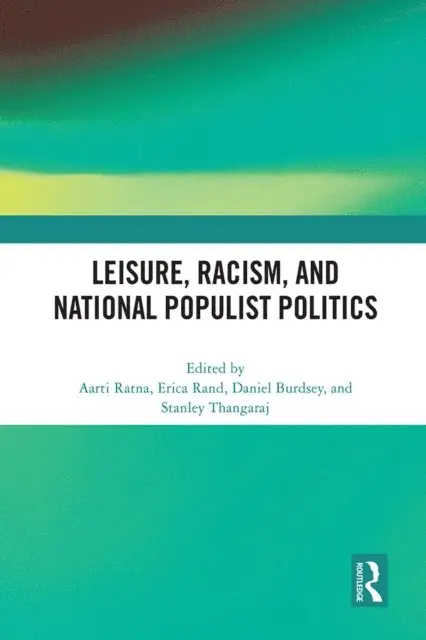
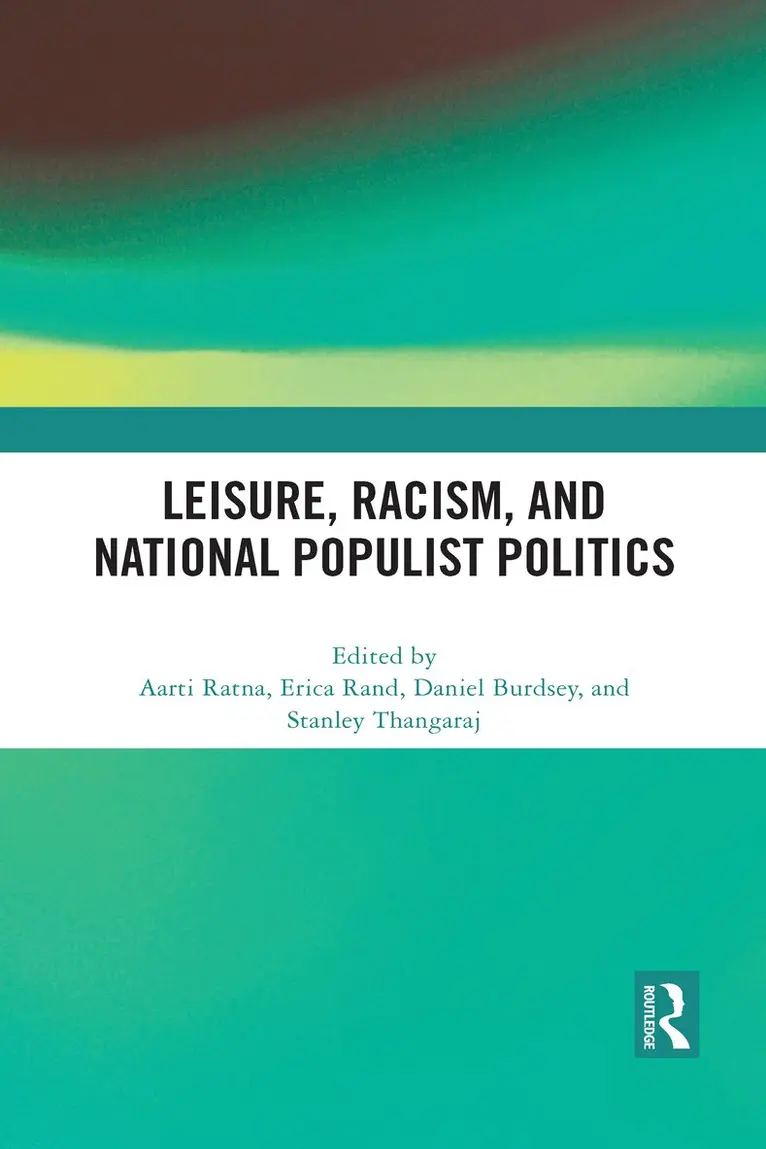
Leisure, Racism, and National Populist Politics responds to the rise and revival of nationalistic, ethnocentric, and authoritarian forms of hegemony, power, and control. Importantly, as a collection of essays, it foregrounds and (re)politicises debates around race and racism, recognising the significance of leisure spaces to the emergence of bottom-up, polymorphous, and dynamic forms of community, resistance, and belonging. A range of authors present a critical and varied exploration of the global manifestations of state-based, increasingly mainstream, racist politics, whilst concomitantly unpicking connected assemblages of power and control. For example: how homonormativity and whiteness structure queer visibility, sexual and civic rights; how white supremacist rhetoric is transformed and differently coded through anti-Black university traditions and state pride; how Western nation-states structure Muslim identity as opposite to national identity; how leisure becomes the site of protest against larger classist and corporate ventures; and how the hegemony of neoliberal, state, and municipal planning practices, and policies about rights to spaces of the neighbourhood, city, and sport, are understood, negotiated, and challenged. The book serves to not only enhance understanding of populist politics but, also, to demand an end to ethnic and racial violence perpetuated through nationalistic and racialised discourses about belonging, citizenship, and social rights to the nation. This edited volume will be a key resource for students and scholars interested in the dynamics of race, gender, and nation, and the politics of belonging in the realm of leisure.The chapters in this book were originally published as a special issue of Leisure Studies.
618 kr
Skickas inom 10-15 vardagar
Leisure, Racism, and National Populist Politics responds to the rise and revival of nationalistic, ethnocentric, and authoritarian forms of hegemony, power, and control. Importantly, as a collection of essays, it foregrounds and (re)politicises debates around race and racism, recognising the significance of leisure spaces to the emergence of bottom-up, polymorphous, and dynamic forms of community, resistance, and belonging. A range of authors present a critical and varied exploration of the global manifestations of state-based, increasingly mainstream, racist politics, whilst concomitantly unpicking connected assemblages of power and control. For example: how homonormativity and whiteness structure queer visibility, sexual and civic rights; how white supremacist rhetoric is transformed and differently coded through anti-Black university traditions and state pride; how Western nation-states structure Muslim identity as opposite to national identity; how leisure becomes the site of protest against larger classist and corporate ventures; and how the hegemony of neoliberal, state, and municipal planning practices, and policies about rights to spaces of the neighbourhood, city, and sport, are understood, negotiated, and challenged. The book serves to not only enhance understanding of populist politics but, also, to demand an end to ethnic and racial violence perpetuated through nationalistic and racialised discourses about belonging, citizenship, and social rights to the nation. This edited volume will be a key resource for students and scholars interested in the dynamics of race, gender, and nation, and the politics of belonging in the realm of leisure.The chapters in this book were originally published as a special issue of Leisure Studies.
1 008 kr
Skickas inom 7-10 vardagar
In The Small Book of Hip Checks Erica Rand uses multiple meanings of hip check-including an athlete using their hip to throw an opponent off-balance and the inspection of racialized gender-to consider the workings of queer gender, race, and writing. Explicitly attending to processes of writing and revising, Rand pursues interruption, rethinking, and redirection to challenge standard methods of argumentation and traditional markers of heft and fluff. She writes about topics including a trans shout-out in a Super Bowl ad, the heyday of lavender dildos, ballet dancer Misty Copeland, the criticism received by figure skater Debi Thomas and tennis great Serena Williams for competing in bodysuits while Black, and the gendering involved in identifying the remains of people who die trying to cross into the United States south of Tucson, Arizona. Along the way, Rand encourages making muscle memory of experimentation and developing an openness to being conceptually knocked sideways. In other words, to be hip-checked.
257 kr
Skickas inom 7-10 vardagar
In The Small Book of Hip Checks Erica Rand uses multiple meanings of hip check-including an athlete using their hip to throw an opponent off-balance and the inspection of racialized gender-to consider the workings of queer gender, race, and writing. Explicitly attending to processes of writing and revising, Rand pursues interruption, rethinking, and redirection to challenge standard methods of argumentation and traditional markers of heft and fluff. She writes about topics including a trans shout-out in a Super Bowl ad, the heyday of lavender dildos, ballet dancer Misty Copeland, the criticism received by figure skater Debi Thomas and tennis great Serena Williams for competing in bodysuits while Black, and the gendering involved in identifying the remains of people who die trying to cross into the United States south of Tucson, Arizona. Along the way, Rand encourages making muscle memory of experimentation and developing an openness to being conceptually knocked sideways. In other words, to be hip-checked.
126 kr
Skickas inom 7-10 vardagar
Reimagining sport beyond the gender binary, where movement and identity break free from tradition Skating Away from the Binary takes a critical look at the ways gender binarism remains deeply embedded in sport, with a focus on pairs figure skating. Erica Rand examines the persistence of these traditional gender structures and explores why trans-hostile sports policies are on the rise, even among those who may otherwise oppose anti-trans rhetoric. Drawing on her own experience as part of a gender-nonconforming pairs team, Rand reveals how figure skating’s historical gender norms intersect with racialized expectations to reinforce widely exclusionary practices in sport. In 2018, Rand teamed up with Anna Kellar, a democracy advocate and skating journalist, to learn pairs skating. Charting this endeavor, Skating Away from the Binary highlights the challenges and joys Rand and Kellar encounter as they navigate a sport designed around rigid male/female roles. Through lively descriptions of their training and insightful comparisons to other physical activities like tennis, quadball, and ballet, Rand identifies the interconnected binarisms shaping athletic participation, from oversimplified distinctions between cis and trans to the artificial division between athletic and artistic. Ultimately, Skating Away from the Binary is more than a critique of gender norms in sport—it’s a call to transform them. Challenging readers to consider new possibilities for movement, connection, and collaboration beyond conventional gendered expectations, Rand offers a vision of sport as a space where all people can experience joy and freedom in their bodies and identities.