• Fri frakt över 249 kr
  • •
  • Snabba leveranser
  • •
  • Billiga böcker
Kundservice

Du är på sajten för privatpersoner.

Företag, bibliotek eller offentlig verksamhet?

Du handlar på classic.bokus.com, där alla dina funktioner finns intakta.
Till classic.bokus.com
Bokus logotyp. Gå till startsidan.
  • Erbjudanden
  • Nyheter
  • Student
  • Topplistor
  • Barn & ungdom
  • Bokus Play
  • E-böcker
  • Pocketböcker
  • Spel & pussel

10% rabatt på allt med kod: NYSTART10 →

Sidfot

Mina sidor

    Hjälp

    • Kundservice
    • Vanliga frågor och svar
    • Frakt och leverans
    • Retur vid ångerrätt
    • Reklamera vara
    • Betalning
    • Köpvillkor
    • Allmänna villkor
    • Information om webbplatsens tillgänglighet

    Om Bokus

    • Om oss
    • Pressrum
    • För studenter
    • För företag
    • För bibliotek och offentlig verksamhet
    • För leverantörer
    • Hållbarhet

    Populärt

    • Aktuella erbjudanden
    • Presentkort
    • Studentlitteratur
    • Nya böcker
    • Topplistor
    • Signerade böcker
    • Engelska böcker

    Inspiration

    • Boktips
    • BookTok
    • Populära bokserier
    • Barnbokskaraktärer
    • Populära författare
    Logotyp för Bokus
    Följ oss på Facebook (extern länk)Följ oss på Instagram (extern länk)Följ oss på YouTube (extern länk)Följ oss på TikTok (extern länk)
    bokus @ CookiesAnpassa cookiesIntegritetspolicyKöpvillkor
    Till Citymail hemsida (extern länk)Till Budbee hemsida (extern länk)Till Postnord hemsida (extern länk)Till Schenker hemsida (extern länk)Till Early Bird hemsida (extern länk)Till Walleys hemsida (extern länk)
    1. Samhälle och politik
    2. Samhälle och kultur
    3. Kultur och medier
    4. Kulturvetenskap

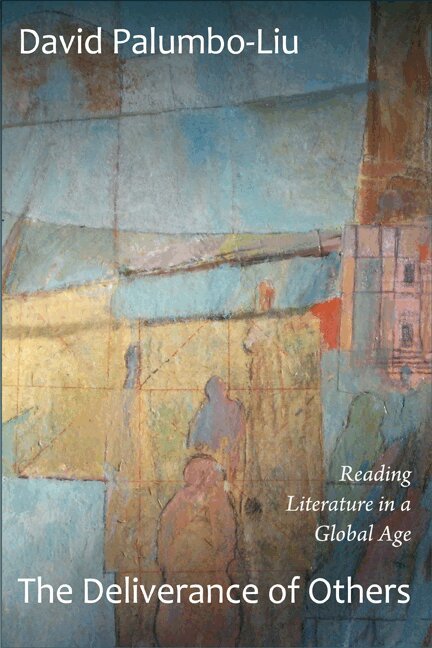
    Deliverance of Others

    Reading Literature in a Global Age

    AvDavid Palumbo-Liu

    Häftad, Engelska, 2012

    385 kr

    Beställningsvara. Skickas inom 5-8 vardagar. Fri frakt över 249 kr.

    Beskrivning

    The Deliverance of Others is a compelling reappraisal of the idea that narrative literature can expand readers' empathy. What happens if, amid the voluminous influx of otherness facilitated by globalization, we continue the tradition of valorizing literature for bringing the lives of others to us, admitting them into our world and valuing the difference that they introduce into our lives? In this new historical situation, are we not forced to determine how much otherness is acceptable, as opposed to how much is excessive, disruptive, and disturbing?The influential literary critic David Palumbo-Liu suggests that we can arrive at a sense of responsibility toward others by reconsidering the discourses of sameness that deliver those unlike ourselves to us. Through virtuoso readings of novels by J. M. Coetzee, Nadine Gordimer, Kazuo Ishiguro, and Ruth Ozeki, he shows how notions that would seem to offer some basis for commensurability between ourselves and others-ideas of rationality, the family, the body, and affect-become less stable as they try to accommodate more radical types of otherness. For Palumbo-Liu, the reading of literature is an ethical act, a way of thinking through our relations to others.

    Produktinformation

    • Utgivningsdatum:2012-06-05
    • Mått:152 x 229 x 13 mm
    • Vikt:336 g
    • Format:Häftad
    • Språk:Engelska
    • Antal sidor:240
    • Förlag:Duke University Press
    • ISBN:9780822352693

    Utforska kategorier

    • Kulturvetenskap inom Samhälle och politik
    • Litteraturvetenskap inom Skönlitteratur

    Mer om författaren

    David Palumbo-Liu is Professor and Director of Comparative Literature at Stanford University. He is the author of Asian/American: Historical Crossings of a Racial Frontier; the editor of The Ethnic Canon: Histories, Institutions, and Interventions; and a coeditor of Immanuel Wallerstein and the Problem of the World: System, Scale, Culture, also published by Duke University Press.

    Recensioner i media

    "Certain to be an important and influential book, The Deliverance of Others examines the profound challenges that the 'contemporary' historical moment poses to literary novel-writing in the early twenty-first century, when the fine line between a 'sufficient' and an 'excessive' measure of otherness seems to have been trespassed, when, as David Palumbo-Liu puts it in his extraordinary reading of J. M. Coetzee's Elizabeth Costello, readers of the novel are asked to imagine themselves confronting a 'tidal wave of difference' that exceeds the specific capacities of realist form and the more general compact that literary writing offers to strike between historical conditions and the liberal, sympathetic imagination."-Ian Baucom, author of Specters of the Atlantic: Finance Capital, Slavery, and the Philosophy of History "In The Deliverance of Others, the distinguished critic David Palumbo-Liu tackles broad questions of aesthetics and ethics in this 'age of otherness and virtual proximity.' By contrasting utilitarian notions of political economy with those of a system based on interdependent and ethically connected communities, he goes to the essential: How do we define truth in relation to reason and ethics and how do we understand the ways that literature and literary composition resonate differently in different global spaces, each with varying notions of rationality and choice?"-FranÇoise Lionnet, coeditor of The Creolization of Theory “Palumbo-Liu makes a persuasive case that the novel - as a self-conscious delivery system in its own right - offers a critical means for registering both the effects and the ‘affects’ of the new global delivery systems that connect us. In posing this ethical power as a problem for the global age, The Deliverance of Others renews our sense of literature’s profound importance for how we come to know others and ourselves.” - Casey Shoop (Los Angeles Review of Books) “Literature offers us a thick description of experience; certainly, a realistic literature makes no apology for this, and Palumbo-Liu pushes his formidable inquiry and sensitivity into this bramble patch. . . . The Deliverance of Others delves into the relationship amongst individual, society, cultures, economies, and civilizations. In its ambassadorial role, literature brings both self and ‘other’ before the eyes - and self encompasses both protagonist (as a nuanced, yet complex figure) and reader (as a representative of a given cultural sensibility).” - Lewis Fried (Key Reporter) “Palumbo-Liu precisely uses his ethical obligation in literary readings to bring to us The Deliverance of Others. This is an influential book which belongs on every shelf that wrestles with understanding the politics of difference, marginality and Otherness." - Reshmi Dutt-Ballerstadt (Rocky Mountain Review) “Palumbo-Liu’s remarkable book goes some way toward answering a question we must take seriously and debate vigorously in the very specific conditions of the twenty-first-century attack on the humanities that also forms part of our current global age: that of why we should read literature at all.” - Kerry Bystrom (College Literature) “[A] fine new book. . . . expertly done, and the range of material covered-from cloning to Facebook, from mass media to close textual reading-is highly impressive.” - Paul Giles (Cultural Studies Review) "In an era when discussions of the role of the humanities are invariably accompanied by a sense of crisis, The Deliverance of Others is a timely reminder and bold defense of the value of literature, brimming with the conviction that an ethical globalism is indeed possible and that the path to it winds through the contemporary novel." - Yogita Goyal (Novel)

    Innehållsförteckning

    • Preface viiAcknowledgments xiiiIntroduction 11. When Otherness Overcomes Reason 272. Whose Story Is It? 673. Art: A Foreign Exchange 964. Pacific Ocean Feeling: Affect, Otherness, Mediation 133Conclusion 179Notes 197Bibliography 207Index 215