• Fri frakt över 249 kr
  • •
  • Snabba leveranser
  • •
  • Billiga böcker
Kundservice

Du är på sajten för privatpersoner.

Företag, bibliotek eller offentlig verksamhet?

Du handlar på classic.bokus.com, där alla dina funktioner finns intakta.
Till classic.bokus.com
Bokus logotyp. Gå till startsidan.
  • Erbjudanden
  • Student
  • Topplistor
  • Barn & ungdom
  • Bokus Play
  • E-böcker
  • Ljudböcker
  • Pocketböcker
  • Spel och pussel

Pocketfynda! Hundratals böcker för 49 kr/st →

Sidfot

Mina sidor

    Hjälp

    • Kundservice
    • Vanliga frågor och svar
    • Frakt och leverans
    • Retur vid ångerrätt
    • Reklamera vara
    • Betalning
    • Köpvillkor
    • Allmänna villkor
    • Information om webbplatsens tillgänglighet

    Om Bokus

    • Om oss
    • Pressrum
    • För studenter
    • För företag
    • För bibliotek och offentlig verksamhet
    • För leverantörer
    • Hållbarhet

    Populärt

    • Aktuella erbjudanden
    • Presentkort
    • Studentlitteratur
    • Nya böcker
    • Topplistor
    • Signerade böcker
    • Engelska böcker

    Inspiration

    • Boktips
    • BookTok
    • Barnbokskaraktärer
    • Populära författare
    Logotyp för Bokus
    Följ oss på Facebook (extern länk)Följ oss på Instagram (extern länk)Följ oss på YouTube (extern länk)Följ oss på TikTok (extern länk)
    bokus @ CookiesAnpassa cookiesIntegritetspolicyKöpvillkor
    Till Citymail hemsida (extern länk)Till Budbee hemsida (extern länk)Till Postnord hemsida (extern länk)Till Schenker hemsida (extern länk)Till Early Bird hemsida (extern länk)Till Walleys hemsida (extern länk)
    1. Samhälle och politik
    2. Samhälle och kultur
    3. Sociala och etiska frågor

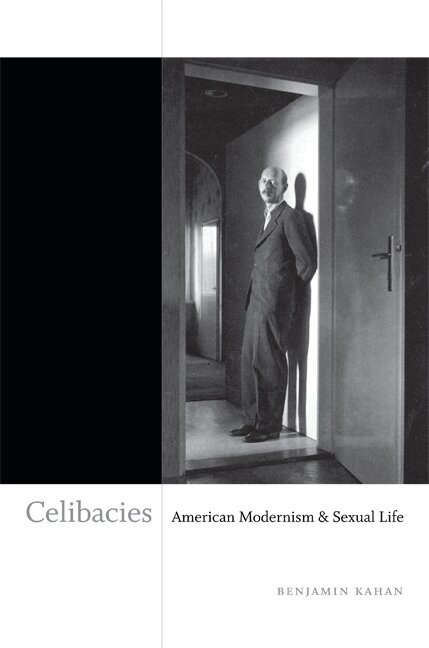
    Celibacies

    American Modernism and Sexual Life

    AvBenjamin Kahan

    Häftad, Engelska, 2013

    324 kr

    Beställningsvara. Skickas inom 5-8 vardagar. Fri frakt över 249 kr.

    Fler format och utgåvor

    Inbunden

    1 357 kr

    E-bok

    580 kr

    Beskrivning

    In this innovative study, Benjamin Kahan traces the elusive history of modern celibacy. Arguing that celibacy is a distinct sexuality with its own practices and pleasures, Kahan shows it to be much more than the renunciation of sex or a cover for homosexuality. Celibacies focuses on a diverse group of authors, social activists, and artists, spanning from the suffragettes to Henry James, and from the Harlem Renaissance's Father Divine to Andy Warhol. This array of figures reveals the many varieties of celibacy that have until now escaped scholars of literary modernism and sexuality. Ultimately, this book wrests the discussion of celibacy and sexual restraint away from social and religious conservatism, resituating celibacy within a history of political protest and artistic experimentation. Celibacies offers an entirely new perspective on this little-understood sexual identity and initiates a profound reconsideration of the nature and constitution of sexuality.

    Produktinformation

    • Utgivningsdatum:2013-11-25
    • Mått:152 x 229 x 14 mm
    • Vikt:363 g
    • Format:Häftad
    • Språk:Engelska
    • Antal sidor:232
    • Förlag:Duke University Press
    • ISBN:9780822355687

    Utforska kategorier

    • Sociala och etiska frågor inom Samhälle och politik
    • Sociologi inom Samhälle och politik

    Mer om författaren

    Benjamin Kahan is Assistant Professor of English and Women's and Gender Studies at Louisiana State University.

    Recensioner i media

    "This original and long-needed book on modern celibacy as a distinctive kind of sexuality-as opposed to the lack or negation of sexuality, or symptom of the repression of sexuality-holds true to its promise to show us just how richly varied celibacy can be, and how vital it in fact was to U.S. and British modernism. As Benjamin Kahan shows through insightful readings of texts by Henry James, Mina Loy, Marianne Moore, W. H. Auden, Father Divine, and Andy Warhol, among others, modernist celibacies were secular as well as religious, collectivizing as well as individualizing, sensuous as well as ascetic; celibacies were also capable of being feminist, erotic, strategic, and episodic. Attentive to celibacy as both practice and identity, Celibacies will be indispensable reading for queer theory and modernist studies."-Sianne Ngai, author of Our Aesthetic Categories: Zany, Cute, Interesting "When did celibacy become unfashionable? Why has queer studies colluded with its denigration? And what do the histories of celibacy, homosexuality, queerness, friendship, and the contemporary Asexuality Movement share? Benjamin Kahan's compassionate genealogy of an alternative modernism provides judicious answers to these questions, while theorizing celibacy's tenacious existence along the edge of the intelligible. Countering queer studies' infatuation with sex-as-visible-transgression and its willingness to cede abstinence's reformist energies to the political Right, Celibacies offers savvy inspiration for thinking sexuality without sex."-Valerie Traub, author of The Renaissance of Lesbianism in Early Modern England Kahan has written a book that is both interesting, well articulated, progressive, and perhaps for some, rather provoking. . . . The book is not only for those interested in the history of celibacy and sexuality, but also for those who work in the field of human sexuality. In Celibacies, Kahan has managed to offer a new perspective on celibacy without focusing on the politics of conservatism and religion, which is refreshing." - Hennie Weis (Metapsychology Online Reviews) “…Celibacies in a truly innovating way expands the concept rendering it positively connoted and giving it a new lease on life…. the author has managed to aggrandize the concept giving it breadth and depth, a past and a future.”  - Aristi Trendel (American Studies) “This scholarly but accessible study turns our notions of celibacy on their heads…. The book’s power derives from Kahan’s skill in making us reconceive sexual categories, particularly celibacy, which he argues convincingly is a positive way of choosing how to be in the world."  - Daniel A. Burr (Gay & Lesbian Review) “Although abstinence does not exactly come off as sexy in Celibacies, Kahan succeeds in making it legible, visible and historically significant for a period that is more typically understood as one of sexual expression and revolution. Kahan does for abstinence what Rachel Whiteread’s reverse castings do for negative space: both reveal the thrum of what is typically thought of as emptiness or lack.” - Laura Frost (Times Higher Education) "Kahan’s analysis intrigues as well as provokes, forcing us to ask new questions about how we define sexuality and understand its history." - Carolyn Herbst Lewis (Journal of American History) "Kahan’s long-overdue consideration of celibacy as sexuality provides significant insights into nineteenth- and twentieth-century American formations of gender, politics, race, aging, citizenship, marriage, and popular culture.  . . . Kahan’s achievement lies not only in what it so effectively accomplishes-the resituation of celibacy within sexuality-but also in the many avenues of future inquiry it brings to view." - Melissa Sanchez (GLQ) “More than simple erotophobia, celibacy in Kahan’s hands yields nuanced literary readings of a range of queer writers and artists. . . . There is something wonderfully counterintuitive about Kahan’s characterization of celibacy as a form of sexuality rather than the absence of one. … Celibacies is an impressive first book, thoroughly researched and elegantly written. . . .” - Tim Dean (American Literary History) "Kahan offers a tour de force set of readings that reveal that it is time to pay closer attention to sexuality without sex.  . . . We should never take for granted that celibacy is a way of withdrawing from life; it can, on the contrary, be a productive, generative, and even erotic way of engaging with it. Throughout his masterful study, Kahan’s brilliant readings demonstrate that modernism’s silences and sidelong glances are often attractive and meaningful ways of experiencing desire rather than hiding it." - Brian Glavey (Modern Philology)

    Innehållsförteckning

    • Acknowledgments Introduction. The Expressive Hypothesis 1. The Longue Durée of Celibacy: Boston Marriage, Female Friendship, and the Invention of Homosexuality 2. Celibate Time 3. The Other Harlem Renaissance: Father Divine, Celibate Economics, and the Making of Black Sexuality 4. The Celibate American: Closetedness, Emigration, and Queer Citizenship before Stonewall 5. Philosophical Bachelorhood, Philosophical Spinsterhood, and Celibate Modernity Conclusion. Asexuality/Neutrality/Relationality Notes Bibliography Index