• Fri frakt över 249 kr
  • •
  • Snabba leveranser
  • •
  • Billiga böcker
Kundservice

Du är på sajten för privatpersoner.

Företag, bibliotek eller offentlig verksamhet?

Du handlar på classic.bokus.com, där alla dina funktioner finns intakta.
Till classic.bokus.com
Bokus logotyp. Gå till startsidan.
  • Erbjudanden
  • Nyheter
  • Student
  • Topplistor
  • Barn & ungdom
  • Bokus Play
  • E-böcker
  • Pocketböcker
  • Spel & pussel

10% rabatt på allt med kod: NYSTART10 →

Sidfot

Mina sidor

    Hjälp

    • Kundservice
    • Vanliga frågor och svar
    • Frakt och leverans
    • Retur vid ångerrätt
    • Reklamera vara
    • Betalning
    • Köpvillkor
    • Allmänna villkor
    • Information om webbplatsens tillgänglighet

    Om Bokus

    • Om oss
    • Pressrum
    • För studenter
    • För företag
    • För bibliotek och offentlig verksamhet
    • För leverantörer
    • Hållbarhet

    Populärt

    • Aktuella erbjudanden
    • Presentkort
    • Studentlitteratur
    • Nya böcker
    • Topplistor
    • Signerade böcker
    • Engelska böcker

    Inspiration

    • Boktips
    • BookTok
    • Populära bokserier
    • Barnbokskaraktärer
    • Populära författare
    Logotyp för Bokus
    Följ oss på Facebook (extern länk)Följ oss på Instagram (extern länk)Följ oss på YouTube (extern länk)Följ oss på TikTok (extern länk)
    bokus @ CookiesAnpassa cookiesIntegritetspolicyKöpvillkor
    Till Citymail hemsida (extern länk)Till Budbee hemsida (extern länk)Till Postnord hemsida (extern länk)Till Schenker hemsida (extern länk)Till Early Bird hemsida (extern länk)Till Walleys hemsida (extern länk)
    1. Naturvetenskap och teknik
    2. Geovetenskap
    3. Miljövetenskap och miljöpolitik

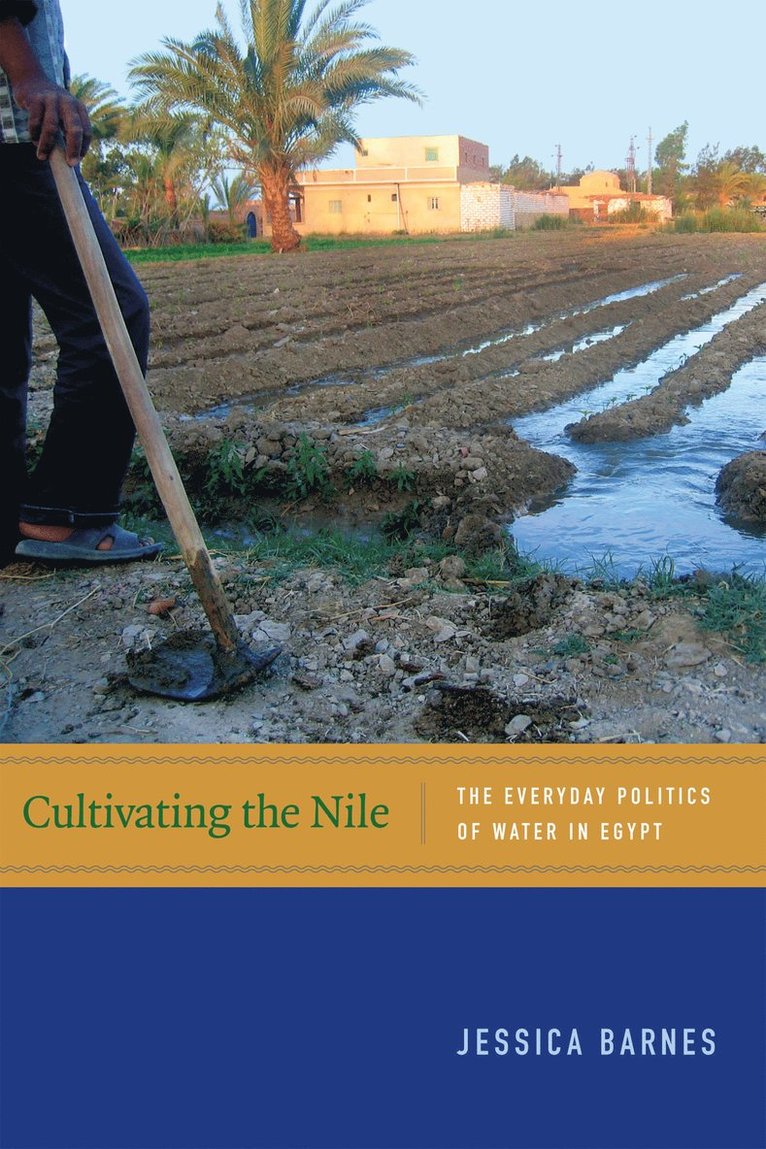
    Cultivating the Nile

    The Everyday Politics of Water in Egypt

    AvJessica Barnes

    Inbunden, Engelska, 2014

    Del i serien New Ecologies for the Twenty-First Century

    1 574 kr

    Beställningsvara. Skickas inom 3-6 vardagar. Fri frakt över 249 kr.

    Fler format och utgåvor

    Häftad

    335 kr

    E-bok

    520 kr

    Beskrivning

    The waters of the Nile are fundamental to life in Egypt. In this compelling ethnography, Jessica Barnes explores the everyday politics of water: a politics anchored in the mundane yet vital acts of blocking, releasing, channeling, and diverting water. She examines the quotidian practices of farmers, government engineers, and international donors as they interact with the waters of the Nile flowing into and through Egypt. Situating these local practices in relation to broader processes that affect Nile waters, Barnes moves back and forth from farmer to government ministry, from irrigation canal to international water conference. By showing how the waters of the Nile are constantly made and remade as a resource by people in and outside Egypt, she demonstrates the range of political dynamics, social relations, and technological interventions that must be incorporated into understandings of water and its management.

    Produktinformation

    • Utgivningsdatum:2014-09-17
    • Mått:152 x 229 x 18 mm
    • Vikt:463 g
    • Format:Inbunden
    • Språk:Engelska
    • Serie:New Ecologies for the Twenty-First Century
    • Antal sidor:277
    • Förlag:Duke University Press
    • ISBN:9780822357414

    Utforska kategorier

    • Miljövetenskap och miljöpolitik inom Naturvetenskap och teknik

    Mer om författaren

    Jessica Barnes is an Assistant Professor in the Department of Geography and the Environment and Sustainability Program at the University of South Carolina.

    Recensioner i media

    "...Barnes’s book is a fresh and innovative addition to the study of inequality, globalization, and Egypt. Scholars and students in a range of academic disciplines will find Cultivating the Nile valuable due to its focus on timely questions of the human–nonhuman and the political–natural worlds." - Rania K. Sweis (American Anthropologist) “[This] book is likely to be a cornerstone in the growing anthropological literature on water by virtue of a rare combination: of accessibility of language and structure, and complexity of argument and method…. Cultivating the Nile is a fascinating account, which is likely to attract the attention of the growing community of water anthropologists. It also deserves a wide readership within the community of water policy-makers and others working with resource governance.” - Mattias Borg Rasmussen (Journal of the Royal Anthropological Institute) "Cultivating the Nile reaches to a body of research and theoretical horizons not usually covered by scholarship on everyday politics in Egypt and the Middle East, pointing to the relevance of environmental politics in the region to wider theoretical debates on materiality and the role of material substances in social theory, nonhuman and distributed patterns of power and agency, and the fluidity and verticality of space. As such, the book’s significance extends beyond the limits of its regional scope to speak to wider intellectual engagements with environmental and spatial issues in social theory." - Tamer Elshayal (Arab Studies Journal) "Given its ethnographic richness and its analytic originality, this book should be on the shelf of readers who are interested in any of the following fields: political ecology, science and technology studies, and Middle East studies.It will also certainly find its own place in the emerging literature of our discipline including the anthropology of infrastructure, the anthropology of water and the anthropology of resource making. Since it is written lucidly and plainly, without jargon, I also expect the book to move beyond the Ivory Tower and to draw a broad non-academic audience." - Bada Choi (Social Anthropology) “Barnes argues that water scarcity in Egypt is not a ‘given’ but rather ‘made,’ through the interactions of bureaucrats, donors, and consumers. . . .  Among other fascinating details that Barnes describes is the country’s massive system of underground drains; if laid end to end, the drains would circle the globe multiple times. (Foreign Affairs) "Cultivating the Nile is a stand out text in many respects, as it is a much needed addition to the field of critical environmental studies and political ecologies of the Middle East and North Africa.  . . . One is left with a sense of how well Barnes’ study was designed, how well her contribution has been crafted, and a sense of anticipation of what the volume will generate in terms of future work on these themes in the years to come." - Leila M. Harris (Review of Middle East Studies) “Like finding an oasis after crossing the desert, Barnes provides a welcome sight onto the lived experience at the local scale, after travelling through a dryness in recent literature characterized by abstract typologies and global discourse. Weaving together expertise in anthropology and geography, this ethnographic study of water management in Egypt remains timely and insightful several years after its publication.”- Bruce Currie-Alder (Water International)

    Innehållsförteckning

    • A Note on Transliteration, Units, and Abbreviations viiPreface ixAcknowledgments xv1. The End of a River 12. The Nile's Nadir: The Production of Scarcity 353. Fluid Governance: Water User Associations and Practices of Participation 724. Irrigating the Desert, Deserting the Irrigated: Land Reclamation at the Margins 1065. Flows of Drainage: The Politics of Excess 1376. Making Egypt's Water 169Notes 179References 199Notes 223