• Fri frakt över 249 kr
  • •
  • Snabba leveranser
  • •
  • Billiga böcker
Kundservice

Du är på sajten för privatpersoner.

Företag, bibliotek eller offentlig verksamhet?

Du handlar på classic.bokus.com, där alla dina funktioner finns intakta.
Till classic.bokus.com
Bokus logotyp. Gå till startsidan.
  • Erbjudanden
  • Nyheter
  • Student
  • Topplistor
  • Barn & ungdom
  • Bokus Play
  • E-böcker
  • Pocketböcker
  • Spel & pussel

10% rabatt på allt med kod: NYSTART10 →

Sidfot

Mina sidor

    Hjälp

    • Kundservice
    • Vanliga frågor och svar
    • Frakt och leverans
    • Retur vid ångerrätt
    • Reklamera vara
    • Betalning
    • Köpvillkor
    • Allmänna villkor
    • Information om webbplatsens tillgänglighet

    Om Bokus

    • Om oss
    • Pressrum
    • För studenter
    • För företag
    • För bibliotek och offentlig verksamhet
    • För leverantörer
    • Hållbarhet

    Populärt

    • Aktuella erbjudanden
    • Presentkort
    • Studentlitteratur
    • Nya böcker
    • Topplistor
    • Signerade böcker
    • Engelska böcker

    Inspiration

    • Boktips
    • BookTok
    • Populära bokserier
    • Barnbokskaraktärer
    • Populära författare
    Logotyp för Bokus
    Följ oss på Facebook (extern länk)Följ oss på Instagram (extern länk)Följ oss på YouTube (extern länk)Följ oss på TikTok (extern länk)
    bokus @ CookiesAnpassa cookiesIntegritetspolicyKöpvillkor
    Till Citymail hemsida (extern länk)Till Budbee hemsida (extern länk)Till Postnord hemsida (extern länk)Till Schenker hemsida (extern länk)Till Early Bird hemsida (extern länk)Till Walleys hemsida (extern länk)
    1. Historia och arkeologi
    2. Historia
    3. Afrikas historia

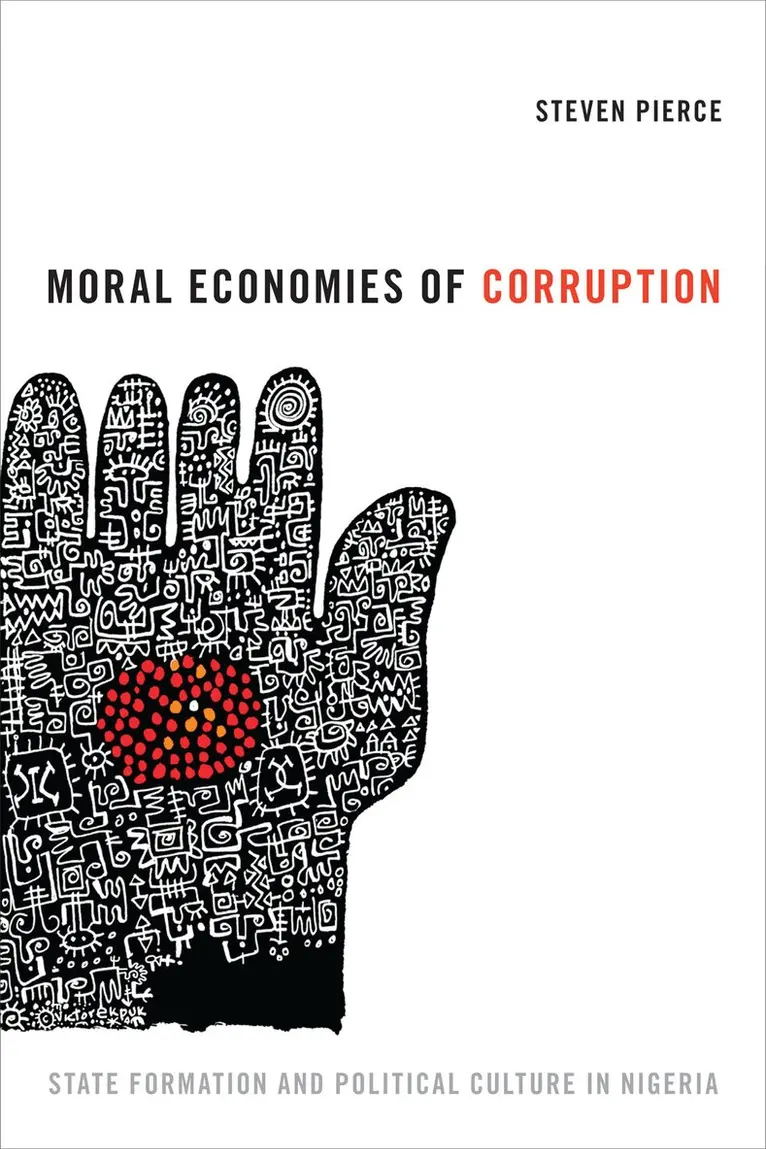
    Moral Economies of Corruption

    State Formation and Political Culture in Nigeria

    AvSteven Pierce

    Inbunden, Engelska, 2016

    1 585 kr

    Beställningsvara. Skickas inom 5-8 vardagar. Fri frakt över 249 kr.

    Fler format och utgåvor

    Häftad

    388 kr

    Beskrivning

    Nigeria is famous for "419" e-mails asking recipients for bank account information and for scandals involving the disappearance of billions of dollars from government coffers. Corruption permeates even minor official interactions, from traffic control to university admissions. In Moral Economies of Corruption Steven Pierce provides a cultural history of the last 150 years of corruption in Nigeria as a case study for considering how corruption plays an important role in the processes of political change in all states. He suggests that corruption is best understood in Nigeria, as well as in all other nations, as a culturally contingent set of political discourses and historically embedded practices. The best solution to combatting Nigerian government corruption, Pierce contends, is not through attempts to prevent officials from diverting public revenue to self-interested ends, but to ask how public ends can be served by accommodating Nigeria's history of patronage as a fundamental political principle.

    Produktinformation

    • Utgivningsdatum:2016-02-26
    • Mått:152 x 229 x 20 mm
    • Vikt:544 g
    • Format:Inbunden
    • Språk:Engelska
    • Antal sidor:304
    • Förlag:Duke University Press
    • ISBN:9780822360773

    Utforska kategorier

    • Afrikas historia inom Historia och arkeologi
    • Statsvetenskap och politisk teori inom Samhälle och politik

    Mer om författaren

    Steven Pierce is Senior Lecturer in Modern African History at the University of Manchester. He is the coeditor of Discipline and the Other Body: Correction, Corporeality, Colonialism, also published by Duke University Press, and the author of Farmers and the State in Colonial Kano: Land Tenure and the Legal Imagination.

    Recensioner i media

    "Moral Economies of Corruption is not only rich history, but also a theoretically insightful analysis that has much to offer beyond its particularism. Scholars interested in corruption in other parts of Africa, and in other regions of the world, will find much to ponder and appreciate." - Daniel Jordan Smith (American Ethnologist) "[T]his is a superb and path-breaking book. Through meticulous attention to detail, it builds an argument that is as important as it is compelling. And, ironically, it is by refusing to compromise on historical and cultural specificity that it makes its most important contribution to understanding and engaging critically and constructively with a global discourse." - Kate Hampshire (Journal of the Royal Anthropological Institute) "The strength of Pierce’s book is the depth of its historical excavation and the synchronization of relevant data on the diverse forms of corruption across Nigeria’s multitudinous ethnicities at different periods in the country’s over one hundred years of statehood." - John Olushola Magbadelo (African Studies Quarterly) "Pierce makes a significant contribution to the analysis of corruption in Nigeria by going beyond the dominant Eurocentric and neo-Weberian analyses, which are couched in universalistic, Eurocentric, and derogatory terms. . . . A useful addition to the study of Nigeria’s contemporary history and political culture." - Jeremiah Dibua (American Historical Review) "Nigerian corruption has attracted the attention of numerous scholars over the years, and this has given rise to a plethora of insightful analyses, from several different angles. However, Steven Pierce ... offers a new perspective and fresh insight into the discourse. ... Pierce has written a valuable book that focuses our attention on the fundamental problem of corruption in Nigeria." - Azeez Olaniyan (African Studies Review)

    Innehållsförteckning

    • Acknowledgments  ixIntroduction: Corruption Discourse and the Performance of Politics  1Part I. From Caliphate to Federal Republic1. A Tale of Two Emirs: Colonialism and Bureaucratizing Emirates, 1900–1948  272. The Political Time: Ethnicity and Violence, 1948–1970  633. Oil and the "Army Arrangement": Corruption and the Petro-State, 1970–1999  105Part II. Corruption, Nigeria, and the Moral Imagination4. Moral Economies of Corruption  1535. Nigerian Corruption and the Limits of the State  188Conclusion  219Notes  231Bibliography  257Index  277