• Fri frakt över 249 kr
  • •
  • Snabba leveranser
  • •
  • Billiga böcker
Kundservice

Du är på sajten för privatpersoner.

Företag, bibliotek eller offentlig verksamhet?

Du handlar på classic.bokus.com, där alla dina funktioner finns intakta.
Till classic.bokus.com
Bokus logotyp. Gå till startsidan.
  • Erbjudanden
  • Nyheter
  • Student
  • Topplistor
  • Barn & ungdom
  • Bokus Play
  • E-böcker
  • Pocketböcker
  • Spel & pussel

10% rabatt på allt med kod: NYSTART10 →

Sidfot

Mina sidor

    Hjälp

    • Kundservice
    • Vanliga frågor och svar
    • Frakt och leverans
    • Retur vid ångerrätt
    • Reklamera vara
    • Betalning
    • Köpvillkor
    • Allmänna villkor
    • Information om webbplatsens tillgänglighet

    Om Bokus

    • Om oss
    • Pressrum
    • För studenter
    • För företag
    • För bibliotek och offentlig verksamhet
    • För leverantörer
    • Hållbarhet

    Populärt

    • Aktuella erbjudanden
    • Presentkort
    • Studentlitteratur
    • Nya böcker
    • Topplistor
    • Signerade böcker
    • Engelska böcker

    Inspiration

    • Boktips
    • BookTok
    • Populära bokserier
    • Barnbokskaraktärer
    • Populära författare
    Logotyp för Bokus
    Följ oss på Facebook (extern länk)Följ oss på Instagram (extern länk)Följ oss på YouTube (extern länk)Följ oss på TikTok (extern länk)
    bokus @ CookiesAnpassa cookiesIntegritetspolicyKöpvillkor
    Till Citymail hemsida (extern länk)Till Budbee hemsida (extern länk)Till Postnord hemsida (extern länk)Till Schenker hemsida (extern länk)Till Early Bird hemsida (extern länk)Till Walleys hemsida (extern länk)
    1. Medicin
    2. Andra medicinska specialiteter
    3. Farmakologi

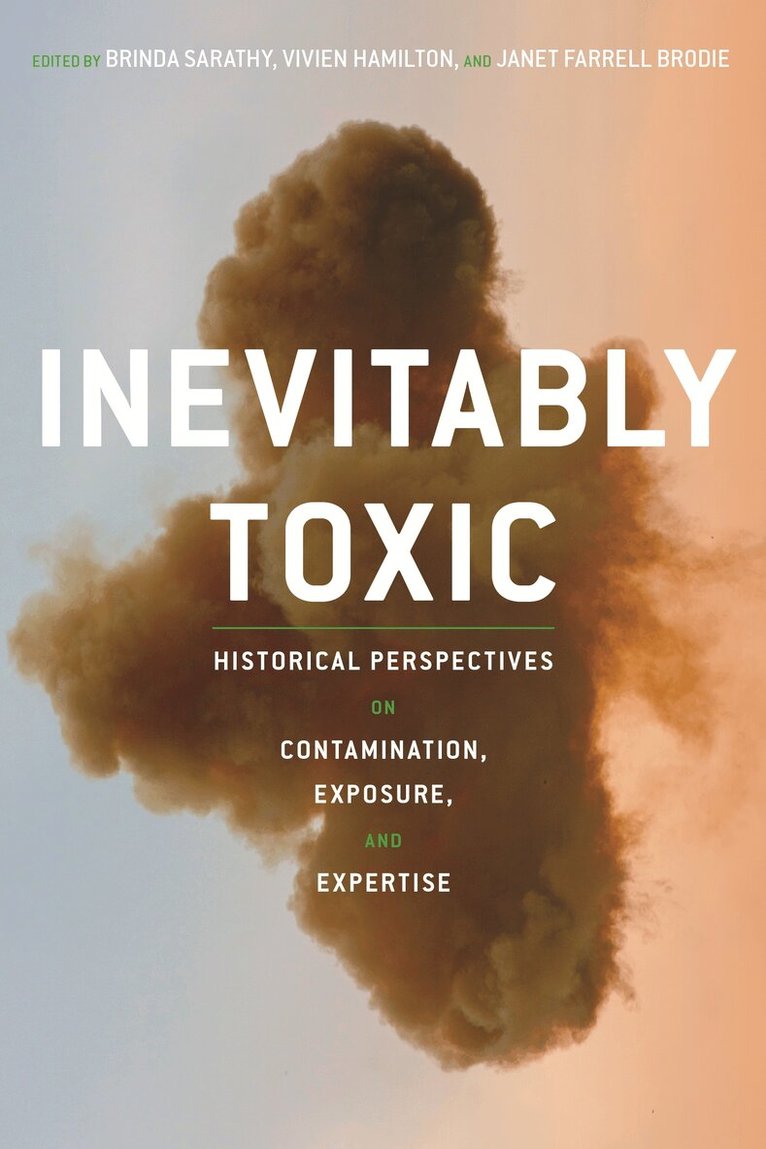
    Inevitably Toxic

    Historical Perspectives on Contamination, Exposure, and Expertise

    AvBrinda Sarathy,Janet Brodie

    Häftad, Engelska, 2019

    Del i serien Intersections

    629 kr

    Beställningsvara. Skickas inom 5-8 vardagar. Fri frakt över 249 kr.

    Beskrivning

    Not a day goes by that humans aren’t exposed to toxins in our environment—be it at home, in the car, or workplace. But what about those toxic places and items that aren’t marked? Why are we warned about some toxic spaces' substances and not others? The essays in Inevitably Toxic consider the exposure of bodies in the United States, Canada and Japan to radiation, industrial waste, and pesticides. Research shows that appeals to uncertainty have led to social inaction even when evidence, e.g. the link between carbon emissions and global warming, stares us in the face. In some cases, influential scientists, engineers and doctors have deliberately "manufactured doubt" and uncertainty but as the essays in this collection show, there is often no deliberate deception. We tend to think that if we can’t see contamination and experts deem it safe, then we are okay. Yet, having knowledge about the uncertainty behind expert claims can awaken us from a false sense of security and alert us to decisions and practices that may in fact cause harm.In the epilogue, Hamilton and Sarathy interview Peter Galison, a prominent historian of science whose recent work explores the complex challenge of long term nuclear waste storage.

    Produktinformation

    • Utgivningsdatum:2019-07-02
    • Mått:152 x 229 x 25 mm
    • Vikt:431 g
    • Format:Häftad
    • Språk:Engelska
    • Serie:Intersections
    • Antal sidor:280
    • Förlag:University of Pittsburgh Press
    • ISBN:9780822966128

    Utforska kategorier

    • Farmakologi inom Medicin
    • Naturvetenskapens historia inom Naturvetenskap och teknik
    • Miljöteknik inom Naturvetenskap och teknik

    Mer om författaren

    Brinda Sarathy (Editor) Brinda Sarathy is a professor of Environmental Analysis and director of the Robert Redford Conservancy for Southern California Sustainability at Pitzer College. She is the author of Pineros: Latino Labour and the Changing Face of Forestry in the Pacific Northwest.Janet Brodie (Editor) Janet Farrell Brodie is a professor of U.S. history at Claremont Graduate University. Her recent scholarship focuses on secrecy in the nuclear era with articles in the Journal of Diplomatic History and The Journal of Social History.Vivien Hamilton (Editor) Vivien Hamilton is an associate professor of history of science and director of the Hixon-Riggs Program for Responsive Science and Engineering at Harvey Mudd College. Her work examines the history of medical technologies, focusing on questions of authority, expertise and cross-disciplinary collaboration.

    Recensioner i media

    Science can be used to both explicate and obscure the violence of toxic exposures. The scholars in this book offer us careful historical accounts that show how science has been both not enough and sometimes profoundly complicit in toxic histories, themselves undergirded by militarism, racism, and industrialism. Crucially, the essays in this book demonstrate how ubiquitous toxicity is an achievement, not an inevitability—it can and should be otherwise.

    Innehållsförteckning

    • IntroductionToxicity, Uncertainty, and Expertise Vivien Hamilton and Brinda SarathyPart One: Radiation1. X-ray Protection in American Hospitals Vivien Hamilton2. Contested Knowledge: The Trinity Test Radiation Studies Janet Farrell Brodie3. Crossroads in San Francisco: The Naval Radiological Defense Laboratory and its Afterlives Lindsey Dillon4. Born Opaque: Investigating the Nuclear Accident at the Santa Susana Field Laboratory William PalmerPart Two: Industrial Toxins5. Making Way for Industrial Waste: Water Pollution Control in Southern California, 1947-1955 Brinda Sarathy6. Processing the Past into Your Future: Uncovering the Hidden Consequences of Industrial Development in the West Texas Petrochemical Industry Sarah Stanford-McIntyre7. Vast, Incredible Damage: Herbicides and the US Forest Service James G. Lewis and Char Miller8. Los Angeles's Neighborhood Oil Drilling and Environmental Justice Bhavna ShamasunderPart Three: Community Contestation, Expanding Expertise9. Atomic Bomb Survivors, Medical Experts, and the Endlessness of Radiation Illness Naoko Wake10. On Sovereignty, Deficits, and Dump Fires: Risk Governance in an Arctic “Dumpcano Alexander R.D. ZaharaEpilogueContainment: Discussing Nuclear Waste with Peter GalisonInterview by Vivien Hamilton and Brinda Sarathy