• Fri frakt över 249 kr
  • •
  • Snabba leveranser
  • •
  • Billiga böcker
Kundservice

Du är på sajten för privatpersoner.

Företag, bibliotek eller offentlig verksamhet?

Du handlar på classic.bokus.com, där alla dina funktioner finns intakta.
Till classic.bokus.com
Bokus logotyp. Gå till startsidan.
  • Erbjudanden
  • Nyheter
  • Student
  • Topplistor
  • Barn & ungdom
  • Bokus Play
  • E-böcker
  • Pocketböcker
  • Spel & pussel

10% rabatt på allt med kod NYSTART10 →

Sidfot

Mina sidor

    Hjälp

    • Kundservice
    • Vanliga frågor och svar
    • Frakt och leverans
    • Retur vid ångerrätt
    • Reklamera vara
    • Betalning
    • Köpvillkor
    • Allmänna villkor
    • Information om webbplatsens tillgänglighet

    Om Bokus

    • Om oss
    • Pressrum
    • För studenter
    • För företag
    • För bibliotek och offentlig verksamhet
    • För leverantörer
    • Hållbarhet

    Populärt

    • Aktuella erbjudanden
    • Presentkort
    • Studentlitteratur
    • Nya böcker
    • Topplistor
    • Signerade böcker
    • Engelska böcker

    Inspiration

    • Boktips
    • BookTok
    • Populära bokserier
    • Barnbokskaraktärer
    • Populära författare
    Logotyp för Bokus
    Följ oss på Facebook (extern länk)Följ oss på Instagram (extern länk)Följ oss på YouTube (extern länk)Följ oss på TikTok (extern länk)
    bokus @ CookiesAnpassa cookiesIntegritetspolicyKöpvillkor
    Till Citymail hemsida (extern länk)Till Budbee hemsida (extern länk)Till Postnord hemsida (extern länk)Till Schenker hemsida (extern länk)Till Early Bird hemsida (extern länk)Till Walleys hemsida (extern länk)
    1. Filosofi och religion
    2. Religion och tro
    3. Religion: allmänt

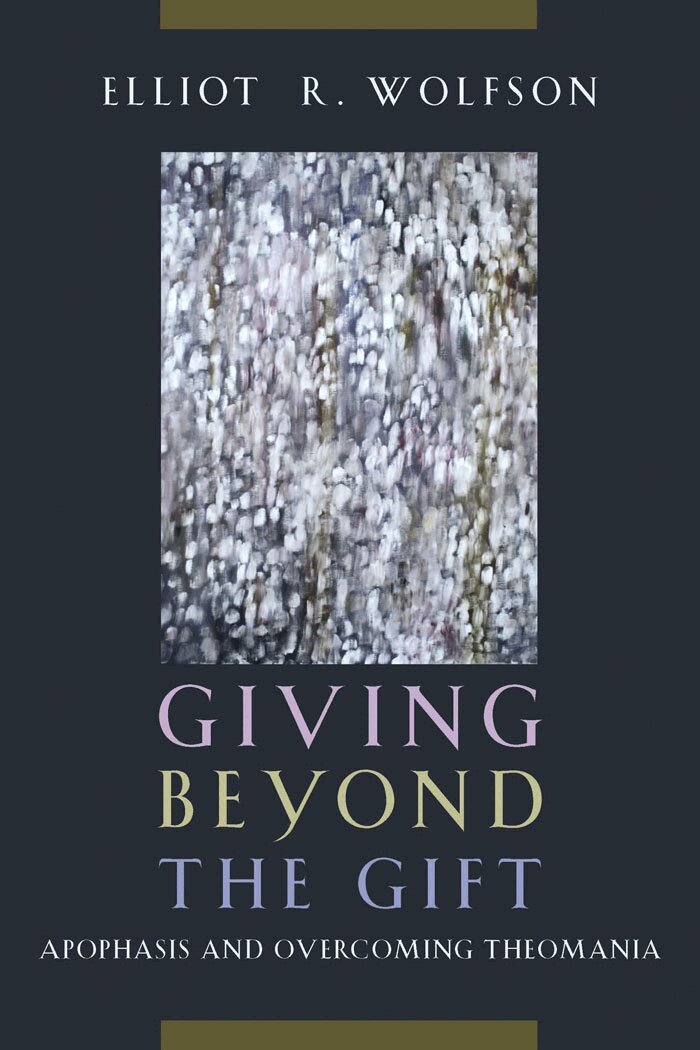
    Giving Beyond the Gift

    Apophasis and Overcoming Theomania

    AvElliot R. Wolfson

    Häftad, Engelska, 2014

    465 kr

    Beställningsvara. Skickas inom 10-15 vardagar. Fri frakt över 249 kr.

    Fler format och utgåvor

    Inbunden

    1 674 kr

    Beskrivning

    This book explores the co-dependency of monotheism and idolatry by examining the thought of several prominent twentieth-century Jewish philosophers—Cohen, Buber, Rosenzweig, and Levinas. While all of these thinkers were keenly aware of the pitfalls of scriptural theism, to differing degrees they each succumbed to the temptation to personify transcendence, even as they tried either to circumvent or to restrain it by apophatically purging kataphatic descriptions of the deity. Derrida and Wyschogrod, by contrast, carried the project of denegation one step further, embarking on a path that culminated in the aporetic suspension of belief and the consequent removal of all images from God, a move that seriously compromises the viability of devotional piety.The inquiry into apophasis, transcendence, and immanence in these Jewish thinkers is symptomatic of a larger question. Recent attempts to harness the apophatic tradition to construct a viable postmodern negative theology, a religion without religion, are not radical enough. Not only are these philosophies of transcendence guilty of a turn to theology that defies the phenomenological presupposition of an immanent phenomenality, but they fall short on their own terms, inasmuch as they persist in employing metaphorical language that personalizes transcendence and thereby runs the risk of undermining the irreducible alterity and invisibility attributed to the transcendent other.The logic of apophasis, if permitted to run its course fully, would exceed the need to posit some form of transcendence that is not ultimately a facet of immanence. Apophatic theologies, accordingly, must be supplanted by a more far-reaching apophasis that surpasses the theolatrous impulse lying coiled at the crux of theism, an apophasis of apophasis, based on accepting an absolute nothingness—to be distinguished from the nothingness of an absolute—that does not signify the unknowable One but rather the manifold that is the pleromatic abyss at being's core. Hence, the much-celebrated metaphor of the gift must give way to the more neutral and less theologically charged notion of an unconditional givenness in which the distinction between giver and given collapses. To think givenness in its most elemental, phenomenological sense is to allow the apparent to appear as given without presuming a causal agency that would turn that given into a gift.

    Produktinformation

    • Utgivningsdatum:2014-02-03
    • Mått:155 x 235 x 41 mm
    • Vikt:794 g
    • Format:Häftad
    • Språk:Engelska
    • Antal sidor:576
    • Förlag:Fordham University Press
    • ISBN:9780823255719

    Utforska kategorier

    • Religion: allmänt inom Filosofi och religion
    • Filosofiska discipliner inom Filosofi och religion
    • Judendom inom Filosofi och religion

    Mer om författaren

    Elliot R. Wolfson is the Marsha and Jay Glazer Endowed Chair in Jewish Studies in the Department of Religious Studies at the University of California-Santa Barbara. Between 1987 and 2014, he was the Abraham Lieberman Professor of Hebrew and Judaic Studies at New York University. He is the author of Through a Speculum That Shines: Vision and Imagination in Medieval Jewish Mysticism (Princeton University Press, 1994); Language, Eros, Being: Kabbalistic Hermeneutics and Poetic Imagination (Fordham University Press, 2005); A Dream Interpreted Within a Dream: Oneiropoiesis and the Prism of Imagination (Zone Books, 2011); Giving Beyond the Goft: Apophasis and Overcoming Theomania (Fordham University Press, 2014); and The Duplicity of Philosophy's Shadow: Heidegger, Nazism, and the Jewish Other (Columbia University Press, 2018).

    Recensioner i media

    "This is a wonderful contribution to the field of philosophy and theology by one of the most important thinkers writing in English. His command of the material is masterful and his argument persuasive. It is outstanding and a real intellectual tour de force." -- -Aaron W. Hughes University of Rochester "We are used to apophatic theology in the service of Christianity. Here, though, Elliot Wolfson brings his deep knowledge of Kabbalah and modern Jewish thought to a rich consideration of apophaticism in Judaism. His readings of Buber, Cohen, Derrida, Levinas, Rosenzweig, and Wyschogrod are nothing less than riveting, as are his readings of thinkers such as Heidegger and Marion. This is a book that all students of modern Jewish thought and its interactions with European philosophy will want to read." -- -Kevin Hart The University of Virginia "This book, at once meticulous and daring, makes an important contribution to theology-one that may end up, uncomfortably, moving the discourse beyond itself. The argument is developed through a remarkable combination of reason, mysticism, analysis of experience, and historical knowledge." -- -Karmen MacKendrick Le Moyne College

    Innehållsförteckning

    • Preface Acknowledgments Introduction: Imagination and the Prism of the Inapparent 1. Via Negativa and the Imaginal Configuring of God 2. Apophatic Vision and Overcoming the Dialogical 3. Echo of the Otherwise and the Lure of Theolatry 4. Secrecy of the Gift and the Gift of Secrecy 5. Immanent Atheology and the Trace of Transcendence 6. Undoing (K)not of Apophaticism: A Heideggerian Afterthought Notes Bibliography Index