• Fri frakt över 249 kr
  • •
  • Snabba leveranser
  • •
  • Billiga böcker
Kundservice

Du är på sajten för privatpersoner.

Företag, bibliotek eller offentlig verksamhet?

Du handlar på classic.bokus.com, där alla dina funktioner finns intakta.
Till classic.bokus.com
Bokus logotyp. Gå till startsidan.
  • Erbjudanden
  • Nyheter
  • Student
  • Topplistor
  • Barn & ungdom
  • Bokus Play
  • E-böcker
  • Pocketböcker
  • Spel & pussel

10% rabatt på allt med kod: NYSTART10 →

Sidfot

Mina sidor

    Hjälp

    • Kundservice
    • Vanliga frågor och svar
    • Frakt och leverans
    • Retur vid ångerrätt
    • Reklamera vara
    • Betalning
    • Köpvillkor
    • Allmänna villkor
    • Information om webbplatsens tillgänglighet

    Om Bokus

    • Om oss
    • Pressrum
    • För studenter
    • För företag
    • För bibliotek och offentlig verksamhet
    • För leverantörer
    • Hållbarhet

    Populärt

    • Aktuella erbjudanden
    • Presentkort
    • Studentlitteratur
    • Nya böcker
    • Topplistor
    • Signerade böcker
    • Engelska böcker

    Inspiration

    • Boktips
    • BookTok
    • Populära bokserier
    • Barnbokskaraktärer
    • Populära författare
    Logotyp för Bokus
    Följ oss på Facebook (extern länk)Följ oss på Instagram (extern länk)Följ oss på YouTube (extern länk)Följ oss på TikTok (extern länk)
    bokus @ CookiesAnpassa cookiesIntegritetspolicyKöpvillkor
    Till Citymail hemsida (extern länk)Till Budbee hemsida (extern länk)Till Postnord hemsida (extern länk)Till Schenker hemsida (extern länk)Till Early Bird hemsida (extern länk)Till Walleys hemsida (extern länk)
    1. Naturvetenskap och teknik
    2. Matematik och naturvetenskap
    3. Naturvetenskap:allmänt
    4. Naturvetenskapens filosofi

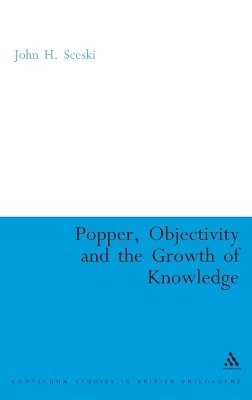
    Popper, Objectivity and the Growth of Knowledge

    AvJohn H. Sceski

    Inbunden, Engelska, 2007

    Del i serien Continuum Studies in British Philosophy

    2 088 kr

    Beställningsvara. Skickas inom 10-15 vardagar. Fri frakt över 249 kr.

    Fler format och utgåvor

    E-bok

    2 264 kr

    E-bok

    2 264 kr

    Beskrivning

    John H. Sceski argues that Karl Popper's philosophy offers a radical treatment of objectivity that can reconcile freedom and progress in a manner that preserves the best elements of the Enlightenment tradition. His book traces the development of Popper's account of objectivity by examining his original contributions to key issues in the philosophy of science. Popper's early confrontation with logical positivism, his rarely discussed four-fold treatment of the problem of induction, and his theory of propensities and evolutionary epistemology are linked in a novel way to produce a coherent and philosophically relevant picture of objectivity. Sceski also explores and clarifies many central issues in the philosophy of science such as probabilistic support, verisimilitude, and the relationship between special relativity and indeterminism. He concludes that Popper's account of objectivity can best bridge the gap between Enlightenment aims for science and freedom and post-modern misgivings about 'truth', by developing a philosophy that is non-foundationalist yet able to account for the growth of knowledge.

    Produktinformation

    • Utgivningsdatum:2007-02-21
    • Mått:156 x 234 x 18 mm
    • Vikt:420 g
    • Format:Inbunden
    • Språk:Engelska
    • Serie:Continuum Studies in British Philosophy
    • Antal sidor:174
    • Förlag:Bloomsbury Publishing PLC
    • ISBN:9780826489043

    Utforska kategorier

    • Naturvetenskapens filosofi inom Naturvetenskap och teknik

    Mer om författaren

    John H. Sceski is an Assistant Professor of Philosophy at Saint Charles Borromeo Seminary, USA, and he teaches Core Humanities at Villanova University, Philadelphia, USA.

    Recensioner i media

    "This work is an important monograph on the thought of Karl Popper. It identifies objectivity as a core problematic in contemporary philosophy and traces Popper's unique approach to this issue. In an original contribution to Popper scholarship, the author argues that Popper's response to the problem of demarcating critical thinking from dogmatic thinking yields an account of objectivity that unites empiricism and metaphysics and can help explain the growth of knowledge. Non-technical, but logically rigorous presentations of probability logic, the problem of verisimilitude, and evolutionary epistemology contribute to an accessible text that belongs in any philosophy of science collection. Moreover, the centrality of objectivity to contemporary philosophical discourse establishes this book as relevant to a broad philosophical audience." Richard J. Blackwell, Emeritus Professor, St. Louis University"

    Innehållsförteckning

    • 1. The Argument of the Text; 2. Scientific Method and Objectivity; 3. Propensities and Cosmology; 4. The Objective Political Order; 5. Ethics: Autonomy and Objectivity.