• Fri frakt över 249 kr
  • •
  • Snabba leveranser
  • •
  • Billiga böcker
Kundservice

Du är på sajten för privatpersoner.

Företag, bibliotek eller offentlig verksamhet?

Du handlar på classic.bokus.com, där alla dina funktioner finns intakta.
Till classic.bokus.com
Bokus logotyp. Gå till startsidan.
  • Erbjudanden
  • Nyheter
  • Student
  • Topplistor
  • Barn & ungdom
  • Bokus Play
  • E-böcker
  • Pocketböcker
  • Spel & pussel

10% rabatt på allt med kod: NYSTART10 →

Sidfot

Mina sidor

    Hjälp

    • Kundservice
    • Vanliga frågor och svar
    • Frakt och leverans
    • Retur vid ångerrätt
    • Reklamera vara
    • Betalning
    • Köpvillkor
    • Allmänna villkor
    • Information om webbplatsens tillgänglighet

    Om Bokus

    • Om oss
    • Pressrum
    • För studenter
    • För företag
    • För bibliotek och offentlig verksamhet
    • För leverantörer
    • Hållbarhet

    Populärt

    • Aktuella erbjudanden
    • Presentkort
    • Studentlitteratur
    • Nya böcker
    • Topplistor
    • Signerade böcker
    • Engelska böcker

    Inspiration

    • Boktips
    • BookTok
    • Populära bokserier
    • Barnbokskaraktärer
    • Populära författare
    Logotyp för Bokus
    Följ oss på Facebook (extern länk)Följ oss på Instagram (extern länk)Följ oss på YouTube (extern länk)Följ oss på TikTok (extern länk)
    bokus @ CookiesAnpassa cookiesIntegritetspolicyKöpvillkor
    Till Citymail hemsida (extern länk)Till Budbee hemsida (extern länk)Till Postnord hemsida (extern länk)Till Schenker hemsida (extern länk)Till Early Bird hemsida (extern länk)Till Walleys hemsida (extern länk)
    1. Ekonomi och Ledarskap
    2. Nationalekonomi
    3. Mikroekonomi

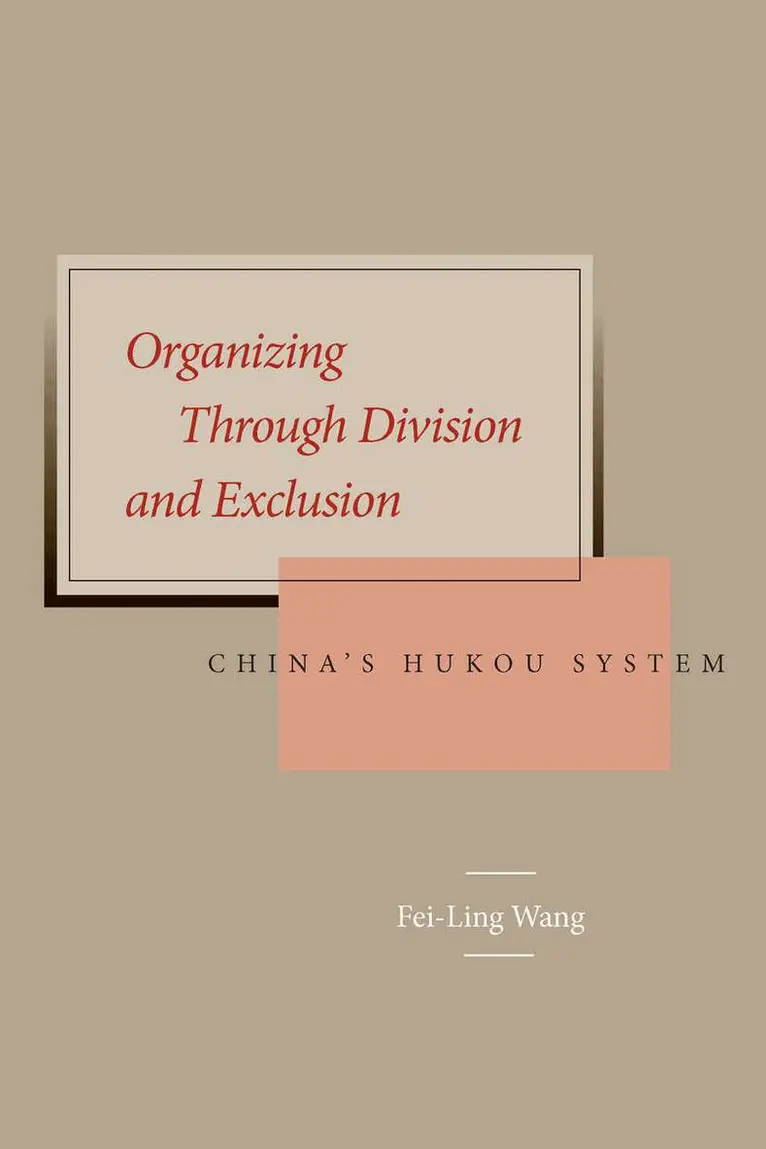
    From Family to Market

    Labor Allocation in Contemporary China

    AvFei-Ling Wang

    Häftad, Engelska, 1998

    520 kr

    Beställningsvara. Skickas inom 10-15 vardagar. Fri frakt över 249 kr.

    Beskrivning

    This book analyzes Chinese history, politics, and economic development through the lens of labor allocation within the world's largest workforce. Capturing the peculiarities, continuities, and changes in the PRC's institutional structure, Fei-Ling Wang examines the segmented nature of China's labor force today. He points to the rare coexistence of four 'labor allocation patterns:' the traditional family-based system, authoritarian state allocation, community-based labor markets, and the emerging national labor market. China's enduringly stable yet backward institutional structure was based firmly on a mix of family and state institutions; now the addition of market forces highlights the PRC's transitional state. Bolstered with rich case-study detail and Chinese source material, this study argues that the development of labor allocation patterns will profoundly influence China's political and economic development in the coming century.

    Produktinformation

    • Utgivningsdatum:1998-03-26
    • Mått:149 x 225 x 21 mm
    • Vikt:476 g
    • Format:Häftad
    • Språk:Engelska
    • Antal sidor:368
    • Förlag:Bloomsbury Publishing Plc
    • ISBN:9780847688807

    Utforska kategorier

    • Mikroekonomi inom Ekonomi och Ledarskap
    • Sociologi inom Samhälle och politik
    • Statsvetenskap och politisk teori inom Samhälle och politik

    Mer om författaren

    Fei-Ling Wang is assistant professor at the Sam Nunn School of International Affairs, Georgia Institute of Technology.

    Recensioner i media

    Wang describes patterns of labour in great detail. ..the descriptions of community -based labour allocation are interesting.. A focus of attention on labour alloction patterns may be useful in understanding China's political and economic institutions.

    Innehållsförteckning

    • Part 1 Part I: Introduction: Labor Allocation Patterns and Institutional StructuresChapter 2 Conceptualizing Labor Allocation PatternsChapter 3 Labor Allocation in China: A Short HistoryChapter 4 LAPs in the PRC Prior to Deng's ReformChapter 5 Chinese Labor Allocation in the 1990sPart 6 Part II: The Family-Based Traditional PatternChapter 7 The Family and Family-Based LAPChapter 8 The Family-Based LAP in ChinaChapter 9 The Family-Based LAP and the Chinese Institutional StructurePart 10 Part III: Authoritarian State Allocation PatternChapter 11 Political Institutions and Labor AllocationChapter 12 The Authoritarian State LAP in ChinaChapter 13 The Authoritarian State LAP and the Chinese Institutional StructurePart 14 Part IV: Community-Based Labor MarketsChapter 15 Community and Community-Based MarketsChapter 16 Community-Based Labor Markets in ChinaChapter 17 Institutional Role of the CLMsPart 18 Part V: An Emerging National Labor MarketChapter 19 Opening and FDI: To Import the MarketChapter 20 The National Labor Market in Contemporary ChinaChapter 21 Impact and Prospects of the National Labor MarketPart 22 Part VI: Conclusion: China at the Institutional CrossroadsChapter 23 Continuity of China's Institutional StructureChapter 24 The Institutional Mixture and Transition in Today's PRCChapter 25 The Dragon Enters the NetsPart 26 Part VII: AppendicesChapter 27 Landmarks of Labor Allocation in the PRCChapter 28 Locational Profile of Individuals Interviewed